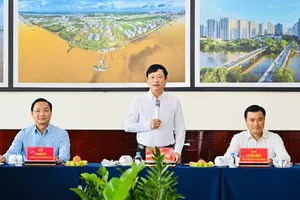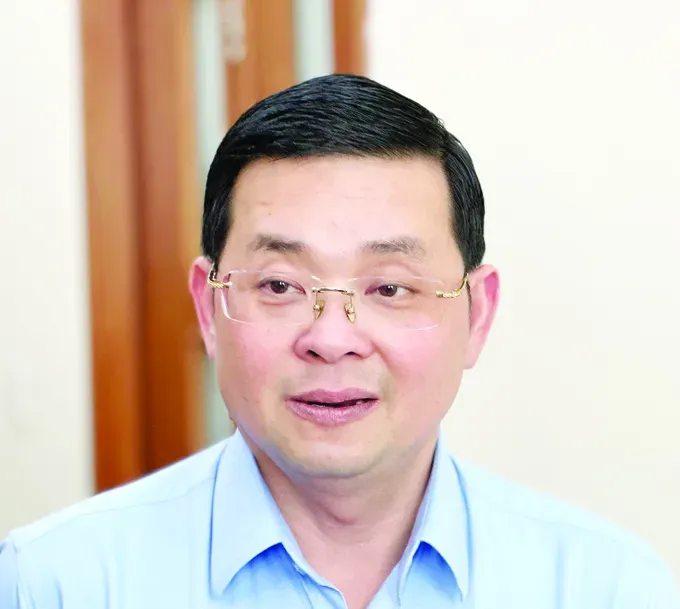
In an interview with SGGP Newspaper, Director Nguyen Toan Thang of the HCMC Department of Agriculture and Environment first shared some useful information regarding the city’s plan on household waste treatment after merging with the provinces of Binh Duong and Ba Ria – Vung Tau.
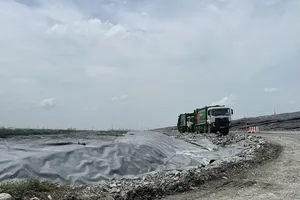
The total volume of municipal solid waste generated in HCMC currently averages about 14,000 tonnes/day. This waste is collected and transported to existing treatment plants at four centralized Solid Waste Treatment Complexes (SWTC): the Northwest (sited in Thai My and Tan An Hoi communes); Da Phuoc (Hung Long and Phong Phu communes); South Binh Duong (Chanh Phu Hoa Ward); and Toc Tien (Chau Pha Commune).
Currently, about 40 percent of waste is treated using technologies such as incineration, composting, or recycling. As the country’s economic locomotive, HCMC is transitioning solid waste treatment technologies to effectively implement green growth goals, contributing to overall sustainable development and ensuring waste treatment security in the city.
HCMC has set a target that in the 2025-2030 period, the rate of domestic waste recycled and treated with new technologies will exceed 90 percent.
To achieve this, HCMC has deployed many synchronous solutions. Specifically, the city focuses on converting solid waste treatment technologies of existing treatment units according to Resolution No. 28/2023 of the HCMC People’s Council.
HCMC solicits investment through public-Private Partnership (PPP) and bidding while actively assisting developers. Authorities petition the Ministry of Industry and Trade to include projects in the 2021-2030 period’s National Power Plan and request support from the Ministry of Construction for feasibility appraisals, helping investors navigate procedural hurdles pending broader planning completion.
In June 2025, Binh Duong Water – Environment Corporation JSC (Biwase) launched a 500-tonne/day waste-to-energy project at South Binh Duong SWTC. Meanwhile, Vietstar and Tam Sinh Nghia are constructing plants at Northwest SWTC, each with a 2,000-tonne daily capacity, scheduled for 2026 operation.
Additionally, Tasco received approval for its technology conversion policy, and an investor was selected for the Toc Tien SWTC project, while other developers continue finalizing regulated investment procedures.
Regarding the support from the amended Resolution No.98/2023/QH15 to the growth of waste-to-energy projects, Director Nguyen Toan Thang stressed three details.
First, waste-to-energy plant projects with an investment capital of VND2 trillion (US$76.1 million) or more will be added to the list of priorities for attracting strategic investors.
Accordingly, projects can apply a strategic investor selection process under a specific mechanism that cuts time compared to normal bidding procedures while ensuring the selection of investors with financial potential and technological capability.
Second, under the current standard legal framework, the planning process for a large-scale waste treatment plant must follow a strict and lengthy sequence. However, applying the amended Resolution 98/2023/QH15 will create an open mechanism for planning waste-to-energy plant projects.
The People’s Council decides on the list of projects allowed to organize zoning planning and detailed planning simultaneously. More importantly, the resolution allows detailed planning to be approved first upon appraisal completion and then updated into the zoning plan. Therefore, waiting for zoning planning is unnecessary. This mechanism helps investors accelerate detailed planning approval immediately upon design completion, without depending on the overall zone’s progress.
Third, the amended Resolution 98/2023 includes mechanisms related to land recovery, site clearance, financial support, and investment incentives.
As to the important task of waste sorting at source, the Director informed that by 2030, local household solid waste will be mainly treated by waste-to-energy technology. Theoretically, all solid waste generated from households and businesses can be collected and treated together using this technology.
However, according to the municipal Department of Agriculture and Environment’s survey results, household solid waste currently contains materials with economic value that can be sorted, collected, and recycled separately to reduce the total volume of waste that must be transported to treatment complexes daily.
In the coming time, the Department will advise the HCMC People’s Committee to promote the separation of recyclable from hazardous waste from the waste volume transported to treatment plants. This will increase efficiency for facilities applying new technologies.
)