From July 1, 2025, the merger of HCMC and the provinces of Binh Duong, Ba Ria – Vung Tau has shaped these development zones:
- Binh Duong as a high-tech industrial hub;
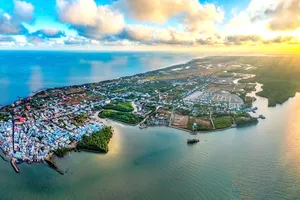
- Ba Ria - Vung Tau as a marine economic pole with deep-water ports, logistics, and offshore wind energy;
- HCMC core maintaining its role as a center for finance, high-end services, Research and Development (R&D), education, and healthcare;
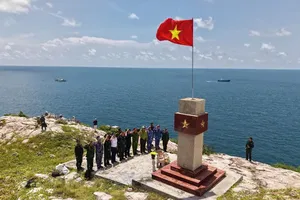
- Con Dao as a green, sustainable island tourism special zone.
This unified economic space creates a seamless value chain from production and logistics to finance and innovation, opening up unprecedented investment potential.
According to Deputy Director of the HCMC Department of Finance Nguyen Thanh Toan, to realize this vision, the city has announced a list of priority projects calling for investment.
On the marine economy and logistics axis, Can Gio International Transshipment Port (571ha), with an expected capital of US$2 billion, is hoped to become a new maritime gateway, capturing international container shipping shifts. Cai Mep Ha Logistics Center, totaling $770 million, plays a core role in directly connecting the Cai Mep – Thi Vai deep-water port.
The marine economic space continues to expand into tourism and services with Vung Tau International Passenger Port (54.3ha), capitalized at $53-$320 million, and the North Vung Tau Entertainment Tourism Service Center covering over 300ha, aiming for an international-standard multi-service destination model.
In the energy sector, the city is developing a large-scale green energy complex comprising 8 offshore wind power projects with a total capacity of 15,000MW, the Long Son LNG Plant, and a chain of petrochemical energy industrial parks, with total capital demand exceeding $37 billion. This provides a clean, stable energy foundation for high-tech industries, big data, and marine logistics.
In the central area, the highlight is the Vietnam International Financial Center in HCMC with an expected total capital of $7 billion, alongside a network of hyperscale data centers and international conference and exhibition complexes; a metro system of over 350km; and ring roads. This totality aims to form a new ecological urban system where finance, technology, and innovation converge, elevating HCMC’s role in regional connectivity.
To meet development requirements, HCMC is adjusting mechanisms toward creating an international standard, transparent, and highly predictable investment environment. According to the HCMC Institute for Development Studies, the city focuses on 5 strategic breakthrough groups:
- the Vietnam International Financial Center in HCMC;
- the Southeast region smart city chain;
- the Eastern innovation corridor;
- smart port and logistics clusters;
- the marine tourism and resort clusters in Can Gio and Vung Tau.
These are sectors capable of attracting large capital flows and creating strong encouragement for the entire regional value chain.
Institutionally, the city is implementing reforms in the spirit of the “5 Nos”: no delays, no overlaps, no passing the buck, no multiple rounds of opinion seeking, and no leaving businesses to fend for themselves. The entire licensing process is digitized with interconnected data between departments, facilitating special mechanisms for the appraisal and approval of projects exceeding VND6 trillion ($235.6 million).
In terms of planning and architecture, HCMC orients the layout of 28 development zones by functional group so as to form service, industrial, and logistics urban clusters that are synchronously connected with metro lines and ring roads. With clear planning, investors can confidently commit to long-term projects such as semiconductors, data centers, renewable energy, or specialized healthcare.
HCMC has announced a list of 10 priority sectors to attract strategic investors. The presence of representatives like MassRobotics, Qualcomm, Ant International, the GOE Alliance, and the International Financial Center in HCMC proves that these sectors are not just a “paper priority list” but are already embedded in specific cooperation between HCMC and international investors.
HCMC aims to become a civilized, modern, deeply integrated city among the world’s top 100 most livable cities by 2030. By 2045, HCMC aims for the status of an international supercity, a center for economics, finance, services, education, and healthcare in Asia, and an attractive global destination with high living quality.
At the 2025 Autumn Economic Forum, Chairman of the HCMC People's Committee Nguyen Van Duoc emphasized that the development of businesses is the prosperity of the city. HCMC calls on strategic investors to accompany the city in this new phase of shaping the future of a Vietnamese supercity on the world map.
Diversifying capital mobilization
According to Deputy Director of the HCMC Department of Finance Nguyen Thanh Toan, the city budget can only meet 20.25 percent of total investment demand, forcing HCMC to shift to a multi-layered capital mobilization model. This includes:
- New-generation Public-Private Partnership (PPP) models;
- Green bonds;
- Infrastructure investment funds;
- Land fund exploitation via the TOD (Transit-Oriented Development) model.
As urban space expands, financial space must grow commensurately. Without flexible mechanisms, HCMC cannot synchronously deploy strategic projects effectively. HCMC has, therefore, redesigned the PPP model to international standards to attract investment into metros, railways connecting ports and airports, inter-regional traffic axes, and major logistics centers. The city plans to implement payment mechanisms using “land funds, urban services, and operational exploitation rights” instead of relying solely on budget capital.