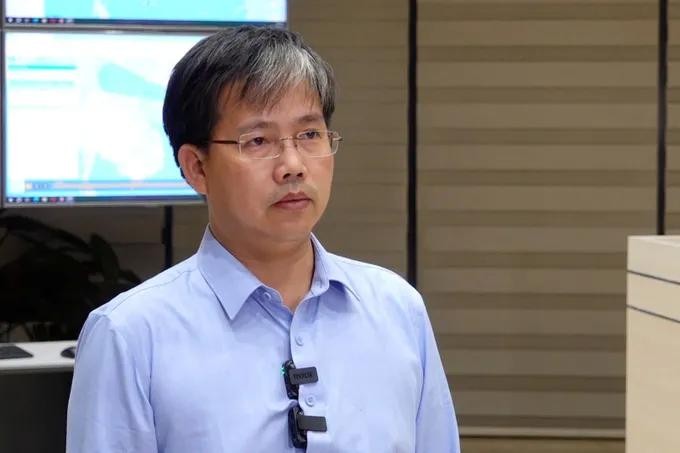
In the context of increasingly extreme weather, public debate has arisen, especially on social media, about forecasts that are “not always precise.” On World Meteorological Day (March 23), Mai Van Khiem, Director of the National Center for Hydro-Meteorological Forecasting, spoke with the press about these issues.

The theme of World Meteorological Day 2026, “Observing Today, Protecting Tomorrow” launched by the World Meteorological Organization, is a call to action. today’s observations are the foundation for safeguarding the future. For forecasters, observation systems are the starting point of the forecasting process. Complete, timely, and reliable data are crucial to determining forecast quality.
“Our mission is to process and analyze observational data and transform it into useful information, into actionable warnings. Forecasters are the bridge between meteorological science and social life,” he explained.
During strong storms or complex natural disasters, pressure is evident on many fronts, especially accuracy under high uncertainty. Forecasters must continuously analyze and compare products from multiple sources and select the optimal scenario in a very short time. Each adjustment of a storm track by tens of kilometers or a change in wind level can have major consequences. Forecast information is the basis for activating the entire decision-making system.
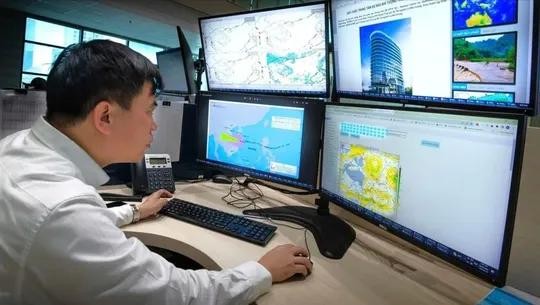
Updating bulletins as conditions evolve is a reflection of scientific responsibility. Today, artificial intelligence is no longer experimental but has become a “digital assistant” directly supporting forecasters. AI helps standardize technical terminology, automatically check spelling and data errors, format bulletins, and adjust language to be more understandable for the public while maintaining scientific accuracy.
Technically, AI supports data processing, simultaneous analysis of multiple scenarios from international forecast models, probability assessment, and proposing the most likely scenario for forecasters to consider. However, AI does not replace the role of forecasters; it reduces repetitive tasks so they can focus on dangerous meteorological situations.
Beyond accuracy, forecasters face time pressure. During peak storm periods, they work 24/7, updating bulletins every one to three hours. They also face public scrutiny. In the age of social media, even small deviations or adjustments can be criticized. “We fear the remark: ‘The State pays you, yet your forecast is wrong, not as good as what’s on the internet,' the center's director admitted.
He emphasized that society should view forecasting not merely as providing weather bulletins but as a scientific and technical pillar in the national disaster risk management system. Forecasting must be recognized as the first line of prevention. Forecast information is the foundation for activating the entire decision-making system.