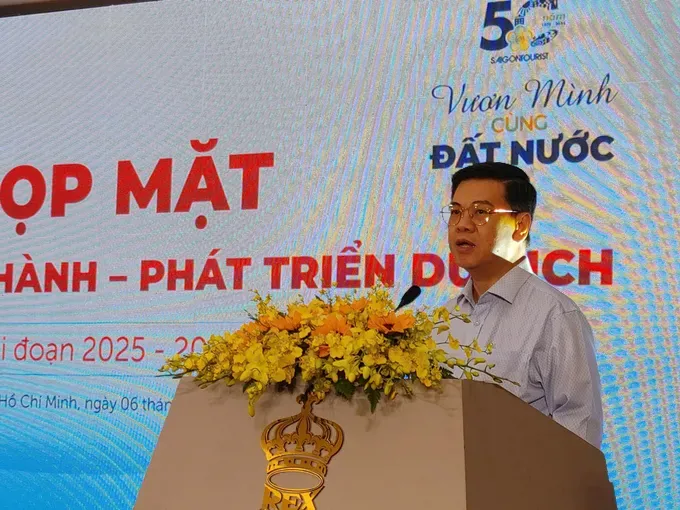
The gathering was attended by Vice Chairman of the Ho Chi Minh City People’s Committee, Nguyen Van Dung.
The meeting’s organizer, Saigontourist Group, described the event as the starting point for its 2025–2030 strategy, emphasizing a development triangle of “government–community–businesses.”
Chairwoman of the Board of Members of Saigontourist Travel Services Company (Saigontourist Group), Nguyen Thi Anh Hoa, stated that to position Ho Chi Minh City among Asia’s top tourist destinations, efforts must begin with genuine local-level connections, where heritage, people, and community stories come together.
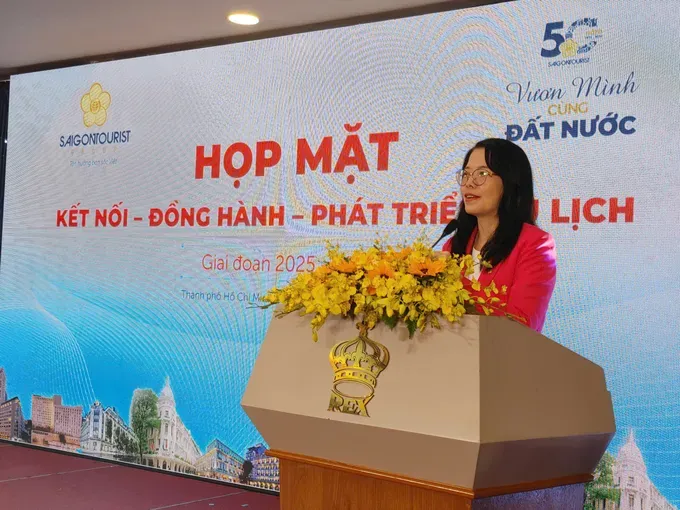
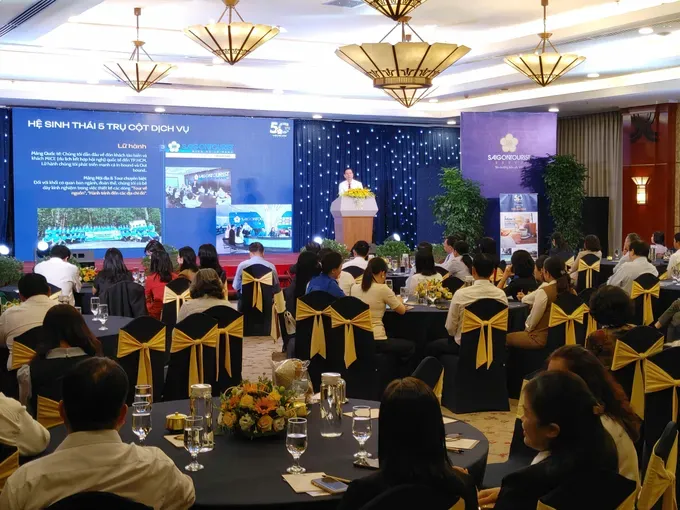
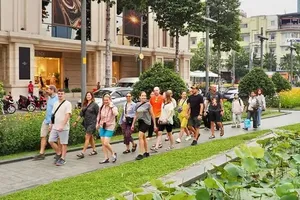
At the event, Deputy General Director of Saigontourist Group, Nguyen Minh Triet, introduced a series of new urban-themed tourism products, including “Saigon Saturday Evening Stroll,” “Tracing the Footsteps of Biet Dong Sai Gon (Saigon Rangers),” “Centennial Saigon Heritage,” and the “Run – Paddle – Chill” tour, which takes visitors on a sunrise run across Ba Son Bridge, followed by SUP paddling on the Saigon River and tasting riverside green cuisine.
Additional routes to Can Gio–Rung Sac and historic inner-city temples have also been added to provide a more comprehensive Ho Chi Minh City experience.
Tan Son Nhat Ward, an area soon to become an interchange for two metro lines, has proposed that Saigontourist Group upgrade the cluster of hotels around Hoang Viet Roundabout to support the nighttime economy.
The local authorities also hope the company will explore incorporating the Bay Hien area into urban tours following a Transit-Oriented Development (TOD) model. Once the Bay Hien station is completed, the area will feature underground parking and connections to major hospitals such as Thong Nhat and Tam Anh, creating opportunities for a pedestrian-friendly service and tourism hub along the metro corridor.
From the coastal side, Ho Tram Commune, known for its string of luxury resorts and golf courses, is facing infrastructure challenges. Ongoing construction along the coastal route has made travel difficult for visitors. Meanwhile, demand for tourism workers has surged, but local authorities can meet only 15–20 percent of the need.
The local authorities of Ho Tram Commune have proposed that Saigontourist Group act as a training hub within the commune, utilizing public land to establish vocational courses that would serve not only Ho Tram but the wider coastal region.
Vung Tau Ward’s authorities noted that beyond its long-established beach tourism, Vung Tau also features a museum of antique weapons, various marine sports offerings, and other cultural attractions. The ward hopes to receive support in training a skilled workforce to develop high-quality services, making Vung Tau’s beaches a more comprehensive destination that fully leverages the area’s natural advantages.
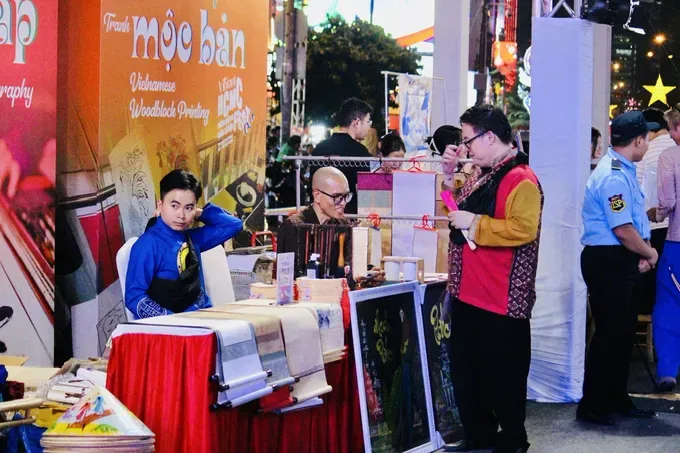
Vice Chairman of the Ho Chi Minh City People’s Committee, Nguyen Van Dung, praised the frank exchanges and noted that the meeting provided an opportunity to review the city’s entire tourism landscape following the recent administrative merger.
After the pandemic, Ho Chi Minh City had only 22 signature tourism products. With the inclusion of 168 wards, communes, and special zones, the city now has significant growth potential. Destinations such as Con Dao, Vung Tau, and urban tours in Saigon and Ben Thanh wards are particularly popular with visitors and require systematic investment.
The Vice Chairman of the Ho Chi Minh City People’s Committee called on the tourism sector, local authorities, and the media to intensify promotion efforts through events such as Ho Chi Minh City Tourism Week and professional platforms like the Ho Chi Minh City Excellent Tour Guide Contest.
He also highlighted the tourism industry’s contribution of around 12 percent of the city’s GRDP and pledged the city’s support in implementing a smart tourism initiative, aiming for the broader goal of making Ho Chi Minh City a leading Asian destination that is both modern and culturally distinctive.


)