His revolutionary journey and literary career were deeply intertwined with propaganda and education efforts in the Saigon - Gia Dinh region (now Ho Chi Minh City).
July 15, 2026, marks the centenary of the birth of the former Secretary of the Saigon-Gia Dinh Party Committee (July 15, 1926–2026).
A keen grasp of reality
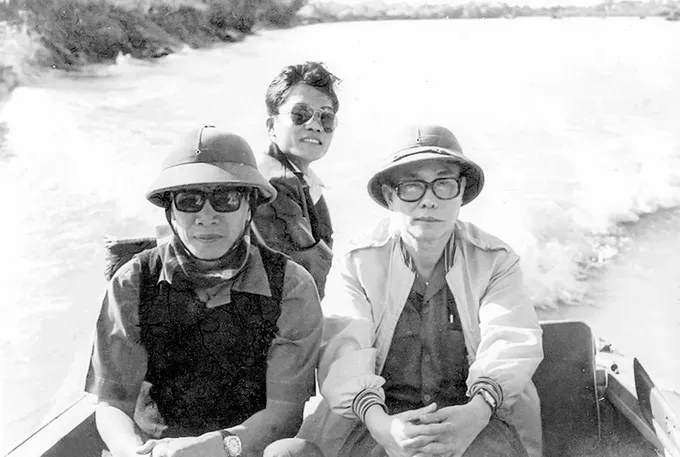
During the resistance war, when politician, researcher, journalist, and writer Tran Bach Dang joined the leadership of the Saigon-Gia Dinh Regional Party Committee, cadres operating in this "strategic urban zone" quickly recognized a leader deeply attuned to the Southern revolution. He was defined by an unshakeable optimism, immense resilience, sharp theoretical acumen, and a unique ability to rapidly grasp ground realities and champion decisive, persuasive solutions.
Following national reunification, free from direct state administrative duties, the thinker dedicated his time to research and writing. He worked closely with local leaders, especially provincial Party secretaries in the Southern region, frequently conducting field visits alongside Vo Van Kiet, Secretary of the Ho Chi Minh City Party Committee during the pre-Doi Moi (Renewal) era.
His sharp research and vivid commentaries launched direct critiques against the heavily centralized, bureaucratic, state-subsidized economic apparatus, aiming at conservative and dogmatic mindsets. He advocated for "unleashing" production and threw his weight behind leaders who dared to think and dared to act.
His intellectual stature was defined by an ability to cut through the noise of complex, monumental issues and deconstruct them with absolute clarity. When the socialist bloc in the Soviet Union and Eastern Europe fractured and collapsed, he laid bare the profound emotional, physical, theoretical, political, economic, and cultural shocks to Vietnam. Yet, he stood firm in his conviction that Vietnam possessed its own history, unique characteristics, and distinct path toward socialism.
For him, a nation’s trajectory, while guided by universal principles, must ultimately be shaped by its own intellect, labor, faith, and identity. He argued that a nation must mindfully chart its own course, grounded in historical lessons and aligned with the modern era. He once warned that the "crisis of all crises" occurs when a nation fails to understand who it is, struggles to comprehend the world it inhabits, and loses sight of whether its ambitions align with its actual capabilities and execution.
For the generation of youth and student movement cadres, many of whom were under his direct leadership across various periods, that mentorship accelerated their growth and fueled their passion. These young activists and students always held the deepest affection and reverence for uncles Nguyen Van Linh, Vo Van Kiet, Tran Bach Dang, and Mai Chi Tho.
The vanguard of pre-Doi Moi
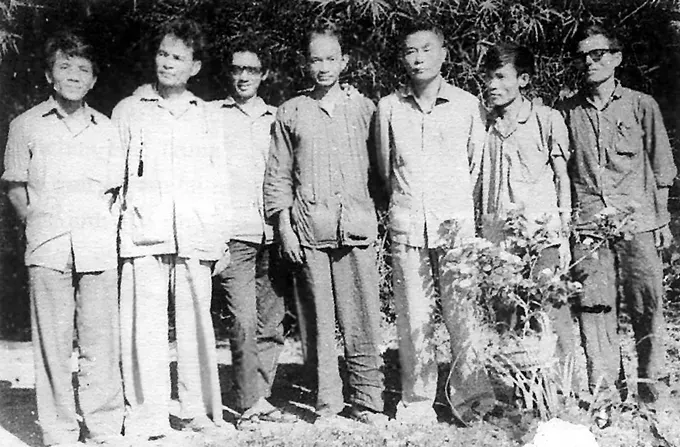
In the 1980s, Ho Chi Minh City, along with the rest of Vietnam, grappled with severe hardships under the crushing weight of a centralized, bureaucratic, state-subsidized economic apparatus. Scholar Tran Bach Dang once described this "bastion of conservatism" as being propped up by a system that preferred talking to acting, dictating to listening, sitting to field-visiting, and consuming to producing. Charging at this fortress was a daunting task, yet he and other cadres forged in the crucible of war refused to back down.
Drawing from his battlefield experience, he emphasized the decisive importance of identifying the right "breakthrough point." In battle, once the key breach is located and breached with concentrated force, the battle is largely won. It is only through this breakthrough point that the vanguard, the main force, and their support can surge into the center and seize control of the field.
Applying this battlefield logic to the Doi Moi reforms, he asserted that once a new vision and policy line are established, the system and the individuals in charge must take action immediately—and this immediate action is the ultimate breakthrough point. The breakthrough, he argued, must target growth-stifling mechanisms and hold those who resist change accountable. His straightforward, upright character and readiness to confront challenges were always on public display, never shied away from. It is a lesson that remains fully relevant today.
In an article published in Nhan Dan Newspaper in late 1994, he analyzed a critical feature of the reforms: opening up and integrating globally must go hand-in-hand with safeguarding national independence, sovereignty, and identity. He warned that opening doors must never be equated with letting down all guards, nor integration with assimilation. Doi Moi, he underscored, is first and foremost for the enduring independence and freedom of Vietnam.
He also viewed the reforms through the lens of unlocking productive forces, a prerequisite to lifting Vietnam out of poverty and driving gradual industrialization and modernization. Yet, he warned of a creeping societal risk: that rising living standards might spark a rush toward consumerism outpacing the economy's actual capacity, allowing consumption to devour the country’s still-fragile capital accumulation.
Today, four decades into Doi Moi and its monumental achievements, Tran Bach Dang’s warnings remain highly relevant. Navigating the reform process and avoiding pitfalls, he argued, demands constant intellectual rigor from communists, justice advocates, and the working class alike. It is a timeless lesson in remaining steadfast through any crisis—anchored in the classic philosophy of "using the immutable to navigate the volatile." For him, that immutable anchor was none other than the revolutionary goal, its ideals, and the path forged by President Ho Chi Minh.