Vietnam’s rice exports grew at an average annual rate of 4.3 percent between 2018 and 2025, according to a report by the Institute of Strategy and Policy for Agriculture and Environment under the Ministry of Agriculture and Environment.
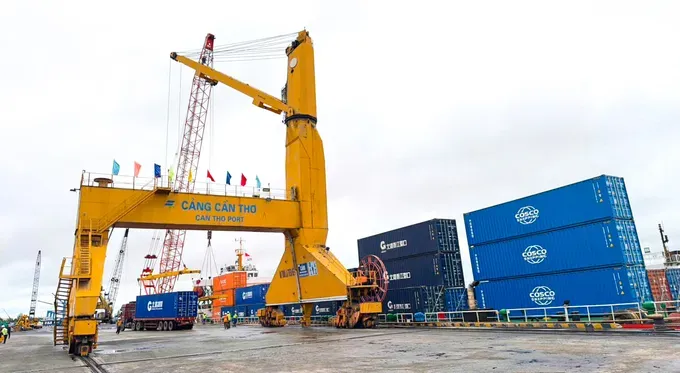
These figures were highlighted on November 24 in Phu Loi Ward, where the Can Tho City People’s Committee and the Ministry of Agriculture and Environment hosted a seminar on the development of the rice industry. The event forms part of a series of activities leading up to the 2nd International Vietnam Rice Industry Festival, scheduled to take place in Can Tho in 2026.
Despite steady export growth, the industry continues to face significant structural and environmental hurdles. An unsynchronized logistics system in the Mekong Delta forces goods to be transshipped through distant ports, while businesses struggle to raise sufficient capital because credit limits often fall short of peak harvest procurement needs. Furthermore, flooding, saltwater intrusion, and the El Niño phenomenon continue to threaten production volumes, grain quality, and overall supply stability. In the first nine months of 2026, the value of rice exports reached US$3.1 billion, a 12.3 percent decline compared to the same period in 2025.
Vietnam’s rice export portfolio is undergoing a positive structural shift toward higher-value grains. The share of regular white rice fell from 58 percent in 2025 to 44.84 percent during the first nine months of 2026, while shipments of fragrant and glutinous varieties climbed. Industry analysts view this trend as a promising foundation for expanding specialty, organic, and low-emission rice production, paving the way for an export strategy centered on quality, branding, and added value.
Vietnamese rice is currently exported primarily to the Philippines, China, Ghana, Côte d’Ivoire, Malaysia, Singapore, and Mozambique. During the first nine months of 2026, the Philippines remained Vietnam’s largest rice export market, accounting for 40.17 percent of exports, followed by China at 17.5 percent.
Vietnam’s average rice export price remains higher than that of other countries for comparable varieties, although it has fluctuated considerably over the years. It stood at US$501 per ton in 2018, rose to US$627 per ton in 2024, then fell to US$509 per ton in 2025 and approximately US$480 per ton in the first nine months of 2026.
Deputy Director Nguyen Anh Phong of the Institute of Policy and Strategy for Agriculture and Environment observes that despite certain achievements, Vietnam’s rice exports still face significant limitations. Small-scale production and the use of a wide variety of rice strains result in inconsistent quality and difficulties in product traceability. Furthermore, packaging and labeling designs remain monotonous, with shortcomings in terms of preservation capabilities, consumer convenience, and environmental friendliness.
Vietnamese rice exports also lack strong branding. Registering and protecting trademarks abroad is often hindered by complex procedures, high costs, and a limited understanding of international legal requirements. Most rice is exported as a raw commodity rather than as a deeply processed product, which keeps value-added levels low. Market access remains restricted; promotional efforts are fragmented and lack a long-term strategy, while information regarding the specific demands and preferences of individual markets is often incomplete.
Additionally, the logistics system in the Mekong Delta lacks cohesion, requiring goods to be transshipped through ports located far from the production areas. Businesses struggle to secure working capital, as credit limits often fail to meet the demand for purchasing rice during the peak harvest season. Production is also increasingly affected by flooding, saltwater intrusion, and the El Niño phenomenon, all of which pose risks to output, quality, and the stability of the rice supply.
To address these challenges, Deputy Director Nguyen Anh Phong proposes strengthening partnerships between enterprises and cooperatives to develop dedicated production zones. This includes standardizing rice varieties, production processes, and traceability data for each shipment. He also advocates for innovating packaging and labeling to better suit the requirements of specific markets, with a focus on enhancing convenience for consumers.
Furthermore, he emphasized the need to promote deep processing, developing products such as instant rice, rice vermicelli, pho, rice cakes, and food ingredients to increase export value. He also advocated for the development of a circular economy by utilizing by-products like rice straw, rice husks, and rice bran, while intensifying trade promotion in target markets through research into the specific consumer preferences of each country.
Additional proposed solutions focus on modernizing the rice industry's logistics network through targeted investments in drying facilities and storage warehouses, alongside stronger waterway transport connections to export ports.
Experts also recommended improving credit access for exporting enterprises and restructuring production methods to better adapt to climate change.