The Vietnam International Financial Center in Ho Chi Minh City (VIFC-HCMC) is exploring new financial connectivity mechanisms to support small and medium-sized enterprises (SMEs). In addition to facilitating access to international capital, VIFC-HCMC is studying a pilot framework that would allow e-commerce platforms to engage in lending activities.
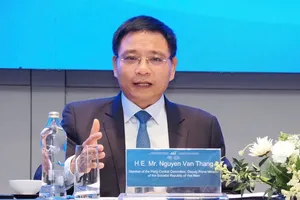
According to Associate Professor Nguyen Huu Huan, Vice Chairman of VIFC-HCMC, the center is developing a controlled pilot mechanism or a sandbox that would enable e-commerce platforms to provide loans to the businesses and individual merchants operating on their platforms.
A major obstacle for SMEs seeking bank financing is the requirement for collateral. Banks often struggle to assess a business's repayment capacity when relying solely on cash flow data. In contrast, e-commerce platforms possess a distinct advantage, as they hold comprehensive data on a seller’s revenue, transaction history, and overall business performance.
Associate Professor Nguyen Huu Huan explained that this serves as a foundation for developing an unsecured lending model, reducing reliance on collateral.
Noting that this model is already quite common globally with a non-performing loan (NPL) ratio of less than 1 percent, VIFC-HCMC is currently consulting on legal matters and working to persuade e-commerce platforms to participate.
Meanwhile, Head Ly Hoang Vu of the Financial Services Section at the British Consulate General in Ho Chi Minh City observes that a major challenge currently facing SMEs is the gap between their capital requirements and their ability to meet the criteria for traditional bank loans.
Consequently, data held by e-commerce platforms such as revenue, cash flow, transaction history, fulfillment of commitments, and business reputation can serve as a vital basis for assessing a business's creditworthiness and repayment capacity.
Effective implementation, however, requires designing the regulatory sandbox with strict parameters governing pilot scope, risk limits, data security, oversight mechanisms, and the responsibilities of all participating parties.
According to the Head of the Financial Services Section, international experience demonstrates that the success of digital financial models relies on operating within a transparent, controlled testing framework that ensures market safety from the outset.
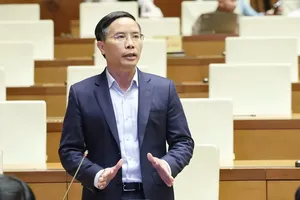
Responding to inquiries during the second session of the 16th National Assembly on November 12, Minister of Finance Ngo Van Tuan stated that e-commerce in Vietnam has grown at an average annual rate of approximately 20 percent since 2022. By the end of 2025, e-commerce revenue is projected to reach roughly US$37 billion, making Vietnam the country with the second-fastest e-commerce growth rate in Southeast Asia.
This presents a significant opportunity to pilot the involvement of e-commerce platforms in providing loans to businesses and household-based enterprises operating on their platforms.
VIFC-HCMC targets expands access to global capital
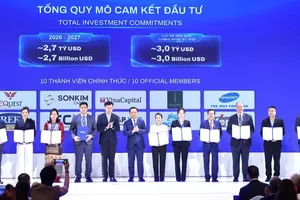
VIFC-HCMC has licensed 10 members to date, all operating as holding companies—entities established to hold and manage capital contributions and shares in other businesses, oversee investment portfolios, and coordinate capital allocation within a corporate group. Together, these firms are projected to mobilize and invest roughly $2.7 billion through 2027.
According to Assoc. Prof. Nguyen Huu Huan, VIFC-HCMC is currently awaiting regulatory approval to allow banks to facilitate transactions involving these capital flows, while also working to refine the legal framework that will enable domestic enterprises to access international capital.
CEO Trinh Thanh Can of Kafi Securities Company notes that the establishment and launch of the Vietnam International Financial Center (VIFC-HCMC) create an opportunity to bridge the gap between domestic enterprises and international investment capital.
“As a securities firm, Kafi Securities can provide advisory services on financial structuring and act as a bridge, connecting domestic enterprises with international investors,” says Kafi Securities Company CEO Trinh Thanh Can.
To effectively access international capital, VIFC-HCMC advises small and medium-sized enterprises (SMEs) to focus on improving transparency in governance and finance by standardizing their accounting systems, financial reporting, risk management, and information disclosure. Furthermore, businesses should develop long-term growth strategies and clear plans for capital utilization.
Accelerating digital transformation, driving technological innovation, and upskilling the workforce will further support this shift. With global capital increasingly tied to environmental, social, and governance (ESG) criteria, supply chain transparency, and sustainability mandates, stronger corporate governance and compliance with international standards will help small and medium-sized enterprises (SMEs) unlock financing and integrate more deeply into global value chains.