Many businesses and cooperatives have developed their own proprietary traceability software, forcing consumers to use a multitude of different applications to verify the origins of agricultural products.

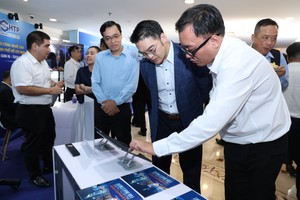
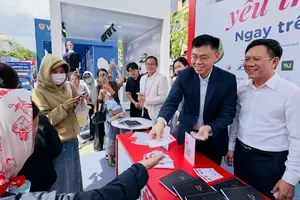
During a seminar titled "Transparency in Agricultural Product Origins: A Passport for Vietnamese Produce to Command Higher Prices and Reach Major Markets," held in Hanoi on November 20, Deputy Director Nguyen Quang Tin of the Department of Science, Technology and Environment under the Ministry of Agriculture and Environment noted that while an agricultural traceability system has been in operation since July 1, 2026, progress in data updates and utilization remains limited.
According to Deputy Director Nguyen Quang Tin, the system is designed as a shared platform that connects local authorities, businesses, cooperatives, and producers. However, traceability is only effective when data is updated continuously and synchronized across all stages of the supply chain. Consequently, the Ministry of Agriculture and Environment is collaborating with specialized agencies, businesses, and producers to develop product chains that offer full traceability.
Mr. Nguyen Quang Tin acknowledged that farmers might initially face challenges due to a lack of familiarity with data entry. Nevertheless, this is an essential requirement that necessitates the participation of all stakeholders. The ministry intends to work alongside local authorities, businesses, and the public to address technical, procedural, and policy-related obstacles.
Meanwhile, Head Bui Xuan Phong of the Cultivation and Plant Protection Division under the Ministry of Agriculture and Environment emphasized the need for a proper understanding of what traceability entails. He pointed out that cultivation area codes and packing facility codes are merely tools to help meet the requirements of importing markets; they do not, in themselves, guarantee that agricultural products will fetch higher prices. The core elements remain product quality, food safety, and transparency throughout the production process.
The most critical data must originate from the actual production process, including cultivation logs, records of input materials used, and information regarding the specific growing area.
To streamline agricultural oversight, Head Bui Xuan Phong is advocating for a unified traceability framework at the national or sector-wide level. The proposal aims to address a growing fragmentation in the market, where a surge of standalone software from individual enterprises and cooperatives currently leaves consumers juggling multiple apps just to verify one item.
In reality, Vietnam has already seen the development and piloting of various traceability platforms, which are gradually being integrated into state management frameworks.
Ms. Pham Thi Ly, Director of the Center for Enterprise Integration and Development (IDE) and head of the Vietnam Union of Organic Agriculture and Medicinal Herbs Cooperatives, highlights "CheckVN," a platform researched and developed by Vietnamese experts to authenticate information, combat counterfeiting, and enable product traceability.
The CheckVN platform traces its roots to 2017, when it was piloted to track fruit distribution across Hanoi, followed by a broader trial under the Ministry of Agriculture and Environment in 2019. Building on those efforts, the Center spearheaded a ministerial-level research project between 2022 and 2024 to develop a comprehensive supply-source database and traceability framework for the agriculture, forestry, and fisheries sectors. Those findings have now been formally reviewed, approved, and handed over to the ministry.