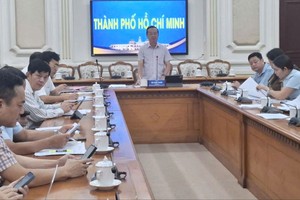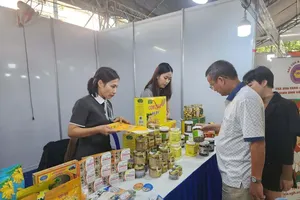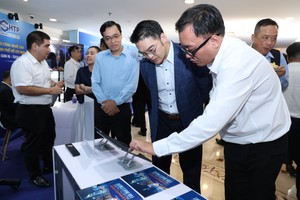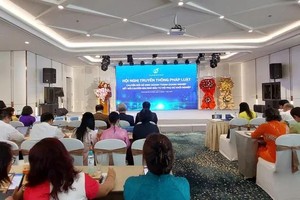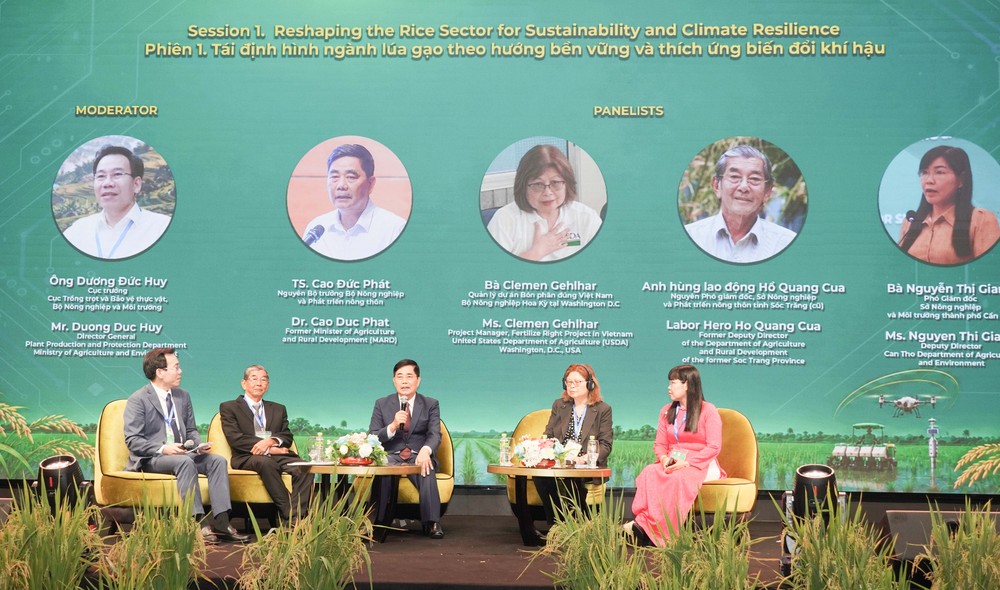
The issue was highlighted at a November 23 seminar titled "The Future of Green Rice: Scientific, Technological, Digitalization, and Low-Emission Solutions," held as part of the second Vietnam International Rice Industry Festival 2026 in Can Tho City.
The event was organized by the Ministry of Agriculture and Environment in collaboration with the Can Tho People's Committee, bringing together Deputy Minister Vo Van Hung, local officials, researchers, scientists, and rice industry representatives.
Mr. Dong Van Thanh, Permanent Deputy Secretary of the Can Tho Party Committee and Chairman of the municipal People's Council, said the city had implemented a sustainable development project covering 1 million hectares of high-quality rice in the Mekong Delta, with 76,000 hectares and 171 farmer cooperatives participating.
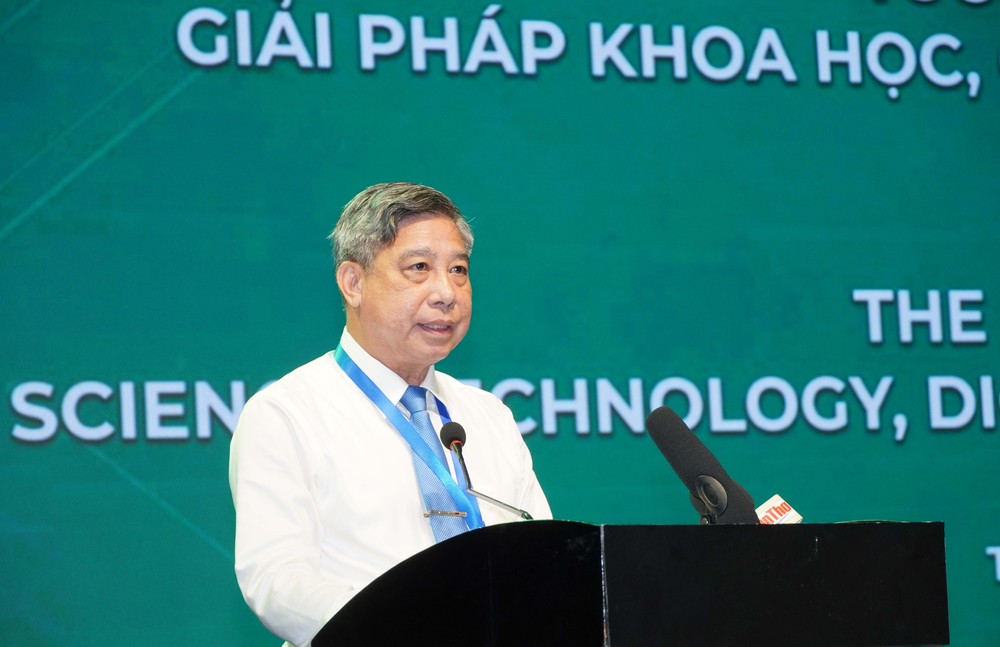
The production model has delivered tangible results, cutting seed use by 50 percent, increasing yields by 0.89 metric tons per hectare and raising profits by VND5.5 million (US$209) per hectare.
Mr. Dong Van Thanh said developing a green, high-quality and low-emission rice industry was central to the city's agricultural transformation. Science, technology, and digital tools must become practical instruments to help farmers optimize production and meet increasingly stringent market requirements, he added.
Deputy Minister Vo Van Hung said climate change, resource depletion and market volatility required a strategic transformation of Vietnam's rice sector.
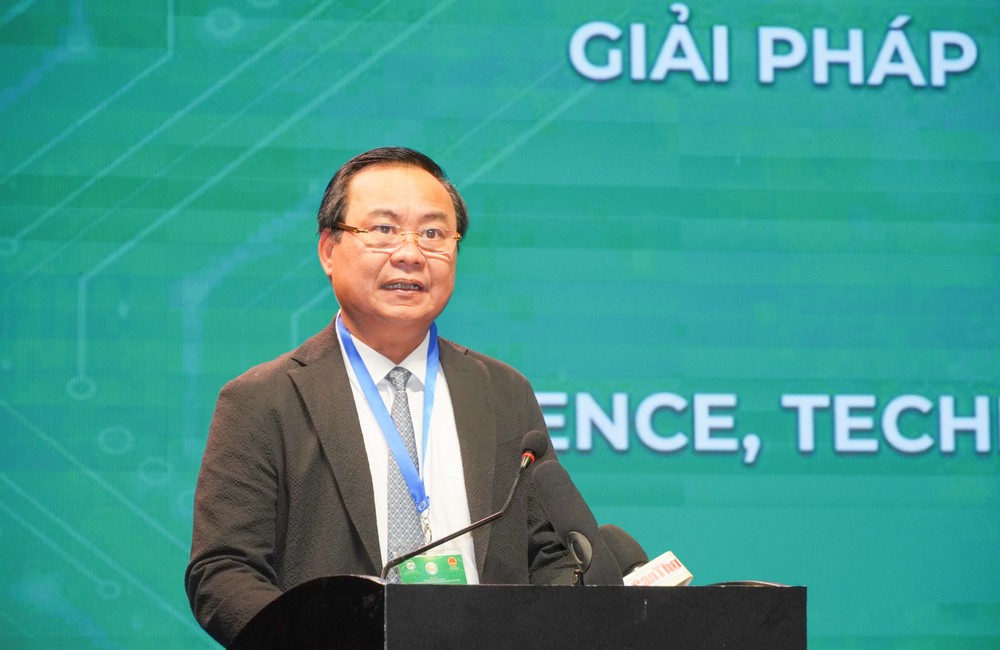
The industry could no longer rely primarily on increasing output but must shift toward higher quality, greater added value, lower emissions and long-term sustainability, he said.
The 1-million-hectare high-quality, low-emission rice project in the Mekong Delta represents a major step toward that goal.
Deputy Minister Vo Van Hung stressed the need to address bottlenecks in policy, credit, infrastructure, and investment while making scientific and technological advances, innovation, and digital transformation the foundations of a modern rice industry.
Priority measures include developing high-quality rice varieties, adopting smart farming practices, improving water management, expanding mechanization, utilizing agricultural byproducts, and reducing emissions.
Vietnam must also expand export markets and strengthen its rice brand in global value chains by moving beyond raw commodity exports toward higher-value products that meet quality standards, ensure traceability, and demonstrate environmental responsibility.