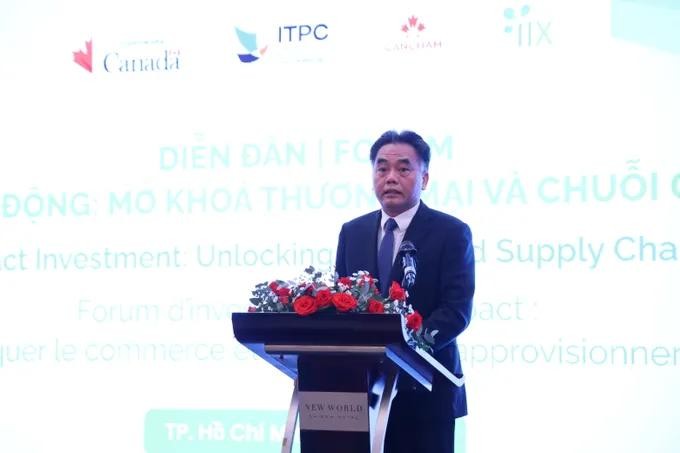
On November 18, the Ho Chi Minh City Investment and Trade Promotion Center (ITPC), in collaboration with Impact Investment Exchange (IIX), the Canadian Chamber of Commerce in Vietnam (CanCham), and other relevant organizations, held an Impact Investing Forum themed “Unlocking Trade and Supply Chains.”

Speaking at the forum, Standing Vice Chairman Nguyen Loc Ha of the Ho Chi Minh City People’s Committee emphasized that the city prioritizes mobilizing resources to shift its growth model towards a green, digital and circular economy. Investment should do more than provide additional capital: it must generate measurable economic, social and environmental value while strengthening business competitiveness.
Standing Vice Chairman Nguyen Loc Ha of the Ho Chi Minh City People’s Committee urged financial institutions, investment funds, and international partners to clarify the requirements for accessing capital; help small and medium-sized enterprises, women-led businesses, and climate-resilient enterprises meet international standards; and turn the forum’s discussions into concrete collaborative outcomes.
Canadian Ambassador to Vietnam Jim Nickel stated that Canada aims to expand investment cooperation in sectors such as agriculture, food, energy, clean technology, and finance, with the goal of enhancing corporate capabilities and linking production to international markets.
According to Ambassador Nickel, to integrate deeply into global value chains, businesses must meet requirements regarding capital, technology, environmental, social, and governance (ESG) standards, supply chain traceability, and production capacity. Consequently, Canada seeks to promote innovative financial solutions, mobilize private capital, and provide a combination of technical assistance and trade connectivity.

Nevertheless, a lack of capital remains a significant barrier for businesses looking to join international supply chains. Robert Kraybill, Chief Investment Officer at Impact Investment Exchange (IIX), noted that the financing gap for small and medium-sized enterprises (SMEs) in Vietnam is estimated at US$24 billion annually, with approximately 62 percent of their financing needs remaining unmet.
He emphasized that addressing this bottleneck requires more than just an infusion of capital; it also necessitates strengthening the capacity of businesses to absorb investment covering areas such as financial management, quality control, international certification, and information transparency.
Tailored financial instruments are also needed to support a range of priorities, from meeting order-related standards to funding long-term investments in machinery. At the same time, strengthening ties among buyers, suppliers, banks, and investment funds will help stakeholders share costs, risks, and growth opportunities.
Building on this framework, the Investment and Trade Promotion Center (ITPC) will collaborate with IIX, the Canadian Chamber of Commerce in Vietnam (CanCham), and other partners to consolidate business requirements, identify viable investment opportunities, and designate focal points for implementation. These efforts aim to translate industry connections into actual capital, commercial contracts, and concrete orders.
Director Pham Quang Nhat of the Ho Chi Minh City Investment and Trade Promotion Center (ITPC) said bilateral trade between Vietnam and Canada reached approximately US$8.6 billion in 2025, up 18.8 percent. As of June 30, 2026, Canadian investors had around 130 projects in Ho Chi Minh City, with registered capital exceeding US$133 million.
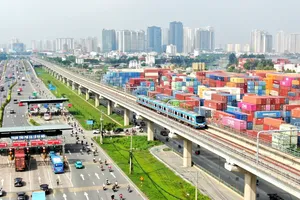
Following its merger, Ho Chi Minh City has a market of more than 14 million people, linking its financial and commercial hubs with industrial parks, the Cai Mep–Thi Vai deep-water port complex and a logistics network. Combined with the advantages of the CPTPP, these conditions create opportunities for businesses in both countries to expand investment in food processing, clean technology, supporting industries, and export services.