Resolution 68-NQ/TW dated May 4, 2025, of the Politburo on the development of the private economy affirmed that "the private economy is the most important driving force of the national economy" and clearly stated the goal of having 2 million businesses operating in the economy by 2030.

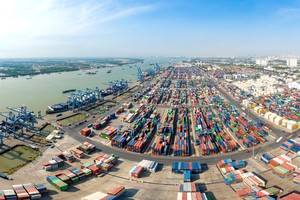
Vietnam's private sector has come a long way, from cramped, poorly funded handicraft workshops to multi-billion dollar industrial and export corporations, contributing to placing Vietnam among the world's top 15 trading nations.
From small workshops to multi-billion dollar brands
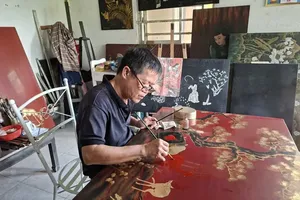
Nearly four decades of private enterprise growth in Vietnam trace back to the difficult early years after Doi Moi in 1986, when institutions were fragile, capital was scarce, and markets were narrow. In that climate, pioneering entrepreneurs pressed ahead through self-learning and resilience, laying the groundwork for today’s private sector.
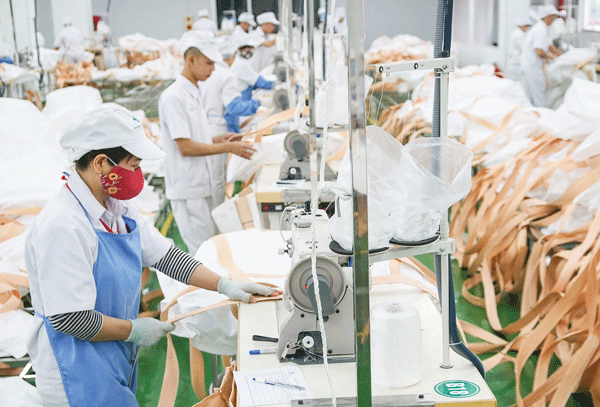
Ho Chi Minh City became the epicenter of this movement, where private enterprises flourished from the 1990s onward, steadily expanding and passing their legacy to new generations.
Many businesses that originated from small workshops, woodworking shops, and furniture manufacturing facilities have now become leading brands such as AA Corporation, An Cuong, Dai Dung, Thanh Thanh Cong, Phuc Sinh, and Satra. These businesses demonstrate that domestic enterprises can fully master design, technology, and supply chains. They are clear evidence of the vitality of Vietnamese entrepreneurs in the era of deep integration, where the private sector is increasingly becoming a crucial driving force for the nation.
To Hoai Nam, Vice President and General Secretary of the Vietnam Association of Small and Medium Enterprises (VINASME): Unlocking capital flows is essential for development
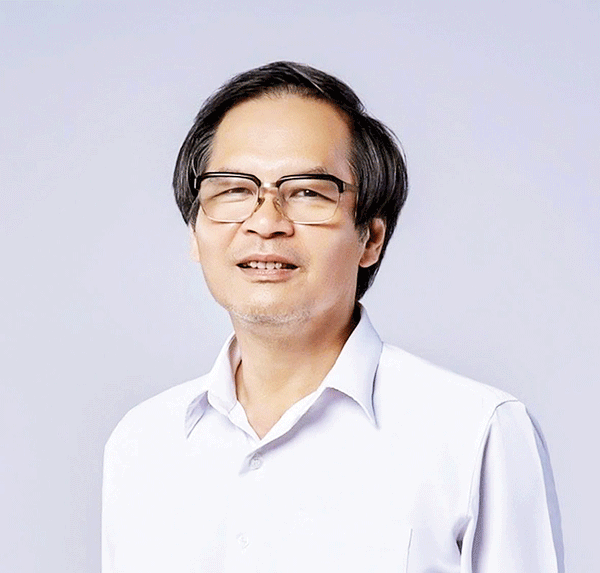
From a policy perspective, ensuring the private sector truly plays its role as a key driver requires three major groups of solutions. The first is to perfect the capital market and green finance mechanisms, thereby opening channels to mobilize and utilize private capital for clean production, green technology, and innovation. When properly encouraged, these capital flows can spread effectively and contribute to fulfilling national commitments on sustainable development.
The second is to build a substantive innovation ecosystem based on tripartite cooperation among businesses, scientists, and the State. This approach is correct, but it demands specific models, transparent coordination mechanisms, and the State’s leadership in creating infrastructure and institutions for innovation.
The third is to establish clear criteria and evaluation mechanisms (KPIs) for private enterprises, state-owned enterprises, and regulatory agencies. By quantifying objectives, responsibilities, and results, transparency can be ensured and all stakeholders can be encouraged to work together toward common goals.
Nguyen Quoc Khanh, Chairman of AA Corporation, shared: “Two decades ago, Vietnamese businesses were still struggling with small orders. Today, the Vietnamese wood industry ranks second in the world with an export value of over US$15 billion. More importantly,” he said, “Vietnamese businesses have built Vietnamese furniture brands with their own unique identity and international competitiveness.”
At the same time, businessman Trinh Tien Dung, Chairman of the Board of Directors of Dai Dung Group, successfully built a renowned enterprise from a simple steel processing workshop to a leading EPC contractor, participating in hundreds of projects both domestically and internationally.
“We lacked capital, but we built on a genuine work ethic. By investing in technology, standardizing processes, and safeguarding credibility, we secured our place in the international project chain,” he said.
Within this broader landscape, Saigon Cosmetics Joint Stock Company (SCC) stands out as a homegrown brand that rose from Ho Chi Minh City’s first generation of private enterprises. What began as a small perfume factory has, over more than 50 years, evolved into a leading force in Vietnam’s cosmetics industry.
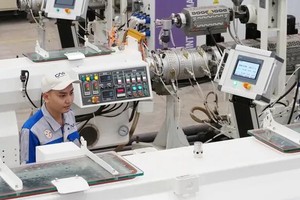
Founded in Ho Chi Minh City in 1977, Binh Minh Plastic Joint Stock Company stands as a hallmark of Vietnamese enterprise, exemplifying the rise of domestic firms in the technical sector. From a small plastic pipe manufacturing workshop, Binh Minh now leads the construction plastic pipe market, meeting many international standards for drinking water safety and consistently being honored as a high-quality Vietnamese product. These stories are part of a larger picture of resilient private enterprises and generations of talented entrepreneurs who have contributed to building a dynamic economic sector, contributing approximately 48 percent of GDP and creating jobs for 83-85 percent of the country's workforce.
Public–private partnership model advanced for nation-building
The past four decades have also been a period of significant upheaval such as the 1997 financial crisis, the 2008 global crisis, the 2020 Covid-19 pandemic, and recent changes in global supply chains. It is through these challenges that private enterprises have matured, shifting towards professional management, digitalization, compliance with ESG (a framework for measuring sustainability and corporate responsibility towards the environment and society), and many international standards.
Le Duc Nghia, Chairman of the Board of Directors of An Cuong Wood, stated: “Digital transformation and green transformation have helped us increase productivity by more than 20 percent and meet the demands of the high-end market. This is the new competitive standard for the Vietnamese wood industry.”
In the dairy sector, Mai Kieu Lien, General Director of Vietnam Dairy Products Joint Stock Company (Vinamilk), emphasized the company’s commitment to building a closed value chain from farm to table — a strategy that has enabled Vietnamese brands to reach more than 50 international markets. At the same time, emerging firms such as Sao Khue Food, Arobid, and Cofidec are carving out their competitive edge by embracing a philosophy of honesty, cleanliness, and transparency to meet the demands of increasingly discerning consumers.
The development of these businesses shows that Vietnam's private sector is not only expanding in scale but also maturing significantly in quality. During this development process, the public-private partnership model has been promoted by many young entrepreneurs.
This is not a conventional public–private partnership but a three-way collaborative framework in which the State builds institutions and infrastructure, businesses drive innovation and execution, and society, particularly the younger generation who engages, monitors, and enriches the knowledge base.
According to Nguyen Xuan Hoang, Chairman of the Board of Directors of Hemula Group, the F2 generation is continuing and writing the story of integration. The public-private partnership model is an effective model of the new era that the State creates, businesses are proactive, and society accompanies.
The growth of the private sector is an initial result of the institutional reforms, green development, and digital economy that the Government is pursuing, along with the support of many localities, international partners, and the young business community. All of this creates an open, flexible, and increasingly competitive economy. The private sector in Vietnam has become a new bright spot in the region and is becoming an important driving force in elevating the nation's position in the global integration process.
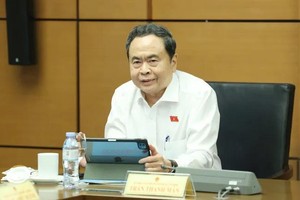
Deputy Finance Minister Nguyen Duc Tam: The goal of reaching 2 million businesses is well within reach
The Politburo’s Resolution No. 68-NQ/TW dated May 4, 2025 on the development of the private economy has created a new impetus, stimulating the entrepreneurial spirit and business confidence. Since the Resolution was issued, an average of about 18,500 new businesses have been established each month; the total capital added by the private sector to the economy is estimated at nearly VND5.2 quadrillion as of the end of Q3 2025.
With 5.2 million household businesses in operation, the sector holds immense untapped potential; if even a fraction makes the leap to formal enterprises, the Resolution 68 target of 2 million businesses by 2030 is within reach. The challenge lies in breaking the mindset of reluctance to transform.
Regarding solutions, the National Assembly has approved amendments to the Law on Tax Administration and the Law on Personal Income Tax, aiming to build a new management model: simple, transparent, and easy-to-implement declarations; simplifying accounting records, invoices, and documents to minimize pressure when household businesses convert to enterprises. The Ministry is also researching the development of a Law on Individual Business to narrow the gap in governance and financial-accounting systems between household businesses and enterprises.
Another important task for the private economy to break through is increasing access to resources, especially land, technology, and high-quality human resources. The Ministry of Finance is focusing on proposing tax incentives and fee reductions in the initial stages for technology startups; and expedited tax deductions and refunds for innovative projects.
Daniel Theobald, Co-founder of MassRobotics and founder of Vecna Robotics: A new Silicon Valley model is taking shape in Ho Chi Minh City
Ho Chi Minh City boasts an ecosystem of dynamic young entrepreneurs and engineers, reminiscent of Silicon Valley in its early days. What matters most for Vietnam and for the city is the willingness to experiment, to accept mistakes, and to try again, a crucial factor in the ambition to become a new technology hub.
He noted that many Vietnamese private enterprises in robotics, automation equipment, and artificial intelligence demonstrate a modern mindset, eager to collaborate globally while continually refining their products.
Many Vietnamese businesses have begun to adopt international standards, possessing a team of young engineers capable of solving problems quickly, creatively, and understanding the regional market. This is something not every country in Asia has. Vietnam has the potential to become a pillar in the value chains of industrial robotics, logistics, smart agriculture, and digital healthcare if it continues to nurture a generation of young entrepreneurs and promote international cooperation.
Stephan Mergenthaler, Managing Director of the World Economic Forum (WEF): Vietnam is no longer a cheap processing factory
What distinguishes Vietnamese private enterprises is not merely their hard work or boldness, but their remarkable ability to adapt quickly to new global standards. From automation and digitalization to clean energy, Vietnamese businesses, especially in Ho Chi Minh City, are demonstrating their ability to meet the stringent requirements of the international market.
Businesses that have grown from domestic resources, such as furniture, machinery, food, and cosmetics, are proving that Vietnam is no longer a "cheap processing factory," but is moving towards higher value-added production. Many Vietnamese businesses are on the right track and could become pillars of a new production network in Asia. The proactive spirit of the young generation of entrepreneurs is the key factor driving the rapid integration of the Vietnamese economy in the coming years.