Of the total, Vietnamese airlines transported 9.6 million international passengers, a slight increase of 0.2 percent year-on-year, accounting for 36.6 percent of the total international passenger market.
International passenger traffic through Vietnam’s airports continued its strong recovery in the first half of 2026, with the number of international travellers increasing 15.4 percent year-on-year, according to the Civil Aviation Authority of Vietnam (CAAV).
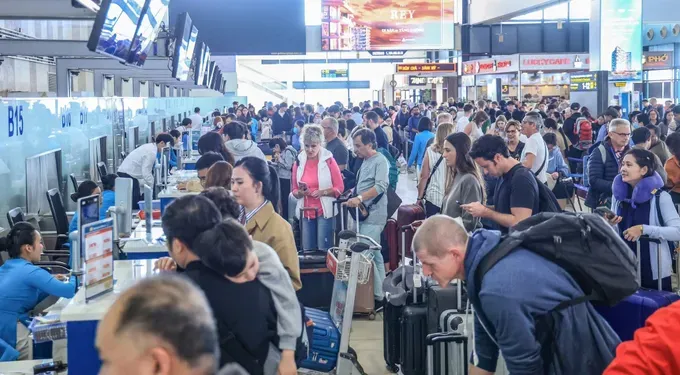
CAAV statistics show that international passenger throughput reached 26.2 million as of June 15, 2026. Of the total, Vietnamese airlines transported 9.6 million international passengers, a slight increase of 0.2 percent year-on-year, accounting for 36.6 percent of the total international passenger market.
International air cargo also recorded robust growth, with throughput reaching 706,700 tons, up 21.3 percent year-on-year. Vietnamese carriers handled 119,000 tons, an increase of 8.6 percent, representing 16.8 percent of the international cargo market. Meanwhile, domestic cargo transport declined 7 percent to 216,400 tons.
Vietnamese airlines are currently operating 109 international routes linking Vietnam with 22 countries and territories. At the same time, airlines from 41 countries and territories are operating 235 scheduled routes to Vietnam, reflecting the continued expansion of the country's global air connectivity.
Despite the positive growth, the CAAV noted that the aviation sector is facing increasing operational challenges. Rising traffic volumes during peak travel periods, extreme weather conditions, risks posed by unmanned aerial vehicles, birds and wildlife around airports, together with growing requirements for highly qualified personnel and stronger safety management capacity, are placing greater pressure on the industry.
CAAV Director Uong Viet Dung stressed that ensuring aviation safety must remain the industry's highest priority.
The CAAV has instructed all aviation authorities and operators to strictly comply with Vietnam's aviation safety regulations as well as the standards and recommended practices of the International Civil Aviation Organization (ICAO). It has also called for stronger risk identification, assessment and control, more effective implementation of safety management systems (SMS), and the development of a safety culture at every level, with heads of agencies and enterprises bearing direct responsibility for safety performance.
Regulatory agencies have also been tasked with modernising oversight by adopting proactive, data-driven and risk-based supervision while stepping up inspections to promptly detect and address safety deficiencies and strictly handle violations.











)