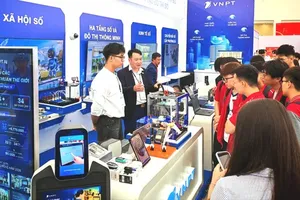
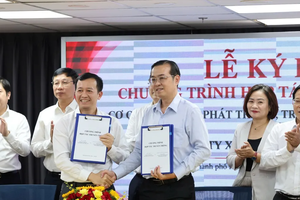
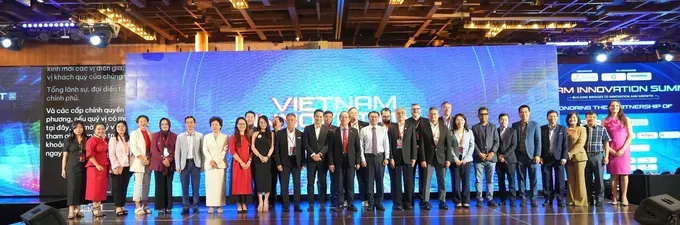
"International delegates network and discuss cooperation opportunities at the Vietnam Innovation Summit. (Photo: SGGP)")
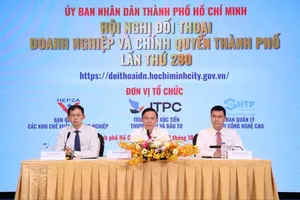
On October 14, primary sessions of the Vietnam Innovation Summit (VIS 2026) convened in Ho Chi Minh City.
Taking place from October 13 to 15, the event is expected to attract over 4,000 domestic and international delegates from 10 countries, including representatives from regulatory agencies, international organizations, corporations, investment funds, universities, and the innovation community.
Under the theme "Converging Resources – New Innovation Currents: Vietnam at the Center of Global Reshaping," VIS 2026 aims to connect resources across the government, business sector, investors, and research institutions.
According to Mr. Huynh Cong Thang, a representative of the organizing committee, the goal is to promote technology transfer and commercialization, integrate research findings into production and business operations, and boost the competitive capacity of Vietnamese enterprises.
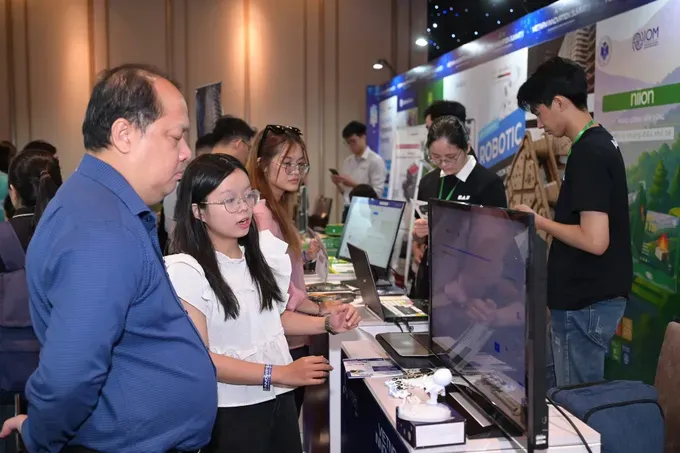
At the "Capital Without Borders" forum, international experts focused on discussing the potential to link global capital flows with Ho Chi Minh City's Free Trade Zone (FTZ) and International Financial Center (IFC).
Mr. Nirai Vedwa, a board member of Mongolia's XacBank, noted that Vietnam holds strong advantages in foreign direct investment (FDI) inflows, industrial manufacturing, and supply chains. However, he emphasized that Ho Chi Minh City needs to transition from merely being an investment destination to becoming an international center for organizing, connecting, and allocating global capital.
According to him, an international financial center must be closely linked to free trade zones, logistics, and real economy projects. He added that the measure of success should not merely be the number of registered financial institutions but the volume of international capital actually mobilized and channeled into the economy.
According to Mr. Nguyen Duy Hieu, Head of Legal at EY Law Vietnam, technology and investment capital alone are insufficient to create a sustainable competitive advantage. Capital flows follow trust, trust is built on institutions, and institutions are established and maintained on a legal foundation. Accordingly, the International Financial Center requires a transparent legal framework, regulatory sandboxes, investor protection mechanisms, and efficient dispute resolution. These are the essential conditions for attracting long-term capital flows, rather than relying solely on incentive policies.
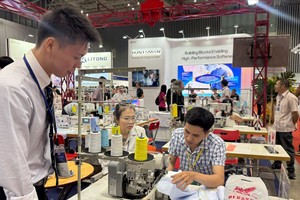
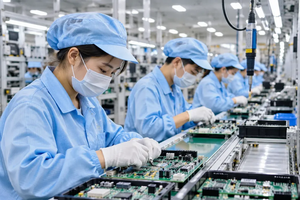
In the technology sector, VIS 2026 focuses on artificial intelligence, semiconductors, robotics, and smart manufacturing. Panel discussions on government-academia-industry collaboration, the ASEAN CrossConnect program, and over 150 investment and trade matching sessions aim to facilitate technology transfer, support startups, and expand market access.
At the forum, numerous delegates proposed competitive solutions that account for the requirements of complying with the EU’s Carbon Border Adjustment Mechanism (CBAM), emissions accounting, supply chain traceability, and ESG (Environmental, Social, and Governance) governance.
According to Mr. Tran Trong Tuyen, Deputy Director of the Ho Chi Minh City Department of Science and Technology, businesses must transition from competing on low costs to elevating quality, technology, and compliance with international standards. The "3A" approach—comprising Adapt, Align, and Author—was introduced to help enterprises not only meet existing requirements but also progressively participate in shaping new standards within global value chains.