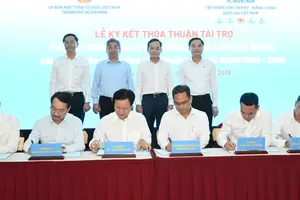
The draft resolution on interest rate support policies for projects is expected to be submitted to the HCMC People's Council for consideration at its October 2026 session.
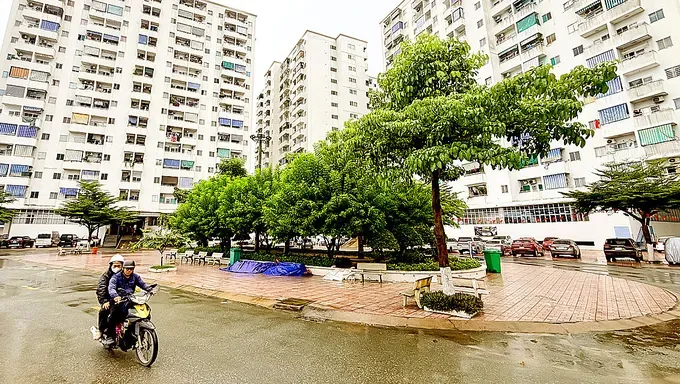
The draft resolution is developed to institutionalize the Urban Development Law while continuing and refining the interest rate support policy under Resolution No. 09/2023/NQ-HDND, expanding the policy scale and scope in line with the city's new development space.
Raising limits, extending support duration
Under the draft, for social housing, worker housing, and dormitory projects, the loan capital eligible for interest rate support from the budget is expected to increase from a maximum of VND200 billion (US$8 million) to VND300 billion per project. The support duration will also increase from a maximum of seven years to 10 years, calculated from the first disbursement by HFIC.
The municipal budget will not provide direct funding to project developers, but will support a portion of interest expenses on loans provided by HFIC. To qualify for the policy, projects must undergo an evaluation by HFIC regarding effectiveness and debt repayment capability, while receiving loan approval or syndicated loan arrangements led by HFIC.
Raising the loan limit by VND100 billion per project and extending the support duration by three years will supply additional capital for projects with large investment needs and long payback periods. A notable feature of the draft is the syndicated lending mechanism between HFIC and credit institutions.
Under the Urban Development Law, the HCMC People's Council is permitted to allocate public investment capital from the city budget to support interest rates for investment projects in priority socio-economic development sectors in the city, where a local development investment fund entity provides loans or acts as the lead arranger for syndicated loans with credit institutions. Targets, conditions, procedures, rates, and durations of support are prescribed by the municipal People's Council.
Through this mechanism, HFIC can grant direct loans or act as the lead arranger for syndicated loans with credit institutions to finance projects. The city budget will be utilized to support interest rates on eligible loans, thereby reducing capital costs for enterprises and creating favorable conditions to mobilize further credit sources.
Empowering social housing developers
In practice, capital designated for social housing has been deployed through various programs, yet the disbursement pace remains limited. According to the State Bank of Vietnam Region 2 Branch, during the first six months of 2026, the loan package under Government Resolution No. 33/NQ-CP for social housing, worker housing, and old apartment building renovation and reconstruction projects totaled VND145 trillion.
In Ho Chi Minh City, only six projects were committed for loans under this program with a total limit exceeding VND2.2 trillion. Among these, five projects received disbursements with a cumulative volume of nearly VND616 billion. For individual borrowers, 173 customers received disbursements totaling nearly VND112 billion, with outstanding loans nearing VND110 billion.
Meanwhile, HCMC's social housing development targets remain immense. Huynh Thanh Khiet, Deputy Director of the HCMC Department of Construction, stated that the Government assigned the city a target to complete 199,400 apartments by 2030. Within this, the 2026–2030 period target stands at 181,257 apartments which is 10 times higher than the 2021–2025 period. In 2026 alone, HCMC aims to complete 28,500 social housing apartments.
Director Le Huu Nghia of Le Thanh Construction Commercial Company remarked that social housing currently faces the most difficult borrowing conditions among real estate segments. Amid high input deposit rates, maintaining long-term preferential lending rates around 6 percent per year for social housing investments makes it difficult for banks to ensure business efficiency. Meanwhile, developers seeking commercial-rate loans for social housing investments face rejections due to bank concerns over legal risks.
"Raising the loan ceiling to VND300 billion with a 10-year term is a highly positive policy. This will serve as an incentive for enterprises to invest more boldly in social housing construction, contributing to the expansion of the housing supply in the coming time," Director Le Huu Nghia evaluated.