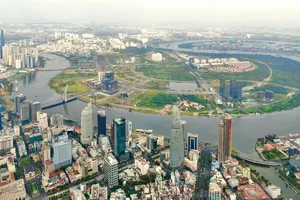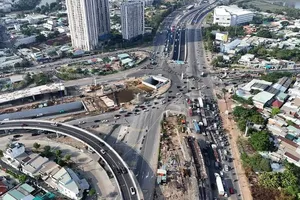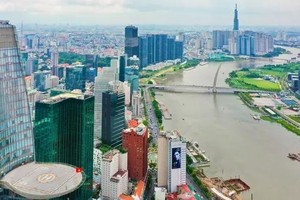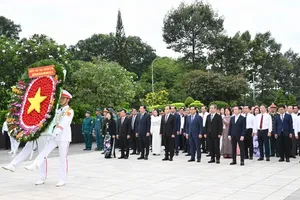
However, the city is also increasingly confronting a paradox: the pace of urban transformation is outstripping the adaptability of the current governance model.
This is precisely why the drafting of a Special Urban Law for Ho Chi Minh City is not merely about granting additional policy mechanisms. More fundamentally, it is about seeking a new “operating system” for mega-city governance in the digital era.
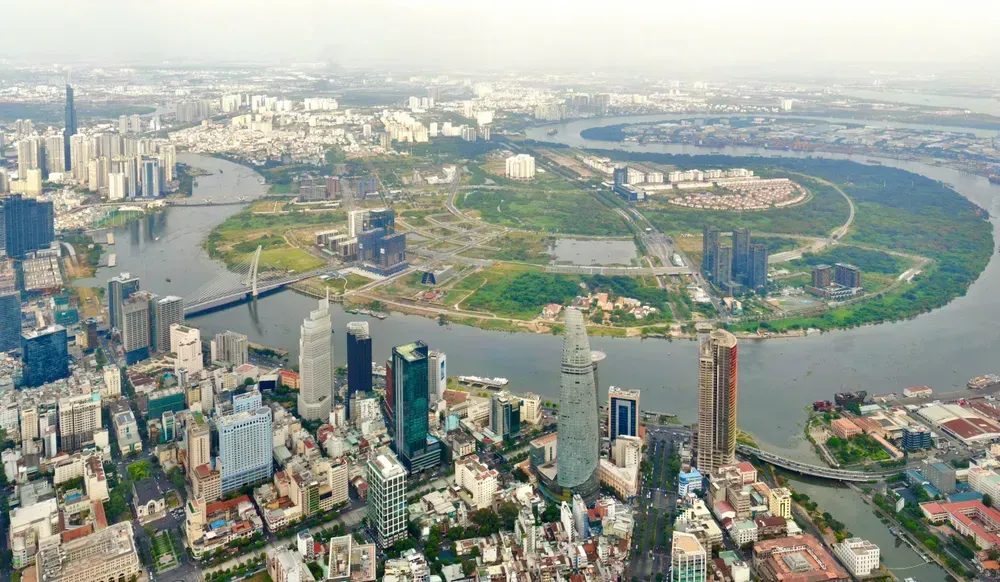
For many years, Ho Chi Minh City has remained the country’s most dynamic locality. The city has continuously expanded its development space, attracted substantial investment flows, and promoted the growth of the digital economy, innovation, logistics, trade, and financial services. Projects such as the metro system, TOD (Transit-Oriented Development), the international financial center, and the eastern innovative urban area all reflect the city’s aspiration to move to a higher stage of development.
Yet, it is through this very process that institutional bottlenecks and governance “lags” have become increasingly apparent. A major infrastructure project may take years merely to complete administrative procedures. An urban master plan must pass through multiple layers of approval. Decisions requiring swift responses to urban realities are often delayed by multi-tiered authorization mechanisms. Fragmented data, fragmented responsibilities, and fragmented authority have caused many development opportunities to be slowed down or even missed altogether.
The challenge facing Ho Chi Minh City today is not merely a shortage of development resources. The city possesses a vibrant market, a strong business community, and immense social creativity. What is often lacking, however, is the capacity to manage the growing complexity of modern development.
A megacity in the 21st century is no longer simply an ordinary administrative unit. It is a space where capital flows move in real time; data has become a strategic resource; transport, energy, logistics, and artificial intelligence (AI) are interconnected within complex ecosystems; and the speed of decision-making itself has become a key competitive advantage. When urban transformation advances at the pace of the digital era while governance models continue to operate under traditional administrative logic, institutions can easily become bottlenecks to development.
One notable aspect of recent discussions surrounding the Special Urban Law is the fundamental shift in policy thinking: the focus is now on designing a governance model that aligns with the nature of a modern megacity. The overarching spirit of the draft law is to provide Ho Chi Minh City with more substantive decentralization and enhance its autonomy in planning, investment, finance, land management, and infrastructure development while strongly shifting from pre-approval mechanisms to post-audit supervision and from the “ask–grant” approach to greater accountability. This represents a highly significant transformation.
In essence, Ho Chi Minh City is in need of a new “operating system”—one that enables real-time data connectivity; allows decisions to be made more swiftly and in closer alignment with practical realities; ensures that authority is accompanied by clearer accountability; and redefines the role of government from merely exercising administrative control to coordinating development.
That is also why many experts have emphasized the need for regulatory sandbox mechanisms, safeguards for officials who dare to think innovatively and take responsibility, as well as governance models based on data and KPI-driven performance management. Innovation inevitably comes with risks. If every margin of error is viewed as a violation, it will be extremely difficult to foster a creative and dynamic governance system.
In this context, modern urban government can no longer function merely as an “administrative authority.” It must evolve into a data coordination center, a platform for mobilizing and connecting resources, and the operational brain of the urban development ecosystem. This represents the most profound shift in governance philosophy.
The significance of the Special Urban Law, therefore, extends far beyond Ho Chi Minh City itself. If well designed and effectively implemented, it could become a major testing ground for the future of urban governance in Vietnam in the 21st century.
Ho Chi Minh City has the potential to become the pioneer of this new governance mindset. From deeper and more substantive decentralization, more effective data governance, and real-time administration to the building of a more flexible public administration system with stronger accountability, these reforms are not solely intended to serve the city’s development. They could also help shape Vietnam’s national governance model in the new era.
And that, ultimately, is the greatest significance of the ongoing effort to formulate the Special Urban Law for Ho Chi Minh City today.