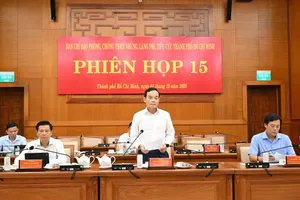
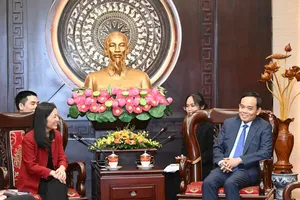
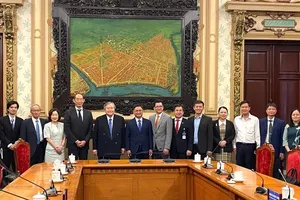
On the morning of May 11, National Assembly deputies from Unit No. 13 of the Ho Chi Minh City National Assembly Delegation met with voters from Tan Nhut, Vinh Loc, Tan Vinh Loc, Binh Loi, Binh Chanh, Hung Long and Binh Hung communes.
Many opinions focused on land planning, tax policies, support for household businesses, policies for non-specialized commune-level workers and mechanisms to protect proactive and innovative officials.
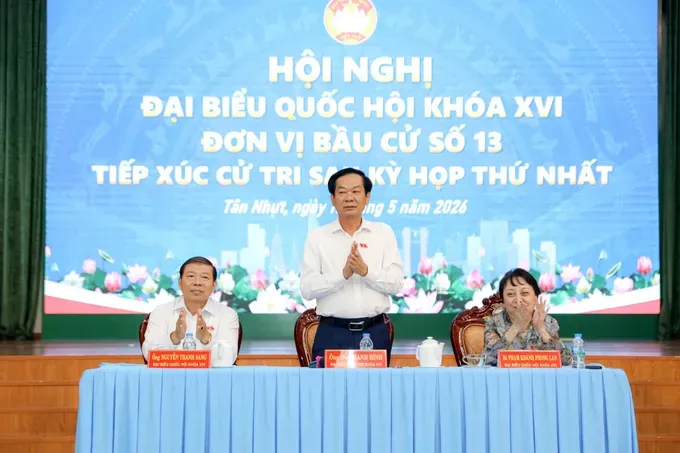
The delegation included Mr. Do Thanh Binh, member of the Party Central Committee and Minister of Home Affairs; Pham Khanh Phong Lan, Director of the Ho Chi Minh City Department of Food Safety; and Mr. Nguyen Thanh Sang, Deputy Head of the Internal Affairs Commission of the Ho Chi Minh City Party Committee.
At the meeting, a voter from Tan Nhut Commune said that a 350-hectare rice land planning project in the locality had been prolonged for years with low efficiency. The unstable rice prices and rising production costs, especially fertilizer prices, have created difficulties for farmers.
One hectare with two crops a year brings less than VND10 million (US$381) in profit after expenses, the voter said, proposing adjustments or removal of the planning so residents could proactively shift production based on market demand.
Regarding tax policies, several voters welcomed recent adjustments, saying that raising the taxable revenue threshold to VND1 billion (US$38,187) had eased pressure on many household businesses and helped them maintain operations during difficult times. They also called for simpler administrative procedures and greater support for preferential loans and digital transformation for small and medium-sized enterprises.
Sharing similar concerns, several voters said many household businesses remain reluctant to change their business models due to additional procedures related to invoices, accounting, and taxes, and called for more transparent and simplified policies to facilitate private sector development.
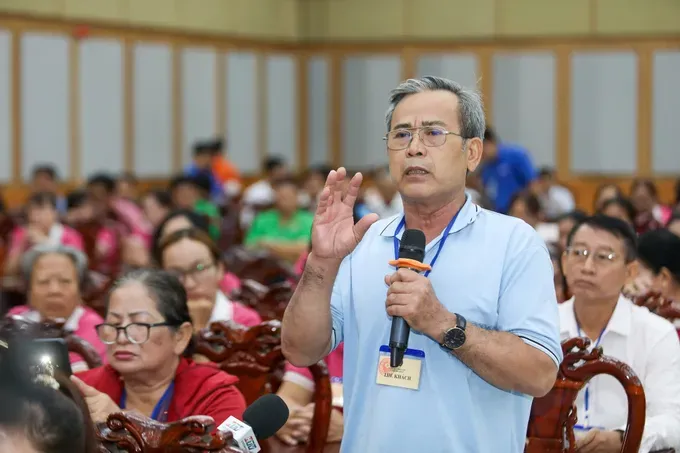
Several voters expressed concern that non-specialized commune-level workers will cease operations from May 31, 2026 under the administrative restructuring roadmap. They proposed creating opportunities for them to participate in civil servant and public employee recruitment.
Similarly, a voter from Hung Long Commune said non-specialized workers have handled workloads comparable to those of civil servants for years but still face disadvantages in terms of policies and benefits. He called for appropriate support measures during the streamlining process.
Meanwhile, a voter from Tan Nhut Commune said many officials are currently afraid of making mistakes or taking responsibility due to overlapping regulations. He proposed mechanisms to protect proactive and innovative officials while strengthening oversight to prevent corruption and waste in public investment projects.
In the healthcare sector, a voter from Binh Hung Commune said hospital fees at public hospitals remain high for workers. He noted that standard hospital rooms are limited, while service rooms are expensive, placing heavy financial pressure on patients and their families.
Rearranging residential groups to improve efficiency
Speaking at the working session, National Assembly deputy Do Thanh Binh said that the delegation would fully receive all voter opinions and assign the office to compile and send them to ministries, central agencies, and relevant authorities for review and response as soon as possible. Issues under local authority would also need timely review and handling.
Regarding the rearrangement of villages and residential groups, he said the number of residential groups has increased after implementing the two-tier local government model, while many no longer meet required criteria. The continued restructuring aims to streamline operations and improve efficiency in line with the new governance model.
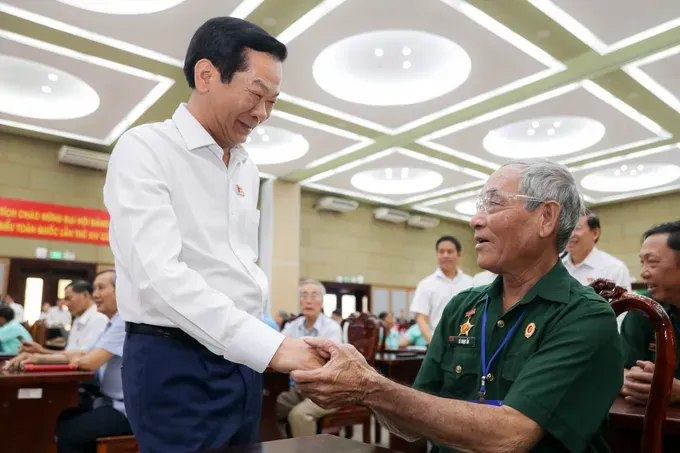
Regarding the restructuring of hamlets and residential groups, National Assembly deputy Do Thanh Binh said the number of these units increased following the implementation of the two-tier local government model, with many no longer meeting established standards. Therefore, the continued restructuring aims to streamline administrative units, improve operational efficiency, and align with the two-tier local government model. The Ministry of Home Affairs is currently developing a restructuring plan for submission to competent authorities. The Government will then issue a decree to serve as the basis for implementation, with the requirement that the process must not negatively affect residents’ lives and must be accompanied by improvements to relevant policies and benefits.
The Ministry of Internal Affairs is currently developing a restructuring plan to submit to competent authorities, after which the Government will issue a decree as the basis for implementation without affecting residents’ lives.
Regarding mechanisms to support officials who take bold and innovative actions, the Minister of Internal Affairs said the Government has adopted policies encouraging initiative and creativity while strengthening transparency and anti-corruption controls. Relevant laws and decrees also contain provisions to protect officials acting in the public interest.





)