The statment was released by the Department of Dyke Management and Natural Disaster Prevention and Control under the Ministry of Agriculture and Environment on the morning of July 5.
The storm also uprooted or felled approximately 850 trees, toppled the gate of the Mui Ngoc Border Guard Control Station in Mong Cai, damaged two cars after a wall collapsed onto them, and left another car flooded. Four vessels anchored in storm shelters broke free from their moorings and drifted away but were safely rescued. Local authorities are continuing to assess and compile reports on the damage.
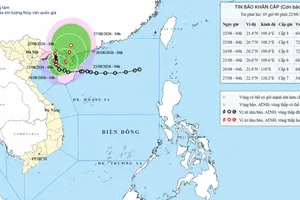
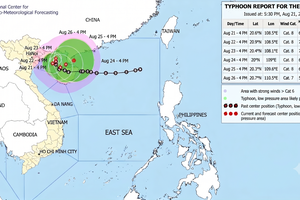
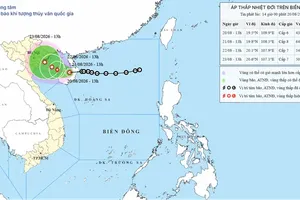
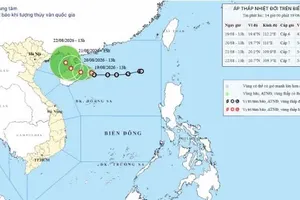
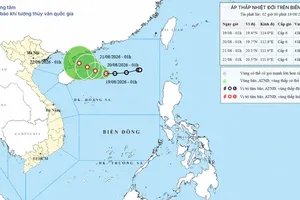
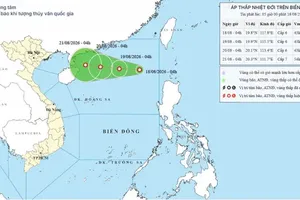
According to the meteorological authority, at 4 a.m. on July 5, the center of typhoon Maysak had moved into the southern part of Guangxi Province, China, packing sustained winds of level 8 (62–74 km/h), with gusts of up to level 10 (89–102 km/h). The storm is forecast to continue moving north-northeast and gradually weaken into a tropical depression before dissipating into a low-pressure area later in the day.
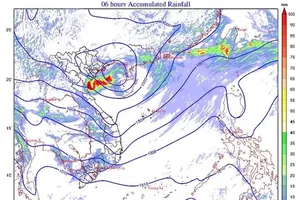
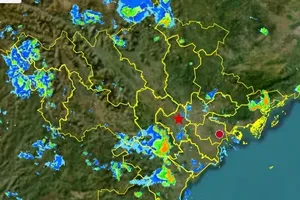
Despite the storm's weakening, the Northeastern region remains at risk of very heavy rainfall on July 5, with widespread precipitation of 100-200 mm and some areas expected to receive more than 300 mm. From July 5 to 7, rivers across the Northeastern region are likely to experience a flood event, raising the risk of inundation in low-lying areas, as well as flash floods and landslides in mountainous localities.
Ahead of the storm, authorities guided more than 56,200 fishing vessels and other boats, carrying nearly 249,200 people, to safe anchorages or away from hazardous waters.