On-time explanation and implementation
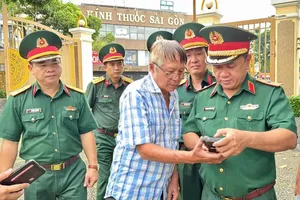
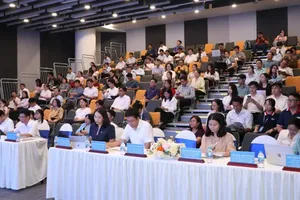
When HCMC restarted the Rach Chiec National Sports Complex project, the Binh Trung Ward People’s Committee proactively invited over 900 affected households to a discussion. The entire planning project, implementation roadmap, compensation steps, and land recovery processes were explicitly presented with clear timelines.
The ward’s chairman Nguyen Chi Thanh emphasized the conference was a candid, two way exchange rather than a unilateral government directive. Residents raised numerous questions regarding their land recovery rights, compensation rates, resettlement plans, and post relocation livelihoods. The chairman directly answered issues within his authority and immediately committed to providing early feedback on others. This transparent approach yielded remarkably tangible, positive effects.
Mr. Tran Van Dien, whose family has lived there for six generations, must hand over his entire 12,000m2 plot. Despite this massive personal loss, he strongly supports the city’s policy. He firmly believes the most crucial aspect is that residents are clearly informed from the outset, rather than having to make wild guesses based on rumors.
Thanks to the local government’s honest communication, Mr. Dien and over 400 other households proactively brought their legal documents to the Binh Trung Ward Construction Investment Project Management Board to easily facilitate the compensation process and ensure completely smooth urban development.
Similarly, in Can Gio Commune, when organizing public consultations on local adjustments to the 1/500 detailed planning of a housing project, the local government didn’t merely “announce and collect opinions as a formality.” Conversely, the meeting was methodically organized; residents were provided with information beforehand and given adequate time to study it. This proactive dialogue not only untangled legal bottlenecks but also alleviated the legitimate concerns and aspirations of the people.
This principle was reiterated by State Leader To Lam at a national conference that all resolutions and projects must become concrete actions aiming to elevate public quality of life. When every policy centers on public benefit, it creates a distinct transformation across the political system, becoming a developmental driving force.
This receptive spirit was clearly demonstrated during the urban embellishment of HCMC for the recent Lunar New Year. When citizens voiced opinions about paint colors at Turtle Lake and Ben Thanh Market, the city immediately suspended construction to absorb feedback, consult experts, and communicate adjustments. Listening at the opportune moment averts unnecessary frustrations and firmly maintains the public’s trust.
Information efficiency enhancement via technology
Alongside direct grassroots approaches, digital platforms are emerging as highly effective support tools in information and propaganda efforts. Before, during, and after the election of deputies to the 16th National Assembly and People’s Councils at all levels for the 2026-2031 term, numerous false and distorted narratives surfaced in cyberspace. To counter this challenge, many localities in HCMC utilized Zalo groups and social networks as official communication channels.
During the preparation days for the election, Zalo groups of Party members and residents in Long Truong Ward continuously updated election information. Everything from misinformation warnings to official content was swiftly transmitted, helping citizens distinguish true from false information and avoid distorted rhetoric.
Similarly, leveraging grassroots social media, wards across HCMC extensively shared articles explaining the election’s significance, voters’ rights, and candidate profiles. This helped citizens select deserving representatives. Some localities even applied novel technologies. Utilizing artificial intelligence to create virtual anchors presenting election regulations generated significant appeal among youth.
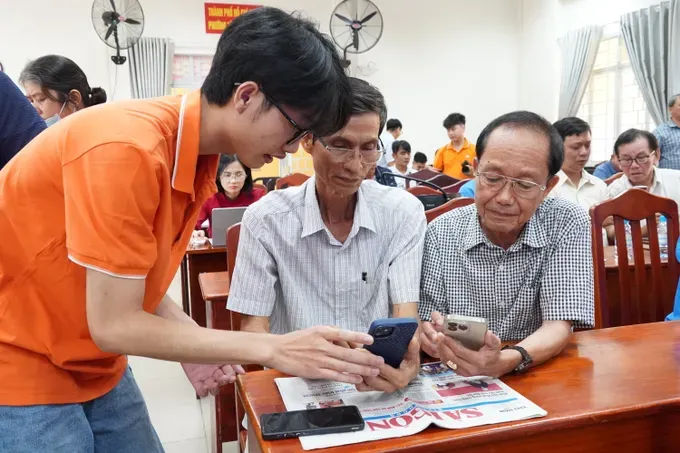
Applying technology to increase citizen proactivity, An Phu Dong Ward recently completed public consultations for the Hong Duc II Hospital expansion. Instead of solely organizing physical meetings, the local ward posted documents on social media and shared links via Zalo groups for residents to review.
Nguyen Thanh Minh, a related local, noted that detailed planning documents were publicly attached online. He could easily access and study them without waiting for a community meeting. Finding the hospital planning reasonable, he simply scanned a QR code to submit feedback and express his absolute consensus.
Alongside gathering public opinions, many localities utilize technology to tackle misinformation. Beyond receiving reports and rapidly connecting citizens with authorities to handle local security and order issues, the “Neighborhood SOS” app of Tang Nhon Phu Ward serves as a vital channel for local authorities to immediately grasp false information spreading among the public. Consequently, they can swiftly post official content on the ward’s and neighborhoods’ social media pages and Zalo groups for citizens to comprehensively cross-reference.
Vice Chairman Pham Minh Tuan of the Vietnam Fatherland Front Committee – HCMC Branch noted that prioritizing citizens’ right to information early ensures substantive consensus. He appreciates localities proactively holding dialogues and transparently publishing plans using direct and digital methods. Staying one step ahead perfectly respects the people, turning them from affected parties into proactive supporters when concerns are addressed. This ultimately maintains grassroots political stability and ensures timely policy completion.
Party Cell Secretary and Head of Neighborhood 14 Le Van Han (Binh Trung Ward) shared “At the neighborhood level, we frequently receive inquiries from residents. If information from the government is ambiguous, it’s exceedingly difficult to explain it back to the people.
This time, the locality proactively provided specific information early on and held direct dialogues, allowing residents to grasp the situation from the outset. When citizens clearly understand, executing subsequent steps becomes substantially more favorable. The neighborhood staff also experiences drastically reduced pressure from having to repeatedly explain every detail.”
Seamless, substantive information from grassroots
Moving beyond unidirectional propaganda, the Central Government as well as various provinces and cities, including HCMC, have recently accelerated the delivery of information regarding resolutions and policies directly to the citizens. Connecting national conferences on researching, learning, grasping, and implementing resolutions online from the central hub directly to the grassroots level, coupled with local propaganda in neighborhood Zalo groups, local e-portals, and live broadcasts on national television channels, has entirely eradicated the public’s “lag time” in policy reception.