At a recent national conference on implementing the resolution of the 2nd conference of the 14th Party Central Committee, General Secretary and State President To Lam emphasized organizing its execution drastically and effectively to completely transform the political system. Crucially, information must stay one step ahead to build consensus before policy promulgation. Adhering to these directives, HCMC shifted from reactive to proactive propaganda, coupling ideological work with specific projects.
Early propaganda to ensure precise understanding
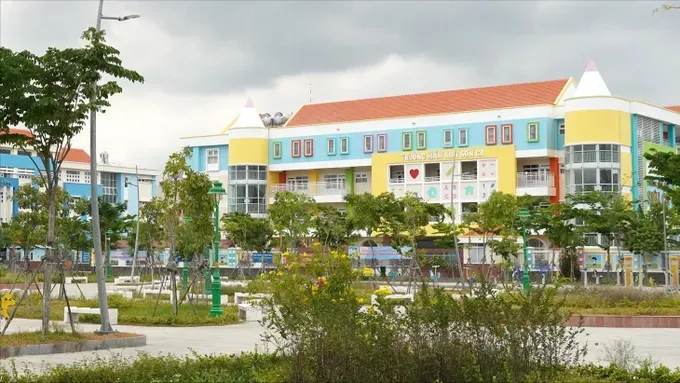
On a morning in April, Ms. V.T.T dropped her granddaughter off at Hung Vuong Primary School in Tan Hoa Ward and stopped by the market. Gazing at the fully equipped school, she could not conceal her joy. She was among the residents who previously opposed land reclamation at this site in the former Tan Binh District.
Recalling the past, she admitted lacking official information and being influenced by rumors claiming the school was a pretext for commercial apartments. Anxious, she protested. Only when the local government organized direct dialogues, provided legal documents, and articulated true project objectives did residents easily comprehend the reality and consent to hand over their land.
This specific case starkly illustrates a broader reality when official information fails to arrive promptly, a cognitive gap materializes, quickly occupied by unverified, speculative internet claims.
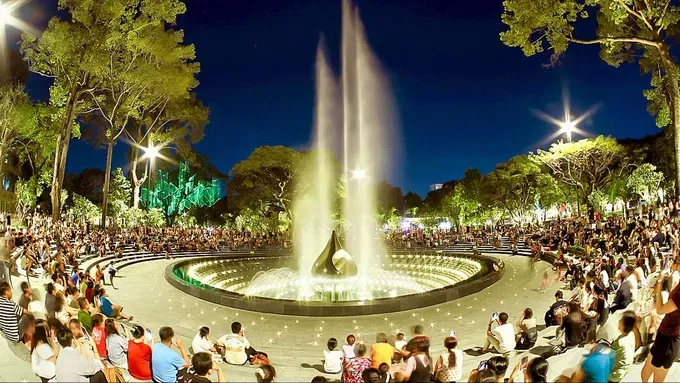
Not far away, Ly Thai To Park No.1 has become a familiar destination. Previously, when officials announced the park, distorted opinions surfaced online, falsely claiming the project would eradicate green space for commercial purposes. However, when the city proactively publicized plans, organized consultations, and provided transparent information, doubts quickly dispelled. “The crux of the matter is that residents need to be fully informed so they can understand correctly and reach a consensus,” expressed Nguyen Van Hung, a resident of Vuon Lai Ward.
These practical examples demonstrate that when official information is delayed, vacuums immediately form, facilitating the rapid spread of erroneous speculation. Regarding this issue, Dr Nguyen Thi Viet Ha from Saigon University observed that lagging behind forfeits the initiative in cognitive orientation. Lacking comprehensive facts, people rationalize issues based on what they hear and share.
Unverified interpretations easily veer off course right from the beginning. Consequently, the requirement is not merely early propaganda, but to proactively stay one step ahead in political and ideological work, starting early at the grassroots level when a policy is conceptualized. When the public understands correctly from the outset, consensus effectively becomes the bedrock for implementation.
Avoidance of “Damage control” trap
Although awareness has shifted, the reactive model of promulgating, implementing, triggering reactions, and then propagandizing remains in certain locales. In such scenarios, ideological work transfers into mere damage control. Information remains unidirectional and confined strictly to simple announcements. Direct dialogues frequently fail to comprehensively resolve underlying issues. Consequently, grassroots officials appear anxious, lacking updated information and skills to solve problems.
Take, for instance, the adjustment of electricity prices. Although a roadmap and regulatory framework were in place, the initial phase still witnessed numerous concerns, particularly because citizens hadn’t promptly accessed comprehensive information detailing the causes and impacts. Only when relevant authorities intensified information dissemination via explaining the calculation basis, regulatory mechanisms, and input factors did public opinion gradually stabilize.
During HCMC urban embellishment and canal house relocations, residents frequently harbor anxieties regarding compensation rates, resettlement locations, and new housing timelines if comprehensive information is not provided immediately. This inevitably spawns dissenting opinions. Conversely, when authorities proactively publicize information, organize dialogues, explicate policies, and listen to feedback, situations transform positively.
A prime example is the Doi Canal upgrade in Phu Dinh Ward. Following intensified advocacy and transparent planning, the vast majority of households reached a consensus. Neighborhood officials visited individual homes to address concerns and set straight any misinformation, garnering high consensus for relocation efforts. Evidently, the crux lies in whether information precedes policy and if dialogue is thorough. Early proactive measures diminish anxieties, mitigate crises, and conserve substantial project implementation resources.
According to Permanent Deputy Head Le Van Minh of the Propaganda and Mass Mobilization Commission of the HCMC Party Committee, hostile forces have recently pivoted toward focusing on practical issues. They concentrate on distorting, criticizing, inciting, and provoking citizens to misinterpret the guidelines, legal policies of the Party and State, as well as local socio-economic development programs.
Therefore, HCMC recognizes that combating and refuting hostile, erroneous views must commence with specific, daily, real-life issues to orient and forge public consensus regarding the city’s developmental policies. Crucially, this involves amplifying positive, official information to clean cyberspace and promptly rebutting distorted narratives online to ensure accurate public comprehension. As the saying goes, “if you’re even a little slow, contrary information travels much faster.”
The imperative to stay “one step ahead” in political and ideological work is not merely a methodology; it’s a prerequisite for retaining the initiative in governance. In the current situation, losing the informational initiative equates to forfeiting the advantage in building trust, the decisive element required to translate resolutions into vibrant reality.
Diversifying information spreading methods at grassroots level
The Government has issued Decree No.49/2024/ND-CP regulating grassroots information activities. Essential grassroots information comprises information concerning the guidelines and policies of the Party, the policies and laws of the State, the regulations of local Party committees and authorities, and significant events impacting local residents.
Accompanying this is information directly related to local citizens such as details regarding projects, economic, cultural, and social welfare development programs; and information linked to local security, order, social safety, and military affairs.