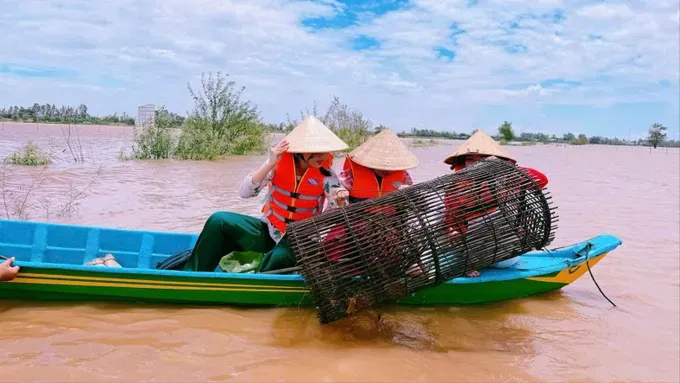
The Mekong Delta is entering its annual floating season as floodwaters from the upstream Mekong River flow into the region's dense network of rivers and canals, bringing nutrient-rich silt and an abundance of aquatic life, including native fish, shrimp, and wild snakes.
During this period, ecotourism sites across the region are seeing a surge in visitors seeking to take part in local recreational activities and enjoy the distinctive culinary flavors of the riverlands.
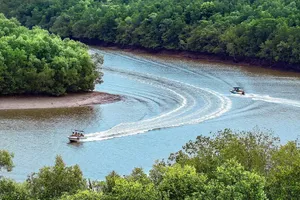
Over the past few days, a community-based tourism initiative organized jointly by the Farmers' Union and the Women's Union in Thuong Phuoc Commune, Dong Thap Province, has drawn hundreds of visitors from across the country to experience the annual floating season.
"What I loved most was rowing a wooden boat through the flooded fields, casting nets, setting fish traps for Siamese mud carp, picking sesbania flowers, and cooking the dishes ourselves. It was a truly captivating experience," said Ms. Nguyen Thi Kim Ngoc, a tourist from Ho Chi Minh City.
Beyond harvesting natural aquatic products, tourists can also explore a local wild-fish conservation and rearing model run by residents in Giong Bang Hamlet, Thuong Phuoc Commune. Developed during the floating season, this seasonal livelihood not only boosts local incomes but also contributes to preserving natural fishery resources.
According to Mr. Tran Van Binh, a tour operator involved in the floating season tourism model in Thuong Phuoc Commune, Dong Thap Province, this year’s tours have been restructured more systematically, with expanded field-experience areas. The itinerary begins near the border, guiding visitors through white lotus fields, open-water swimming spots, and traditional fishing activities.
"We design the tours so guests can cast fishing nets, pick sesbania flowers, and harvest fish. The catch can then be prepared on the spot in an authentic, rustic style," Mr. Binh said.
Mr. Binh noted that tourist arrivals to Thuong Phuoc’s floating season attractions have grown year over year. While the model welcomed only 20 to 30 visitors per day during the same period last year, daily arrivals have now surpassed 50.
Beyond Thuong Phuoc Commune, community-based tourism models are currently being studied and introduced in several other border communes across Dong Thap and An Giang provinces. Alongside untouched natural destinations, established community hubs such as Tan Loc Islet in Can Tho City and the Chau Doc Floating Village in An Giang are capitalizing on the season to promote unique local culture and culinary specialties, offering travelers a comprehensive look into life during the "living with floods" season.
The surge in seasonal tourism not only generates significant revenue for travel agencies but also creates sustainable livelihoods for residents through the supply of native agricultural and aquatic produce, as well as opportunities in local tour guiding. Local authorities are actively raising safety awareness and enforcing stricter regulations on waterway navigation to ensure safety for all visitors.