Number of international tourists sharply increases
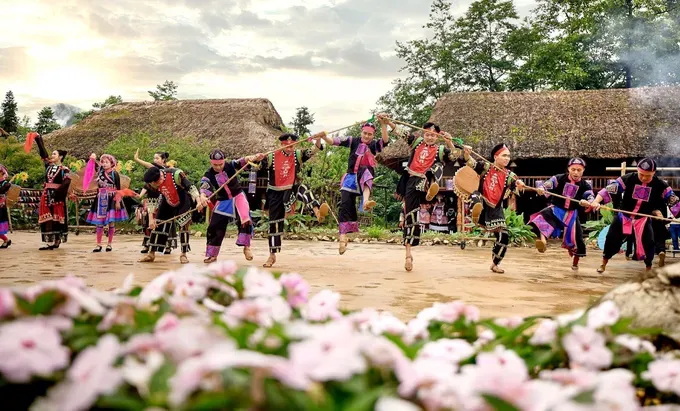
During the nine-day Lunar New Year holiday, international arrivals surged across several of Vietnam’s key tourism hubs.
Da Nang welcomed an estimated 510,000 foreign visitors, up 32 percent year-on-year. Hue recorded 238,200 international arrivals, marking a dramatic 207 percent increase. In Hanoi, the capital, received 217,000 foreign visitors, up 55 percent, while Ho Chi Minh City saw 170,000 arrivals, a rise of 51.7 percent. An Giang reported 98,588 international visitors, up 28.6 percent, and Khanh Hoa attracted 120,000 foreign travelers, an increase of 23.08 percent.
Notably, in both Hue and Da Nang, the number of international visitors nearly matched domestic arrivals, a striking indicator of Vietnam’s growing appeal and increasingly prominent position on the global tourism map.
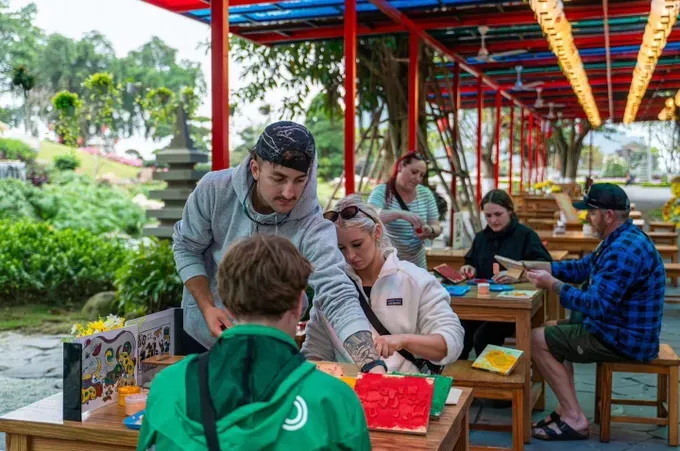
This year’s Lunar New Year holiday also saw the launch of a range of new tourism products and destinations, underscoring efforts to diversify visitor experiences. Among the newly introduced attractions were the Hanoi Botanical Garden in Hanoi; the Thung Ui Cultural Tourism Space in Ninh Binh; the Nha Trang Impression Submarine Tourism Area; Butterfly Flower Island in Ca Mau; and the Sun World Vung Tau Aqua Adventure water park in Vung Tau.
Several localities also waived entrance fees at renowned historical and cultural landmarks, including Yen Tu, Lam Kinh, the Complex of Hue Monuments, the Citadel of the Ho Dynasty, and the Hien Luong–Ben Hai Historic Site in Quang Tri, among others.
Authorities in Hanoi and Ho Chi Minh City offered free access to selected bus routes and urban rail lines during the holiday period, facilitating travel for residents and tourists embarking on spring outings.
Travel companies stepped up the promotion of Tet-themed tours and immersive cultural experiences rooted in local traditions. A marked shift toward online bookings, personalized itineraries, and early holiday reservations was also evident, reflecting evolving consumer behavior in Vietnam’s travel market.
Nationwide, average hotel occupancy rates reached between 55 and 60 percent. Several destinations reported exceptionally high levels: Sa Pa recorded occupancy of 90–95 percent; Phu Quoc reached 95 percent; while Lo Lo Chai in Tuyen Quang Province saw full capacity at 100 percent, underscoring robust demand across key tourism hotspots.
Aviation and rail services ramp up capacity
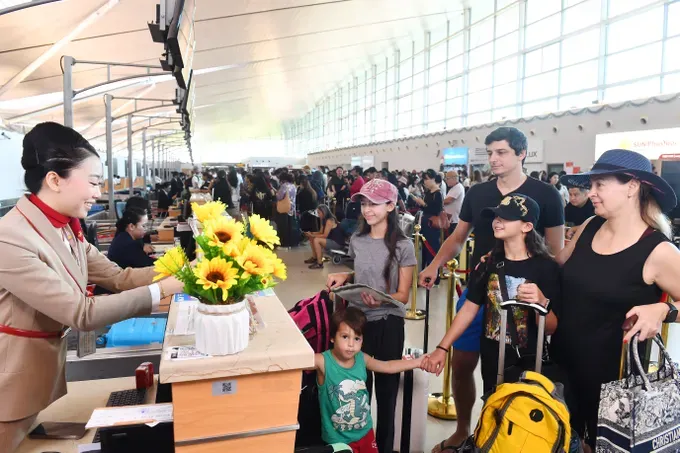
Vietnam’s railway sector operated 906 train services on the Hanoi–Ho Chi Minh City route, providing approximately 384,000 seats, a 7 percent increase compared with the 2025 Lunar New Year.
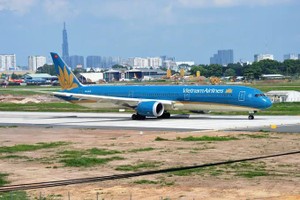
Airlines also significantly expanded capacity to meet surging travel demand. Vietnam Airlines added more than 60,000 seats, while Vietjet Air offered an additional 390,000 seats. Bamboo Airways reinstated several routes and increased flight frequencies across its network.
Cruise tourism has likewise been experiencing a strong rebound, welcoming more than 10,000 passengers. Numerous international cruise ships have docked at ports in Quang Ninh, Khanh Hoa, Thua Thien Hue, and Da Nang, underscoring a broader recovery in the country’s travel and tourism sector.
According to the Vietnam National Authority of Tourism, during the nine-day Lunar New Year holiday, destinations across the country maintained public order, adhered to listed prices, and ensured environmental sanitation as well as food safety standards.
However, localized overcrowding was reported at several major attractions, including Trang An Scenic Landscape Complex in Ninh Binh, Dong Van in Tuyen Quang, Huong (Perfume) Pagoda in Hanoi, and Dong Pagoda in Quang Ninh.
The tourism sector enters the new year on a firm recovery trajectory, underpinned by strengthened destination management and a growing shift in consumer preferences toward higher-quality, experience-driven services.








)