Rural tourism has begun to unlock opportunities for sustainable community development while breathing new life into once-quiet countryside areas.
A countryside transformed
Suoi Rao Ecolodge, located in Xuan Son Commune in eastern HCMC, sits gently along a hillside adjoining the lush Xuan Son protection forest. Few would imagine that nearly two decades ago, this area was little more than barren, rocky land where farmers planted short-term crops, such as peanuts, corn, and cassava, on a seasonal basis.
Le Thi Nga, owner of Suoi Rao Ecolodge, recalled that her original ambition was simply to transform her five-hectare tract of wasteland into a biodiverse forest to satisfy a personal passion. “Today, the garden has more than one million trees of various kinds,” she said. “What was once a desolate land has become an ecological forest of hills and valleys, native forest species, medicinal plants, vegetables, flowers, and wildlife. Once a diverse ecosystem took shape, I turned toward green tourism.”
That vision gradually evolved into a fully fledged eco-tourism destination. Suoi Rao Ecolodge now features a restaurant, a tea lounge, and dozens of villas ranging from 30 to 140 square meters, all constructed with environmentally friendly materials, such as naturally fired bricks, clay roof tiles, bamboo, and wood. The architecture draws inspiration from traditional three-compartment houses of Northern and Central Vietnam, as well as Central Highlands stilt houses.
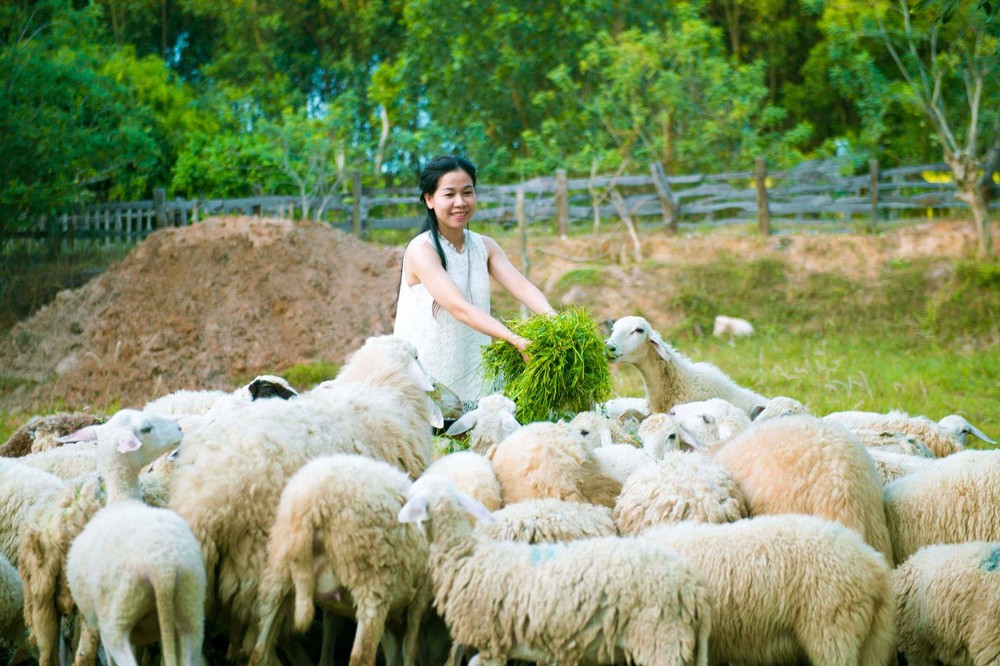
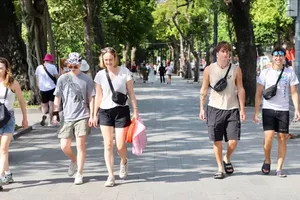
In September 2024, Suoi Rao Ecolodge was recognized by the Institute for Applied Research and Enterprise Innovation (3AI) as the first carbon-neutral destination, or Net Zero Station, in eastern HCMC. Since then, visitors from around the world have been drawn to the site to enjoy clean air and immerse themselves in the rural landscape. Singh Sukhmandeep, a visitor from Hong Kong, said after a two-week stay that he had truly escaped the noise of urban life to experience the tranquility of the eastern HCMC countryside.
Elsewhere in the region, farmers have been reimagining traditional agricultural areas as experiential destinations. In recent years, cacao-growing zones in eastern HCMC have been transformed into parks and agri-tourism sites. Binon Cacao Park, located in Chau Duc Commune, spans 46 hectares and showcases cacao cultivation and processing, offering visitors a distinctive form of agricultural tourism.
At the park, tourists do more than admire the scenery. They stroll through orchards heavy with cacao pods, sample the sweet-and-sour taste of fresh cacao beans, and observe the entire production process, from nursery cultivation and harvesting to fermentation, drying, shell removal, and bean extraction. Local authorities describe Binon Cacao as a clean agriculture model combined with tourism, and consider it one of the commune’s most unique tourism products, making a meaningful contribution to the local economy.
A similar approach can be seen at Tu Phuong That Dao Ecotourism Site in Tam Long Ward, which emphasizes harmony between people and nature in the search for sustainable values. Completed in 2016 on a three-hectare site, the project has undergone multiple upgrades and now features rustic, countryside-style structures. Three sides are bordered by vast rice fields, while the fourth adjoins orchards and livestock areas. Thatched huts sit atop seven rectangular artificial islets, surrounded by a network of canals that enhance the site’s rural charm.
Linking agriculture with tourism
Across rural communes in eastern HCMC, including Xuan Son, Chau Duc, Xuyen Moc, Dat Do, Ho Tram, and Long Son, community-based eco-tourism and agricultural experience models have been developing rapidly. These initiatives have opened up significant economic opportunities, transforming purely agricultural areas into attractive destinations that combine farm production with visitor services.
By integrating tourism into agriculture, localities are able to extend visitor stays, increase spending, and raise incomes for rural residents. The benefits ripple outward, encouraging farmers to diversify crops, improve environmental practices, and preserve traditional ways of life while adapting to new market demands.
According to Mr. Trinh Van Thanh, Chairman of the Board of Directors of Binon Cacao JSC, the company officially began operations in May 2019. Each year, Binon Cacao welcomes more than 10,000 visitors, including many international tourists from South Korea, Japan, Canada, and the United States. “In the coming period, we will work with local authorities to expand the park and connect with nearby farming households,” he said. “The focus will be on organically and sustainably grown cacao and fruit trees, allowing us to broaden the agricultural tourism experience. At the same time, we aim to develop a chain of certified clean products so residents and visitors can enjoy and purchase them directly at the farm.”
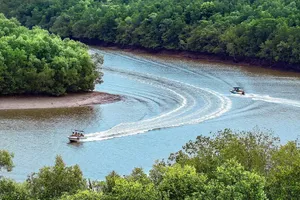
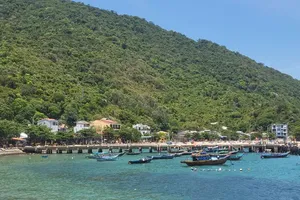
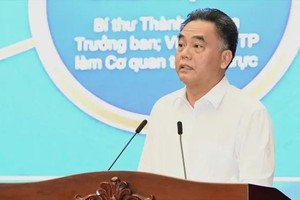
From a broader perspective, Mr. Pham Ngoc Hai, Vice Chairman of the HCMC Tourism Association, noted that the eastern part of the city benefits from favorable natural conditions and climate. In addition to dozens of kilometers of coastline, the area features lakes, rivers, streams, and expansive fields, providing ideal conditions to diversify tourism offerings. The city’s tourism sector is prioritizing high-quality products and community-based tourism in rural areas, he said, while tailoring development strategies to the specific geography and natural conditions of each locality.