Logistics experts have proposed that Ho Chi Minh City develop a network of 38 logistics centers and zones, requiring between 4,500 and 6,000 hectares of land by 2035, to transform the metropolis from a traditional cargo gateway into an international supply chain coordination hub.
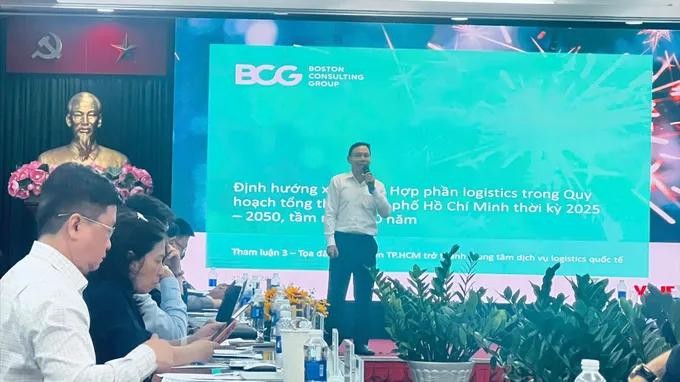
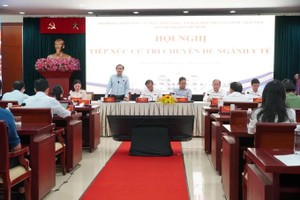
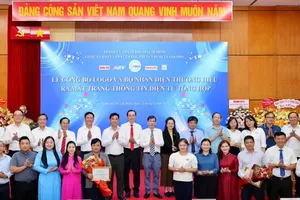
The proposal was presented during a seminar hosted by the Ho Chi Minh City Department of Industry and Trade on the afternoon of November 25, focused on developing the city into an international logistics service center.
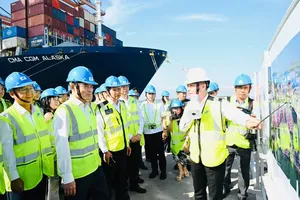
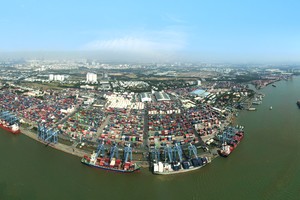
According to Deputy Director Le Van Danh of the municipal Department of Industry and Trade, recent administrative consolidations have given the city a strategic advantage through direct links to major industrial zones, deep-water seaports, airports, and a vast consumer market. Total cargo volume moving through the city's port system has reached nearly 356 million tons, anchored by the Cai Mep port complex, which ranked 11th globally in container port efficiency in 2025.
Deputy Director Le Van Danh emphasized that the city's primary challenge is no longer simply building more ports, roads, or warehouses. Instead, authorities must focus on organizing, connecting, and leveraging existing infrastructure and cargo flows to generate genuine competitive capacity.
In practice, transportation and warehousing contribute 8.5 percent of the city’s GRDP, while approximately 89 percent of goods continue to be transported by road. Links between seaports, industrial parks, inland container depots, and logistics hubs remain limited. Supply chain management, trade finance, and international transshipment services have likewise yet to develop to a comparable level.
Addressing these structural needs, logistics expert Tran Ngoc Thanh, who represents a consulting consortium of the Vietnam Institute for Urban and Rural Planning (VIUP) and the Boston Consulting Group (BCG), recommended integrating the 38 facilities into Ho Chi Minh City’s master plan for the 2025 to 2050 period, with a 100-year vision. According to him, the proposed network comprises 16 general logistics centers, 19 specialized logistics centers, two free trade zones, and one integrated logistics zone.
The network comprises three interconnected spatial layers covering international and regional logistics, transshipment and distribution, and urban logistics, linked through five multimodal logistics corridors. At the center of this network, the Cai Mep Ha Free Trade Zone, spanning more than 4,174 hectares, is envisioned as the main engine of development.
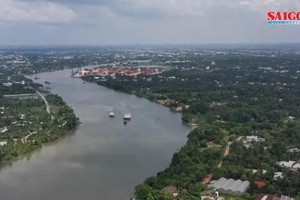
To realize this plan, experts recommend that the city safeguard land designated for logistics near seaports, railway stations, and industrial zones. Priorities should include investing in rail connections to ports, upgrading waterways, completing ring roads and expressways, and establishing a link between Cai Mep and Can Gio.
The city should also expand the use of Public-Private Partnership (PPP) models for the development of dry ports, cold storage facilities, logistics centers, and shared infrastructure, while attracting foreign investment into high-value-added logistics services.
Furthermore, it is essential to finalize specific tax and customs mechanisms for free trade zones and integrated logistics zones, establish an inter-agency and inter-regional coordination hub, and develop a shared data platform connecting seaports, warehouses, businesses, and customs authorities.
Deputy Director Bui Nguyen Anh Tuan of the Agency for Domestic Market Surveillance and Development under the Ministry of Industry and Trade, stated that Ho Chi Minh City and Dong Nai City are being positioned to form a logistics hub for the Southeast region.
The state will focus on refining institutional frameworks and developing connectivity infrastructure, data systems, and human resources, while businesses will play the primary role in investment, operations, and service provision.
The Ministry of Industry and Trade is currently working to refine the legal framework for the development of commercial infrastructure and will collaborate with the city to implement criteria for the classification and grading of logistics centers.