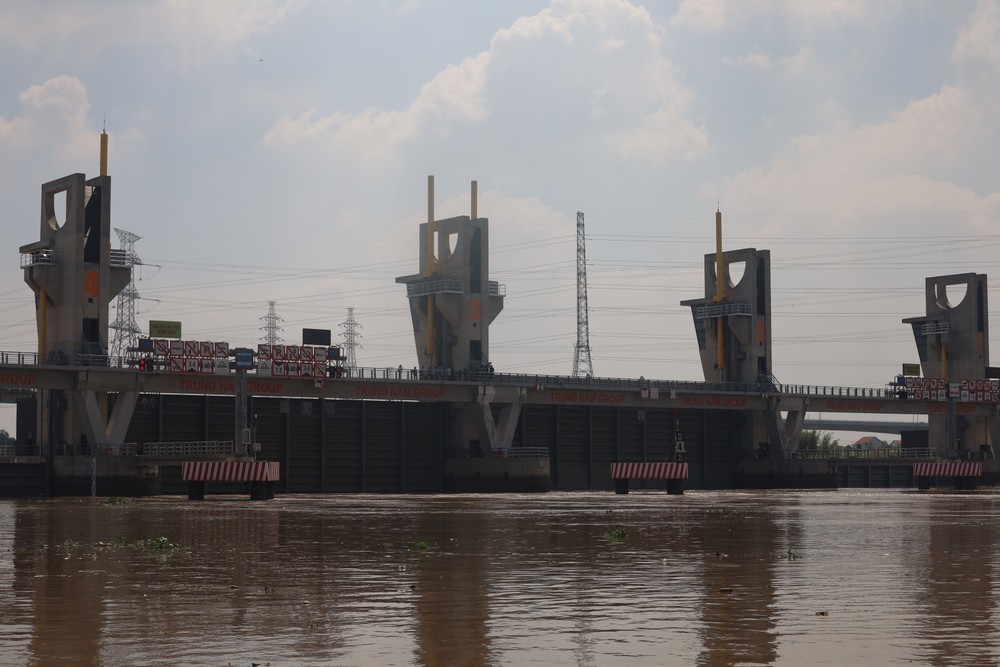
The system comprises six large gates — Ben Nghe, Tan Thuan, Phu Xuan, Muong Chuoi, Cay Kho, and Phu Dinh — and two medium-sized gates, Cau Kinh and Ba Buom.
During the trial, ensuring the safety of waterway traffic was given top priority. Operators coordinated with relevant agencies and authorities to notify vessels at least 30 minutes before lowering the gates and temporarily suspend navigation through affected areas.

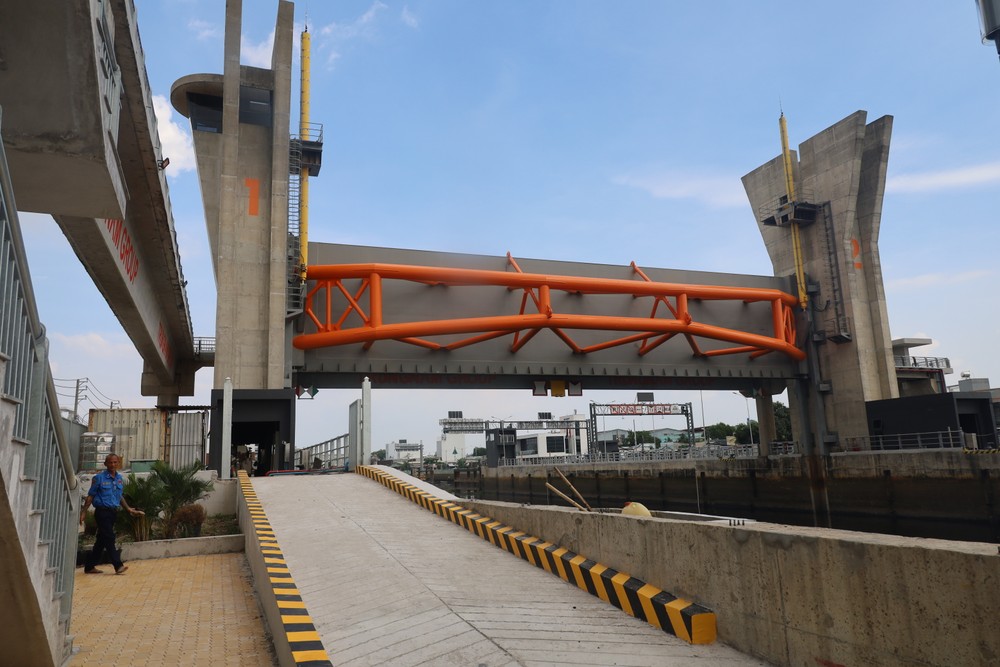
Vessels were directed through navigation locks at facilities equipped with them, including Muong Chuoi, Ben Nghe and Tan Thuan, or instructed to anchor in designated safe areas until water levels on both sides of the gates became balanced and navigation could resume.
Authorities also required vessels to reduce speed, follow safety instructions, and avoid anchoring in areas with strong currents or near gates scheduled for closure. Operators were advised to regularly monitor operating schedules to plan their journeys accordingly.
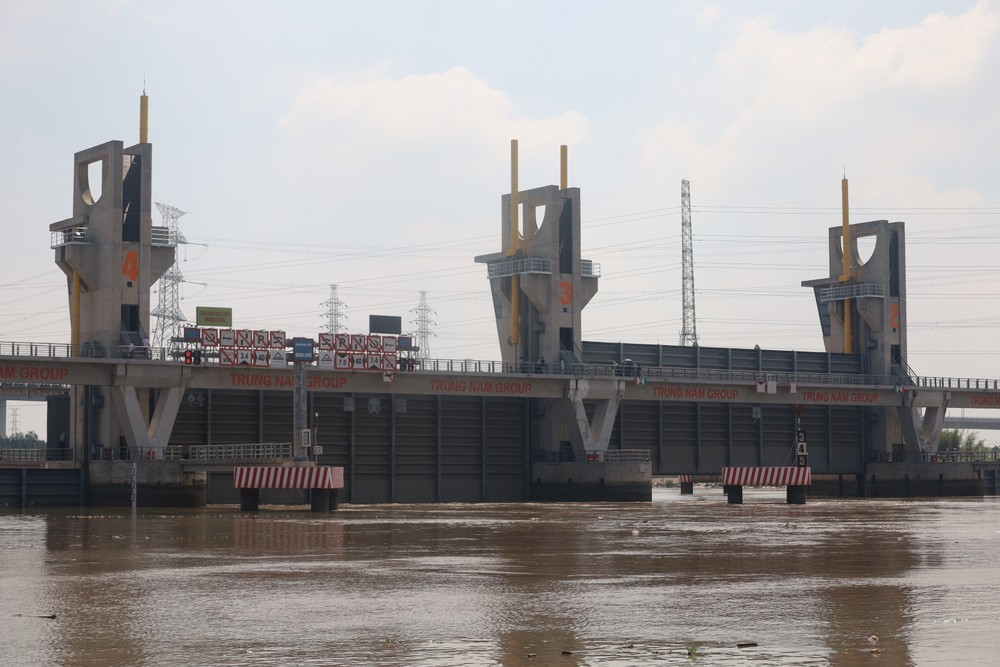
At Muong Chuoi Gate, which has a 160-meter opening, the gate-lowering process was carried out with particular caution to minimize impacts on water flows and riverbanks. At Phu Dinh Gate, closing the gates completely takes approximately 20 minutes. Technical parameters, water levels, and flow conditions are continuously monitored throughout operations.
Mr. Pham Duc Pha, Head of Technical Operations for the Tidal Control Project at Trung Nam Group, the project investor, said the entire process was under continuous supervision to ensure timely responses to unexpected situations.
Depending on hydrological conditions and the characteristics of individual facilities, gates can be closed simultaneously or sequentially. Their operation is determined by tidal movements, actual water levels, and rainfall forecasts. Gates are lowered during rising tides to prevent seawater from entering the city and reopened as tides recede and water levels on both sides approach equilibrium, allowing water from urban canals and waterways to drain outward.
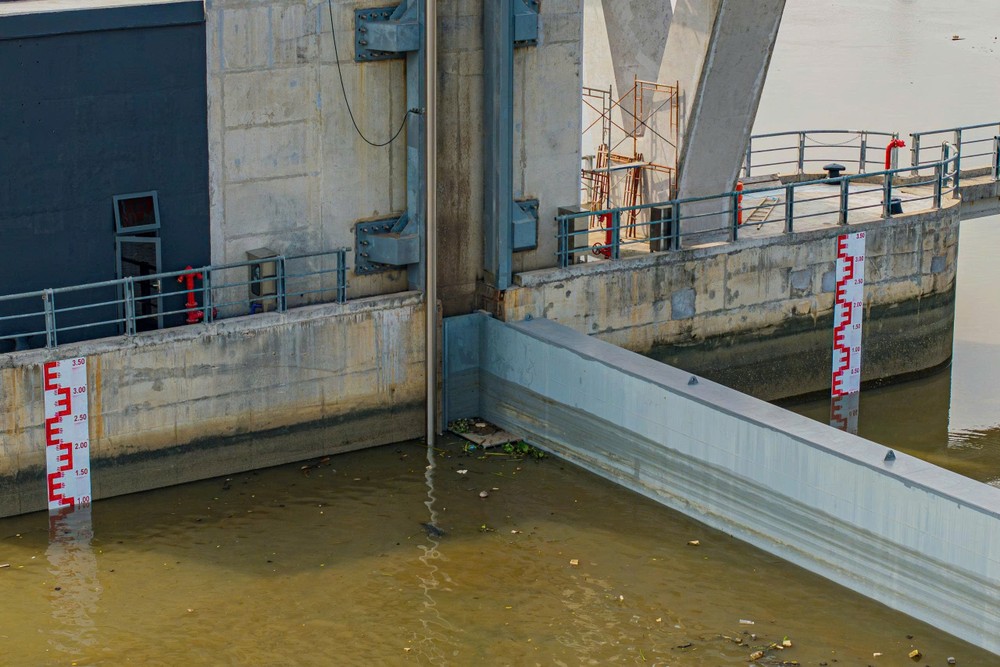
Mr. Nguyen Tam Tien, CEO of Trung Nam Group, pledged that the system would be operated in strict compliance with technical procedures. Designed to prevent tidal intrusion, the project is intended to protect 20 wards and communes.
Mr. Nguyen Tam Tien said areas within the project's designated protection zone would be shielded from tidal flooding. However, its effectiveness against rainfall-induced flooding would depend on the capacity of the city's drainage network.
The system has a designed pumping capacity of 120 cubic meters per second, enabling water to be pumped from canals and smaller waterways while creating additional storage capacity for subsequent rainfall. With rainfall below 100 millimeters, the protected areas could avoid flooding if the urban drainage network operates effectively. However, blocked street drains or inadequate connections to canals could undermine the system's ability to prevent localized flooding.
Mr. Nguyen Hoang Anh Dung, Deputy Director of the Investment Project Management Board Ho Chi Minh City Urban Infrastructure Construction, said flooding was a complex urban management challenge that could not be addressed through drainage infrastructure alone.
He described the simultaneous operation of all eight tidal gates as an important advance in the city's flood mitigation efforts, stressing that long-term effectiveness would also require improvements to drainage networks, pumping stations, and urban water-storage planning.













)