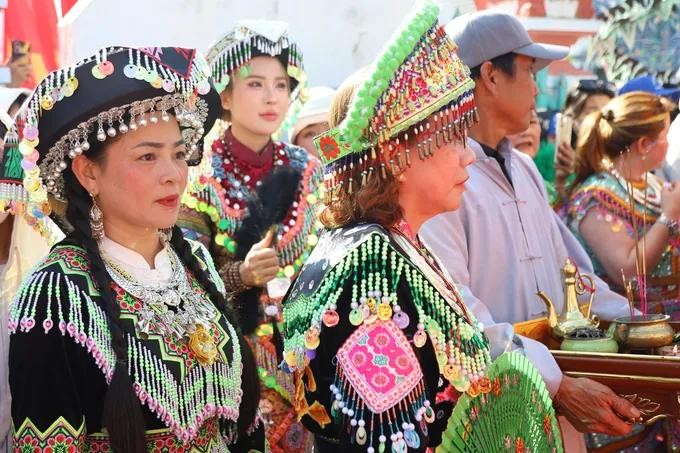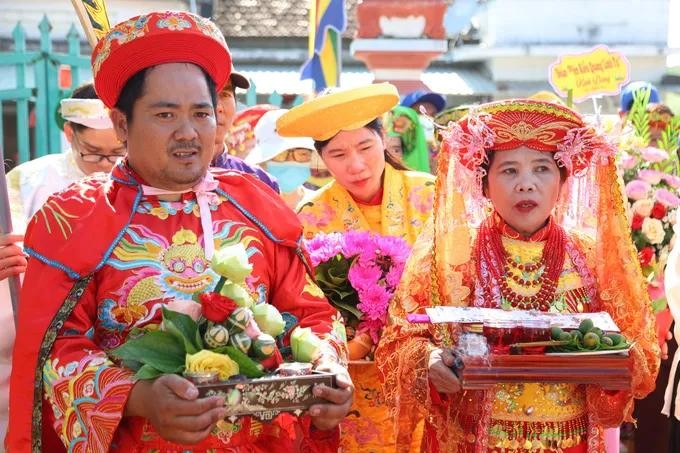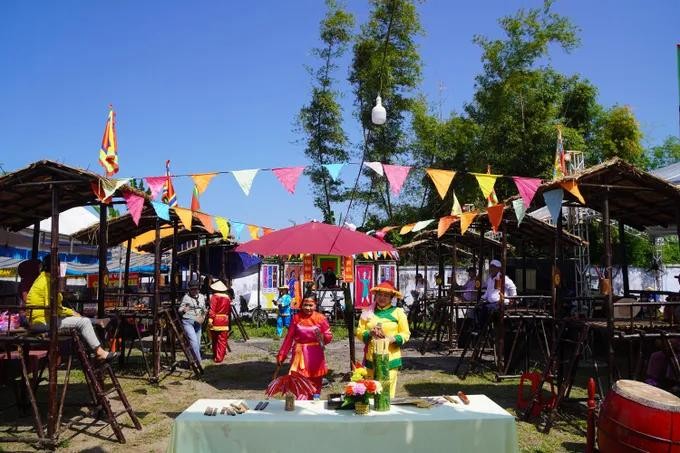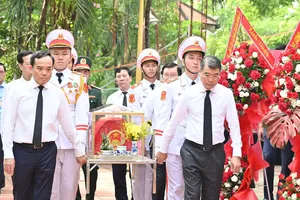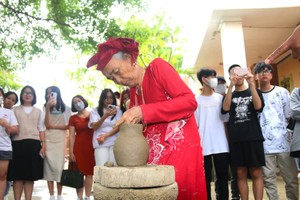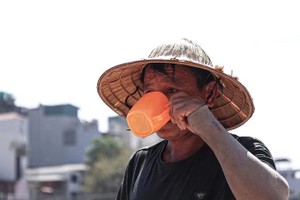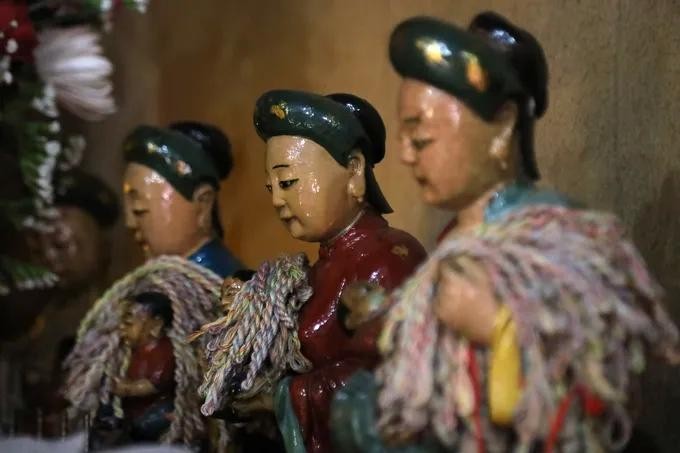
They took part in a procession to welcome deities and carry royal ordinations, marking the opening of the three-day Ba (local tutelary goddess) Pagoda-Nuoc Man Trading Port Festival.
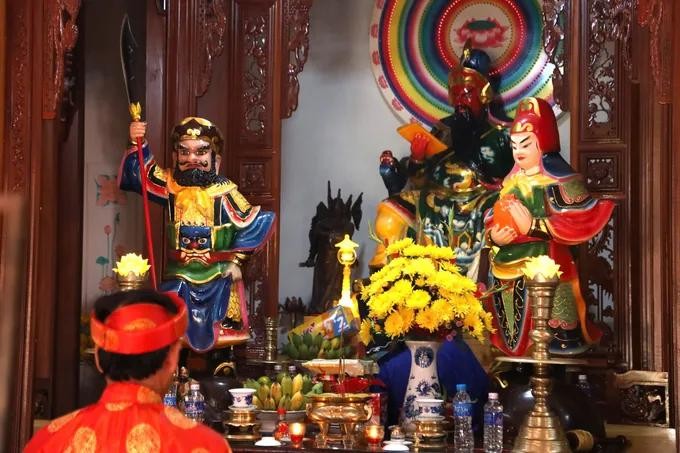
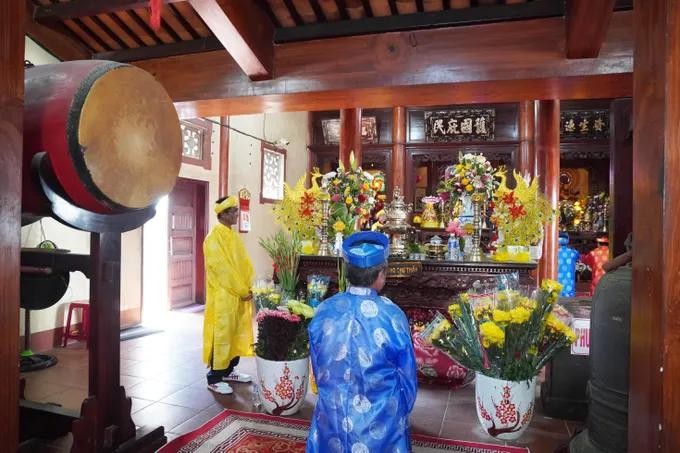
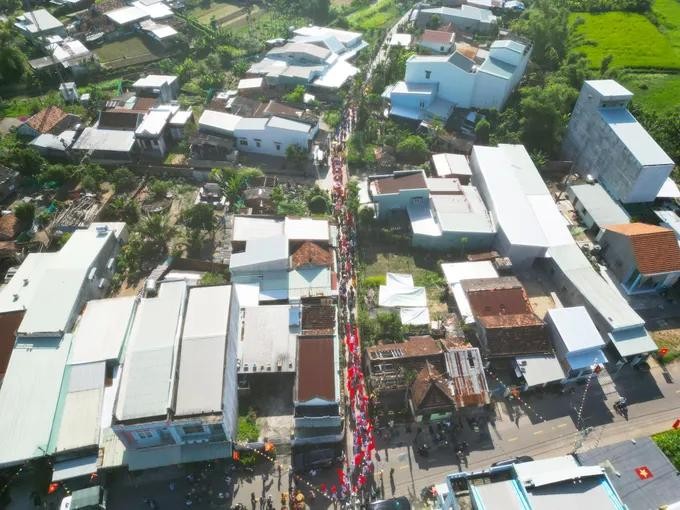
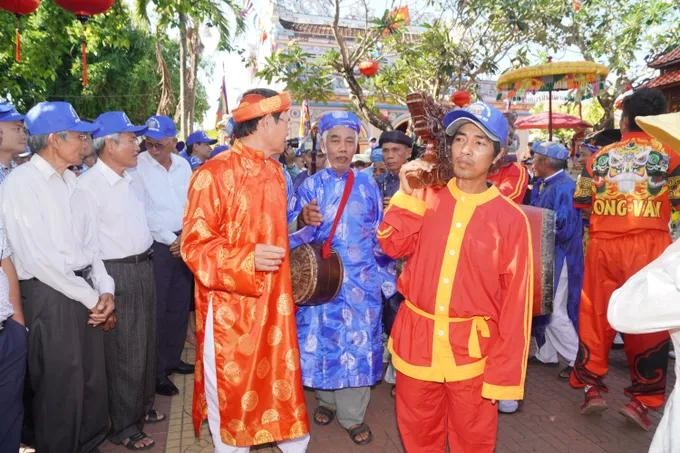
The ritual featured a ceremonial procession on foot, carrying sacred ordinations through five historical sites, including the Quan Cong Temple, Ba Pagoda, Ba Hoa Shrine, the Village Guardian Deity Shrine, and the Twin Tiger Deities Shrine.
Participants, dressed in traditional festival attire, vividly reenacted the images of fishermen, woodcutters, farmers, and herders. They carried offerings and palanquins along village roads, creating a solemn and vibrant atmosphere that reflected the strong sense of ritual propriety, cultural continuity, and community solidarity among the residents of the Nuoc Man area.
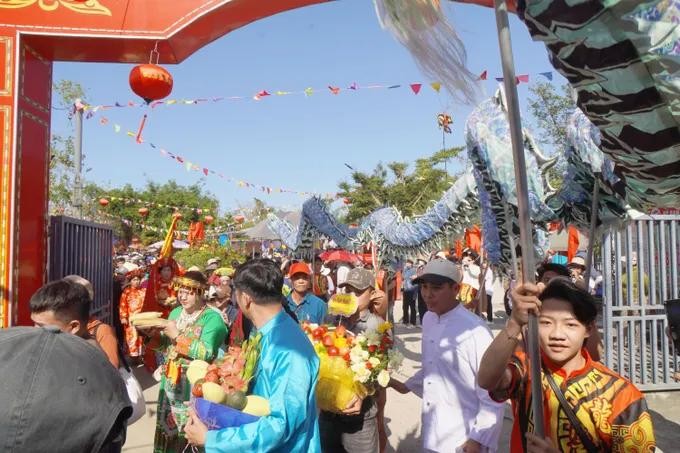
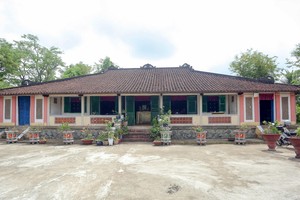
According to the organizing committee, Nuoc Man Trading Port flourished from the 16th to the 18th centuries. Around 1610, merchants from Fujian, China, arrived for trade and settlement alongside local Vietnamese communities, forming a bustling ancient urban center that later expanded to Tuy Phuoc, An Nhon, and Quy Nhon. Ba Pagoda was constructed during this period.
Over time, the port gradually silted up, and Ba Pagoda receded inland into An Hoa Village. Despite these geographical changes, its cultural and historical values have been consistently preserved.
Vo Xuan Lan, a 74-year-old resident of An Hoa Village, noted that due to historical transformations, much of the physical evidence of Nuoc Man Trading Port has disappeared. However, residents later unearthed artifacts, including ancient ship anchors, in the Ba Pagoda area—remnants of the once-thriving trading port.
Although Nuoc Man Port no longer exists, its cultural legacy is still maintained by local people through the Ba Pagoda – Nuoc Man Trading Port Festival. In recent years, the festival has been organized on a larger scale, attracting participants from across the South Central region and the country as a whole, Mr. Lan said.
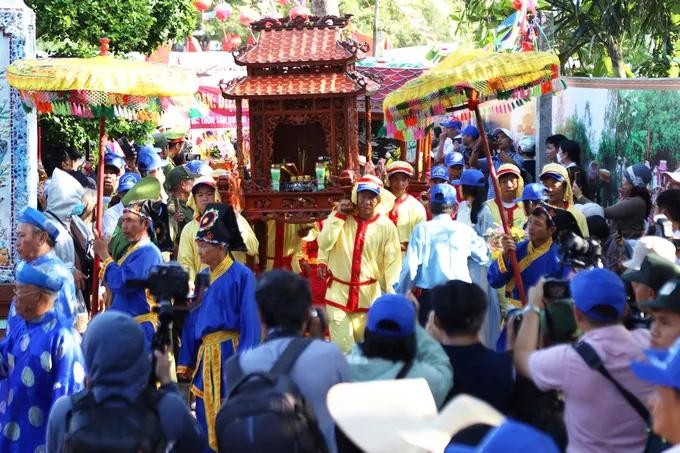
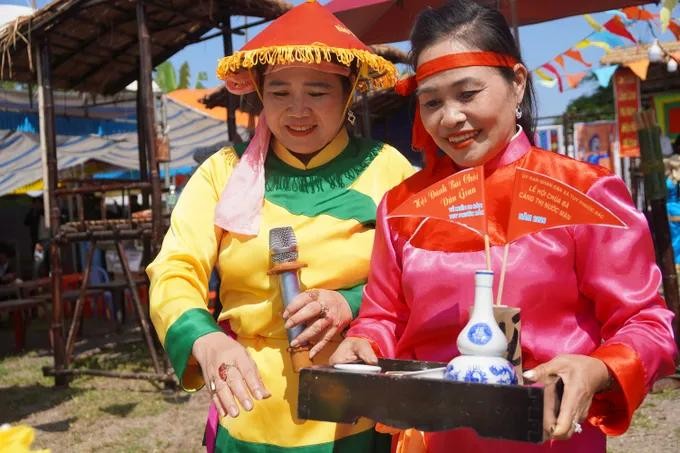
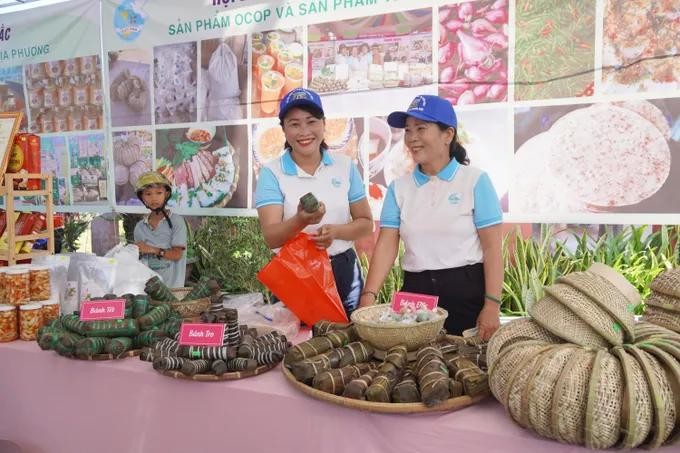
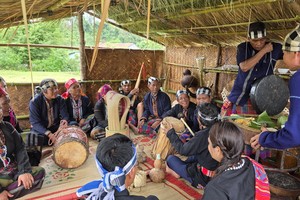
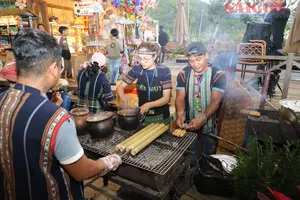
Following the ceremonial rituals, residents and visitors took part in a wide range of traditional cultural activities, including Tuong (Vietnamese classical opera), martial arts performances, Bai Choi folk singing, lion–unicorn–dragon dances, and various traditional games.
Le Anh Duy, Vice Chairman of the Tuy Phuoc Bac Commune People’s Committee, stated that in August 2023, the Ba Pagoda–Nuoc Man Trading Port Festival was officially recognized by the Ministry of Culture, Sports, and Tourism as a national intangible cultural heritage. The locality has since developed plans to position the festival as a distinctive cultural tourism product, attracting a growing number of visitors.
In the coming time, the commune will continue investing in the restoration and preservation of relics and archaeological sites associated with Nuoc Man Trading Port, with a view to safeguarding and promoting its unique cultural values.