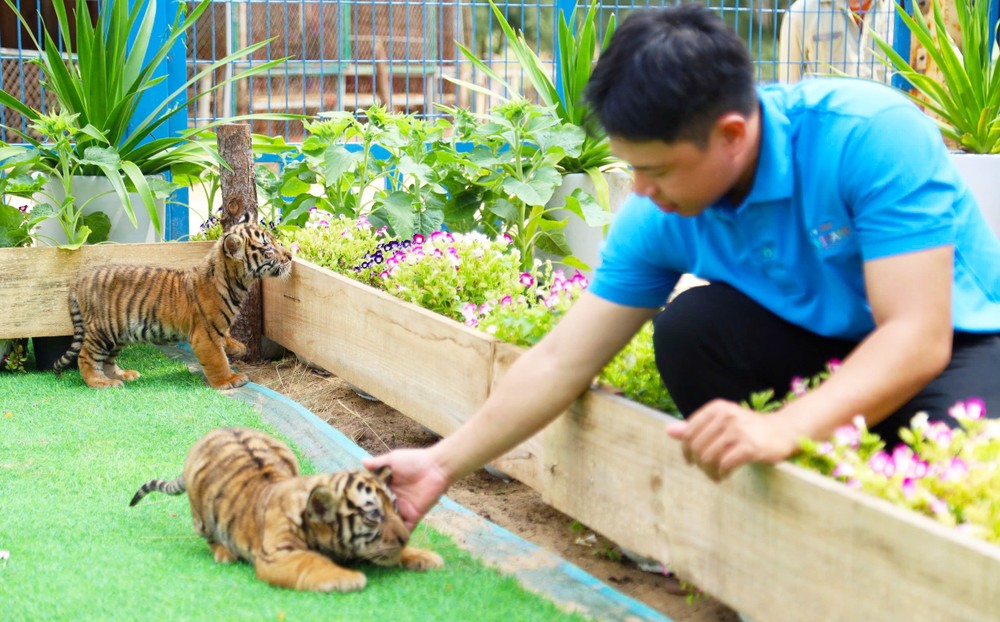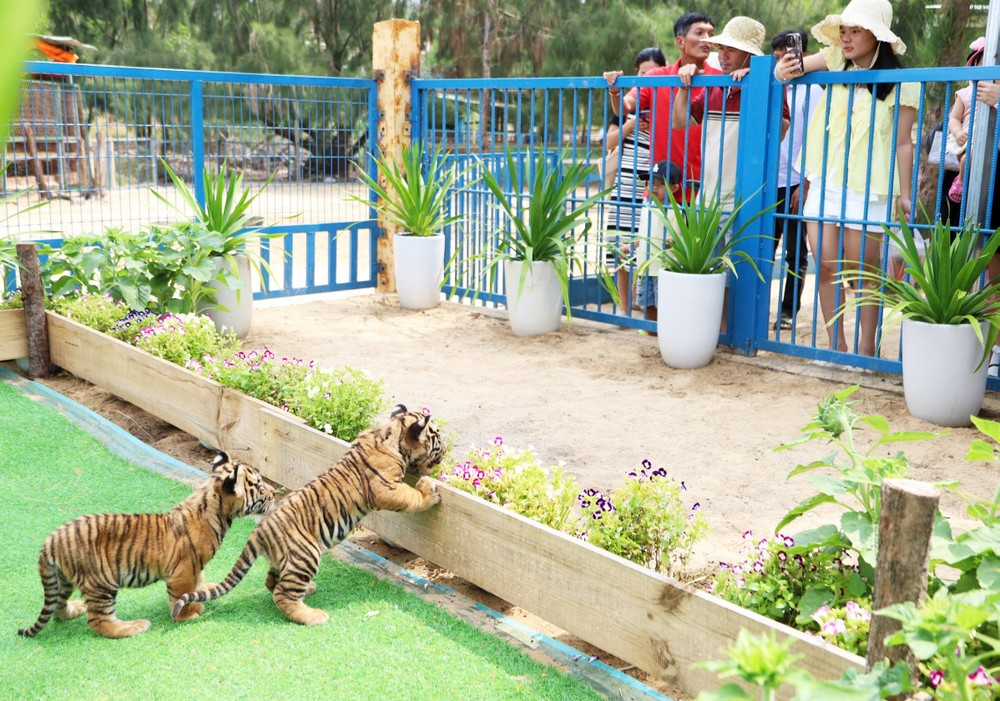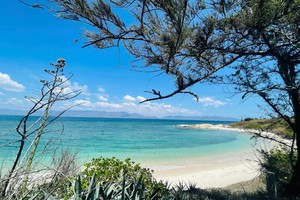
Despite the scorching heat, a steady stream of vehicles continued heading to the Nhon Ly, Nhon Hai, and Cat Tien peninsulas for seaside and community-based tourism. Many families brought children to Zoo Safari Park Quy Nhon to catch a glimpse of the newly born cubs.
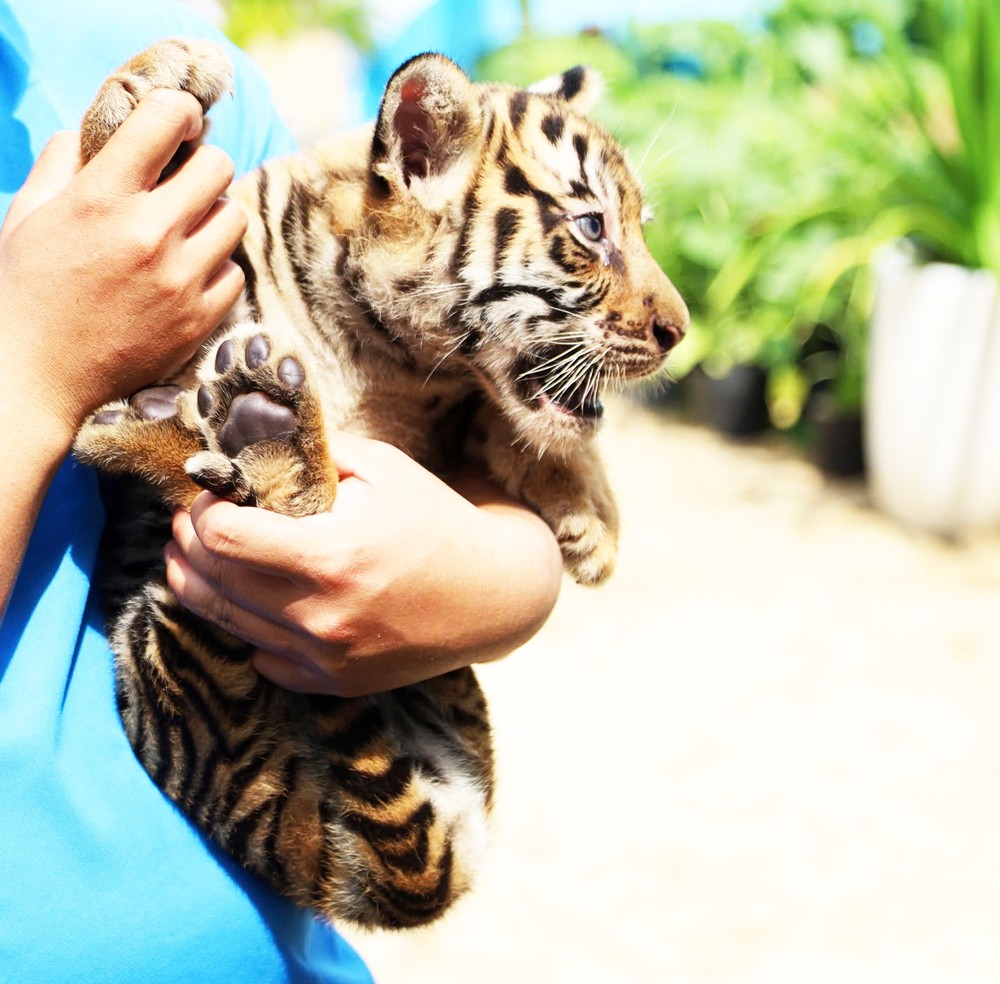
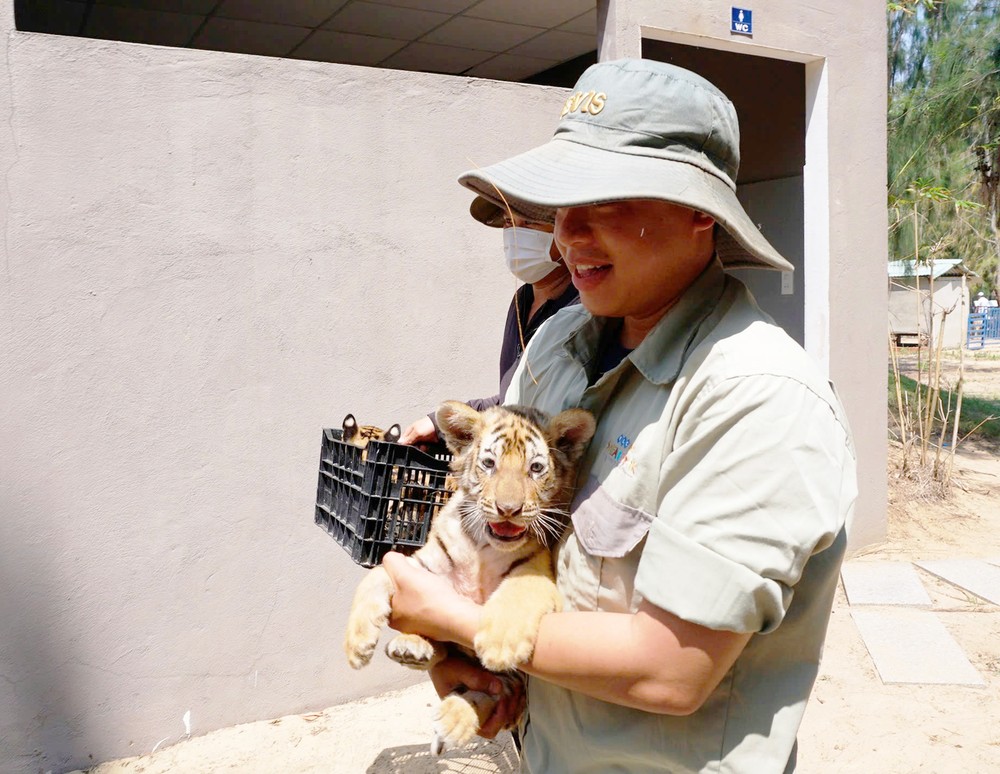
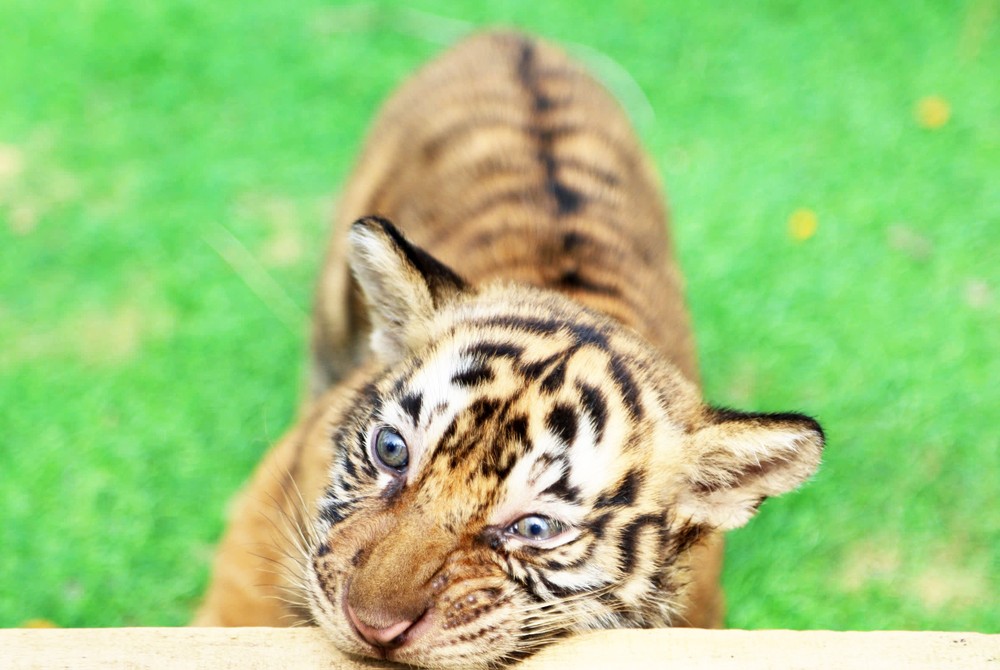
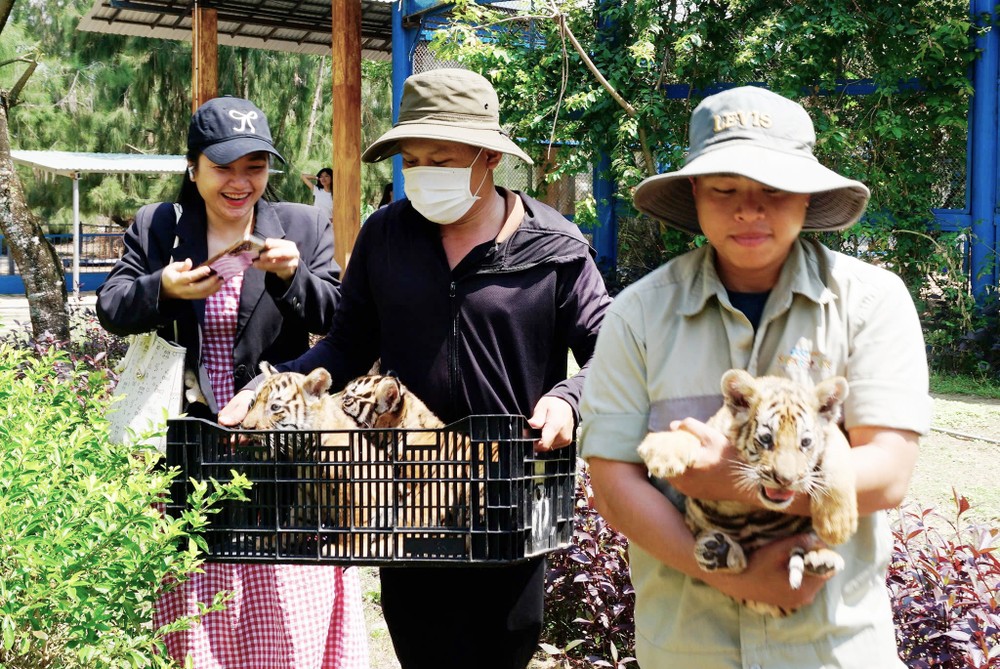
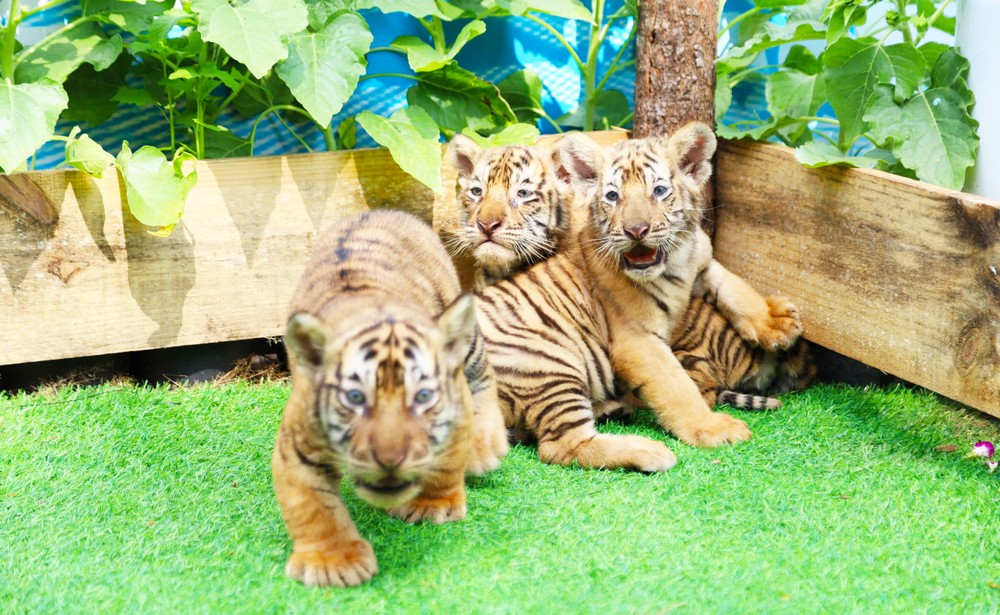
At around 9 a.m., the zoo presented the 20-day-old tiger cubs to visitors and students for viewing and photos. The three cubs—one male and two females—weighing 4–5kg each, have been named Hung, Ha, and Trang. The distinctly Vietnamese names add a sense of familiarity for both locals and tourists.
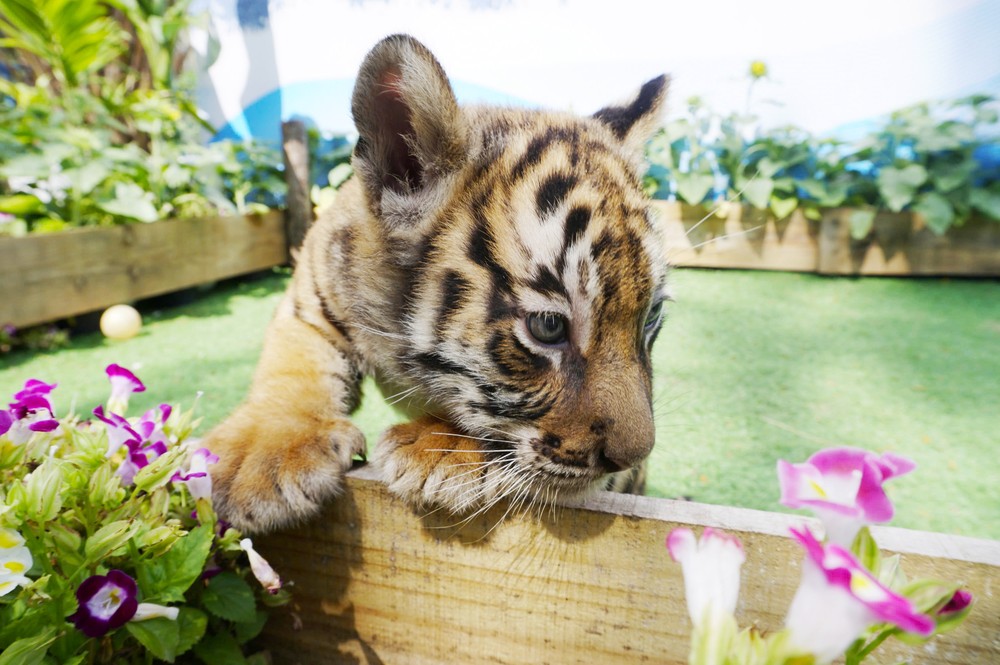
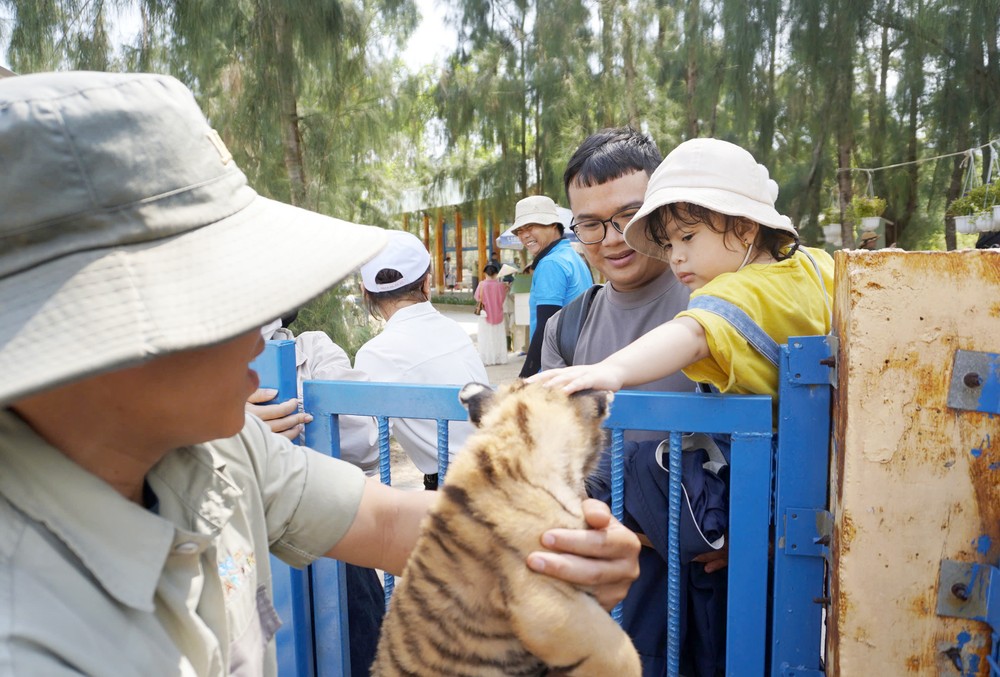
The cubs were born to a Bengal tigress after a 113-day gestation period. All three are healthy, with striking coats and an endearing appearance that has captivated young visitors.
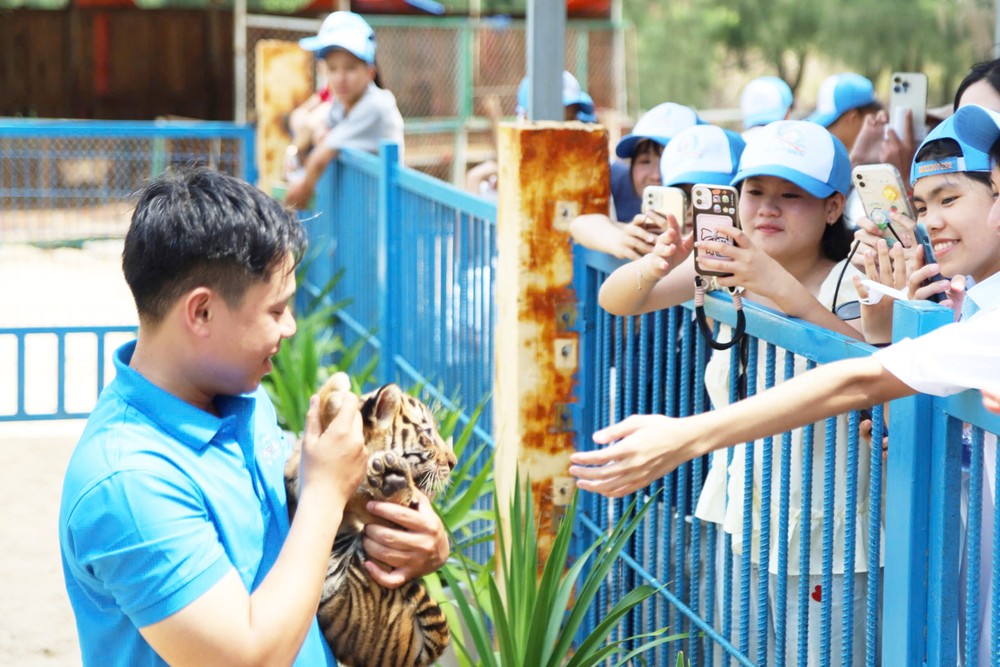
Nguyen Ham Minh Duc, an animal care technician, said that during the Hung Kings Commemoration Day and the April 30–May 1 holiday, the cubs are brought out for sun exposure and photo opportunities for one hour daily, from 8:30 a.m. to 9:30 a.m. As the mother is currently nursing, human intervention is kept to a minimum; the cubs will be gradually introduced to meat at around 45 days old.
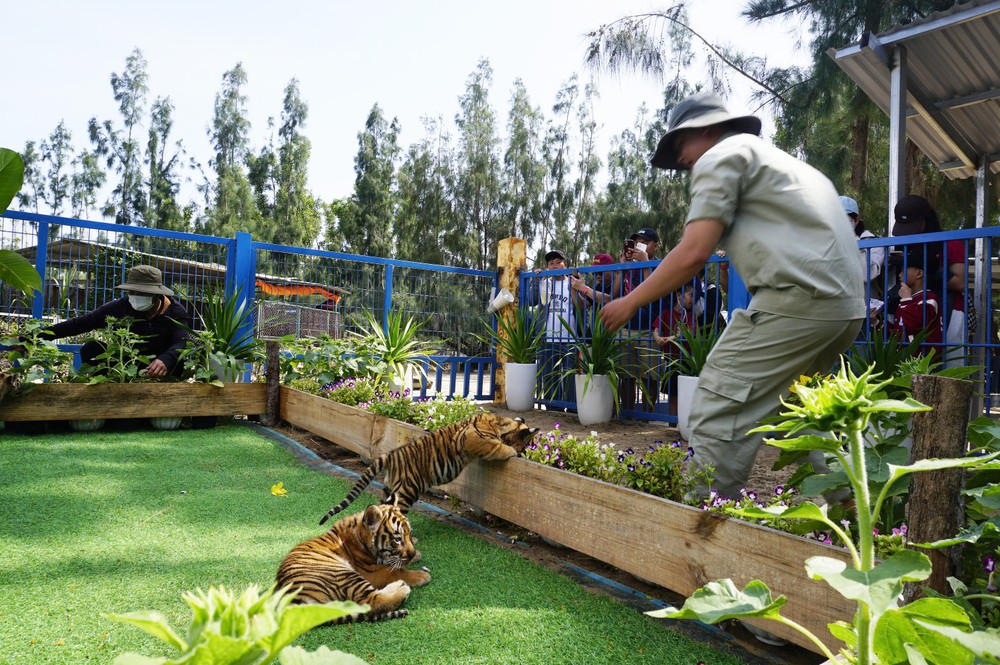
Many visitors expressed excitement at seeing tiger cubs in real life. Hoang Thuy Nhi, a tourist from Hanoi, said the zoo offered her family a range of experiences, describing it as a “miniature world” of wildlife.
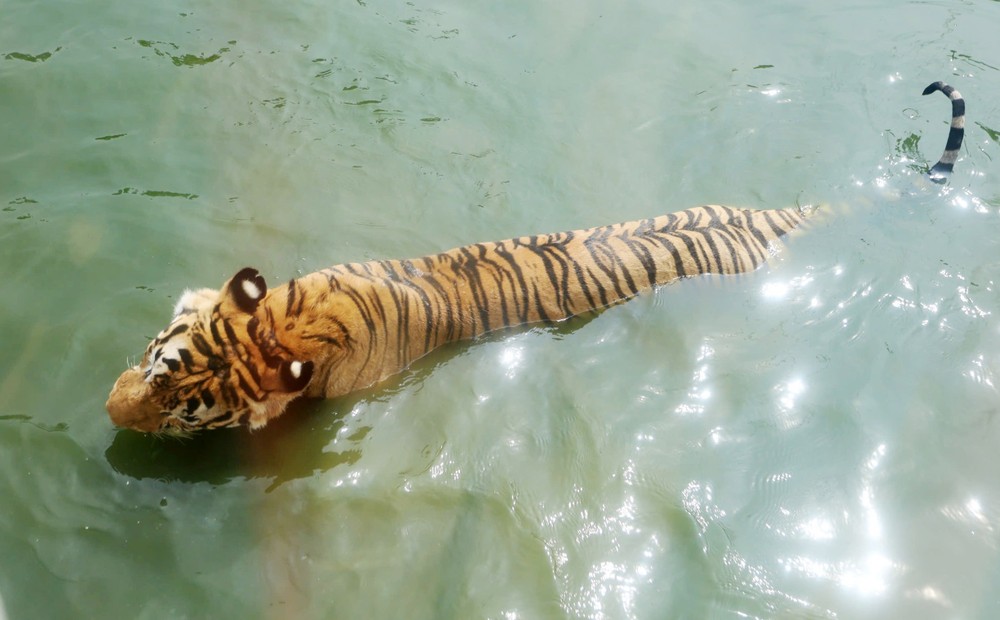
The zoo currently houses 11 tigers, including six cubs. Last year, another tigress gave birth to three cubs, which reached around 50kg after eight months of care.
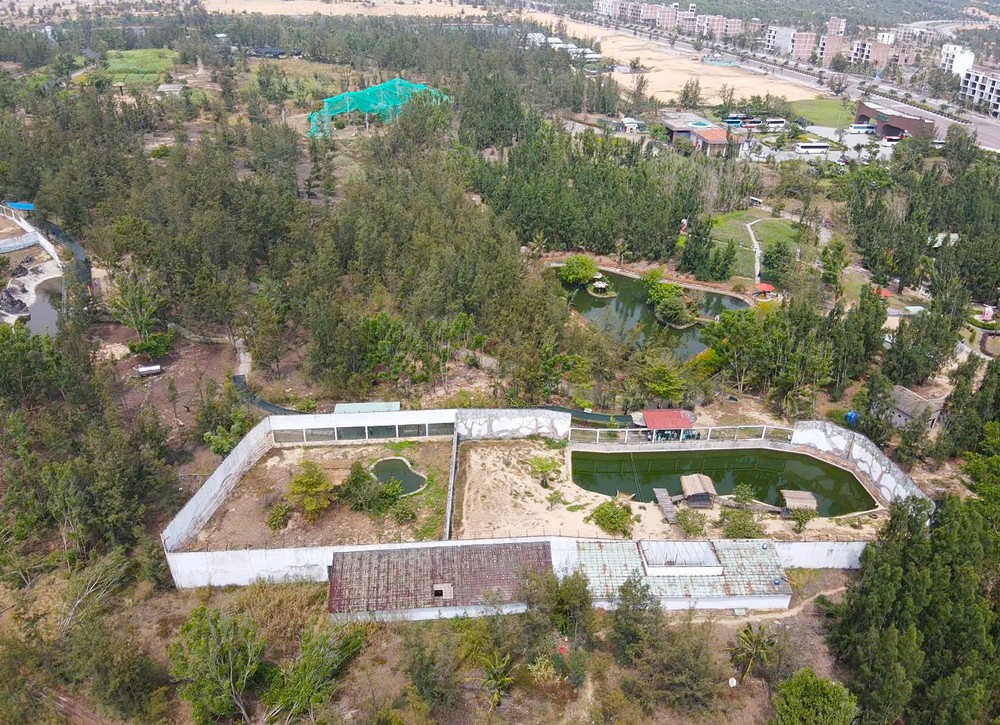
Spanning about 130 hectares, the zoo is home to more than 40 species and nearly 1,000 animals, including rare species such as northern white-cheeked gibbon, camels, tigers, ostriches, leopards, Asiatic black bears, and elephants. The site is divided into 13 functional zones designed to replicate natural habitats for the animals.