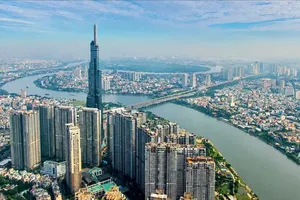
Among them is the seemingly simple question of street names — identifiers used for addresses that also carry layers of history, memory, and cultural identity. A look at the city's street-naming system after the merger shows how these names still reflect the histories of the communities that make up the expanded metropolis.
In Ho Chi Minh City, street names do more than identify locations. Many commemorate historical events, prominent figures, geographical landmarks, or milestones in the city's development. Over time, the network of names has become what poet and journalist Le Minh Quoc calls an "outdoor museum of history," preserving the memory of a city more than 300 years old.
Reading history through street signs
Le Minh Quoc settled in Ho Chi Minh City in the early 1980s. More than four decades later, he still makes a point of noticing the names of the streets he passes.
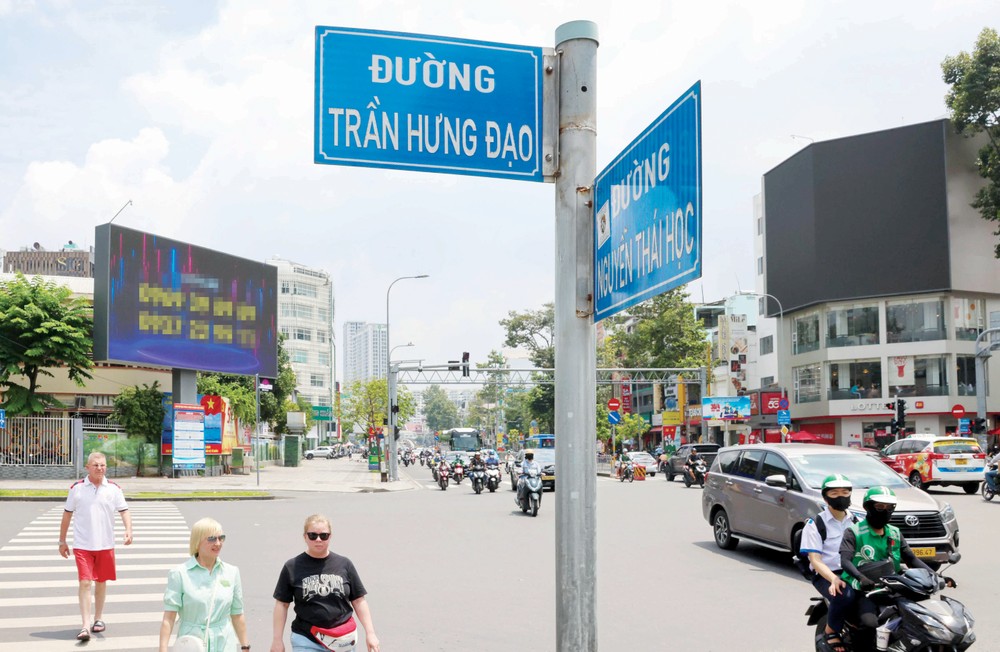
He says the nation's history can be traced through familiar blue-and-white street signs bearing names such as Dien Bien Phu, Truong Sa, Hoang Sa, Nguyen Hue, Vo Thi Sau, and Tran Hung Dao.
"A major city needs modern boulevards, but it also needs memories that endure," Le Minh Quoc said.
That historical memory is not confined to the traditional center of Ho Chi Minh City. Areas incorporated into the city after the administrative merger also retain their own histories through familiar street names.
In Vung Tau Ward, for example, several major roads share names with streets elsewhere in the expanded city.
One example is Truong Sa Street. The section from the intersection of Truong Sa and Vo Nguyen Giap streets to the foot of Long Son Bridge lies in Phuoc Thang Ward, while the section from the bridge to the intersection of Truong Sa and 28 Thang Tu streets is in Long Son Commune.
According to a representative of the Phuoc Thang Ward People's Committee, Truong Sa Street was named in April 2014, at the same time as Hoang Sa and Vo Nguyen Giap streets. Before the merger, these roads were key arteries linking Vung Tau City with Long Son Island Commune.
Truong Sa Street is the main axis, stretching about 8 kilometers and measuring 60 meters wide. It connects Vo Nguyen Giap Street with the 28 Thang Tu intersection, passing through Long Son and Cha Va bridges.
"The names were chosen to affirm the sacred sovereignty of the nation over Truong Sa and Hoang Sa, while helping foster patriotism, national pride and awareness of the responsibility to protect the country's sovereignty over its seas and islands among younger generations," the ward official said.
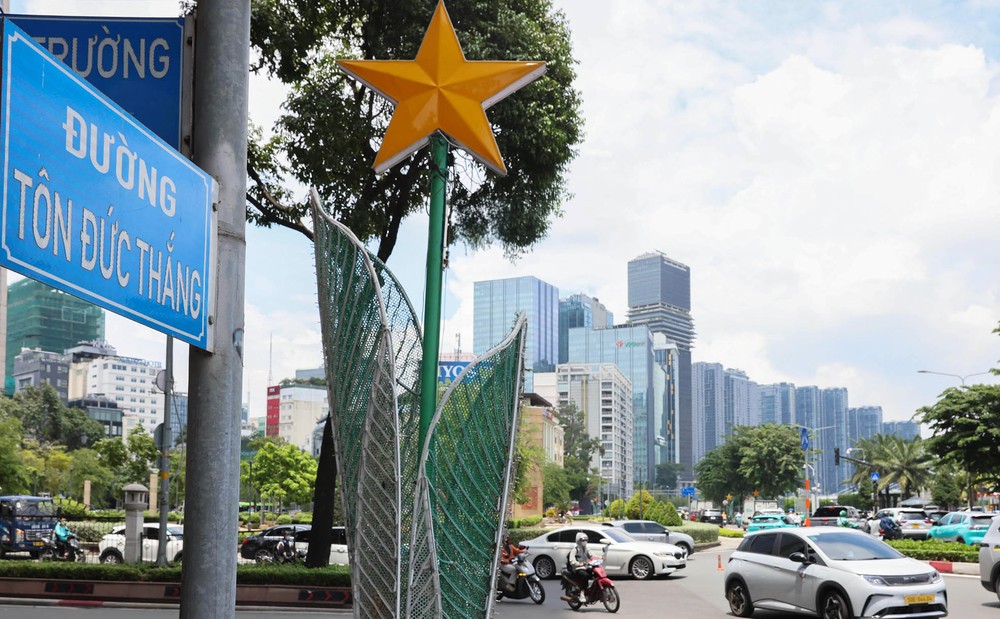
In Con Dao Special Administrative Zone, many central streets also bear familiar names, including Ton Duc Thang, Le Duan, Le Hong Phong, Vo Thi Sau, and Nguyen Hue.
For residents, these names are more than geographical markers. They have become part of everyday memory.
Tran Kim Le Thi, who lives on Nguyen Hue Street, said Ton Duc Thang Street immediately brings to mind what she considers the island's most scenic road, winding along Con Son Bay. Nguyen Hue Street forms the island's central hub, lined with restaurants and eateries, while Le Duan Street is known for its old houses and heritage tropical almond (Terminalia catappa) trees.
Although Con Dao changed administratively from a district to a special administrative zone, Thi said the cultural and historical values associated with its streets remain unchanged.
Dr. Nguyen Dinh Thong, Vice Chairman of the Ho Chi Minh City Association of Historical Sciences, said most streets on Con Dao were named after historical figures and revolutionary fighters who were imprisoned there.
The duplication of street names across different urban areas, he said, is a normal part of urban development and does not diminish the historical significance of individual streets.
"Ton Duc Thang Street in Con Dao is associated with the revolutionary activities of President Ton Duc Thang during his imprisonment there. Ton Duc Thang Street in central Ho Chi Minh City, meanwhile, is associated with the Ba Son Shipyard, where President Ton Duc Thang once worked and participated in revolutionary activities," Dr. Nguyen Dinh Thong said.
"The same name can carry a different layer of historical memory in each place."
Preserving local identity
The former Binh Duong area offers another illustration of how street names preserve the memory of a locality.
Many roads there are closely associated with local history and landmarks, including Huynh Van Luy Street, Huynh Van Nghe Street, Binh Duong Boulevard, Lo Lu, and Lao Cai.
Musician Pham Dac Hien, former Chairman of the Binh Duong Literature and Arts Association, said such names evoke the people, places and historical processes that have shaped Binh Duong's development.
They represent cultural layers accumulated over time and reflect the area's distinctive identity within the larger urban landscape of today's Ho Chi Minh City, he said.
Preserving these values is therefore an important part of the city's development. Retaining street names rooted in local history and culture not only honors the past but also helps shape a modern urban identity in which every street has a story to tell.
In Phu Loi Ward, for instance, a street is named after Huynh Van Nghe, a celebrated military poet whom local residents hold in high regard.
Early each morning, residents walk or cycle along the roughly 3-kilometer road, enjoying the fresh air.
A focal point is a park covering more than 1,000 square meters, which regularly hosts community cultural and sporting activities. In the afternoon, children fill the area with laughter, while in the evening it becomes a familiar gathering place for older residents practicing exercise and students rehearsing performances.
The section beside the park is lined with purple queen’s crepe-myrtle (Lagerstroemia speciosa) trees interspersed with bright bougainvillea. The open, well-maintained surroundings give the street a distinctly picturesque character.
Tran Thi Dep, who has lived in Phu Binh residential quarter in Phu Loi Ward for more than 31 years, remembers the street before its transformation — when the area was muddy and dusty — as well as its gradual expansion and paving.
"Every morning, when I walk with my children and grandchildren, I tell them about military poet Huynh Van Nghe so that younger generations can better understand the history and traditions of their hometown," Dep said.
Nguyen Quoc Dung, a resident of Phuoc An residential quarter in Phu Loi Ward, recalls another road that has come to symbolize the region's economic transformation: National Highway 13, now known as Binh Duong Boulevard.
From the late 1990s to the early 2000s, the section from Vinh Binh Bridge, now in Hiep Binh Ward, to the area of Ben Cat, now part of Bau Bang Commune, became a vast construction site.
Heavy machinery, engineers, and workers operated around the clock amid clouds of dust as the road was transformed into a broad modern artery. Some sections eventually reached eight lanes, with a roadbed more than 40 meters wide.
Binh Duong Boulevard has long been regarded as a symbol of the province's development. After the merger, the boulevard has become part of the expanded Ho Chi Minh City's dynamic development landscape.
Street names also serve as an informal and highly visible form of public education.
A child growing up on Vo Thi Sau Street may eventually ask who Vo Thi Sau was. A foreign visitor arriving on Dien Bien Phu Street may be prompted to learn about the historic battle that has become an important part of Vietnam's modern history.
As Ho Chi Minh City continues to expand and evolve, its urban identity still needs tangible links to the past. Street names provide one such connection, embedding history and memory into the everyday landscape.
Yet the city's system also includes many roads identified primarily by numbers or descriptive names, particularly in newer urban and suburban areas. Examples cited by Le Minh Quoc include Kenh Nuoc Den (literally Dark Water Canal), Dien Cao The (literally High Voltage), Cong Hop (literally Box Culvert), Duong Vao Cho An Suong (literally Road to An Suong Market), and Duong Vao Chua Khanh An (literally Road to Khanh An Pagoda).
Apart from specific circumstances that may justify such names, poet-journalist Le Minh Quoc said, these labels can offer limited cultural depth or a distinctive sense of place.
"A street name does more than identify a location. It can also tell the story of the land," he said. "A name with historical or cultural significance helps residents remember the place where they live, while giving visitors another way to understand the city."