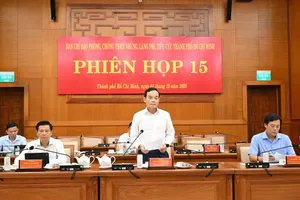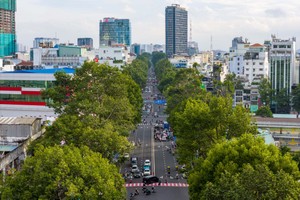
In his interview with SGGP Newspaper, National Assembly Deputy Do Duc Hien, a full-time member of the National Assembly’s Law and Justice Committee, stated that the Law on Urban Development boasts numerous specific policies meticulously tailored to align with HCMC’s practical demands and conditions. The law unlocks a vastly broader policy landscape, granting proactive empowerment to the municipality, strictly adhering to the ethos that “the locality decides – the locality executes – the locality shoulders absolute responsibility.”
The city has reportedly pivoted from a position of “asking for pilot mechanisms” to proactively forging development upon a robust legal bedrock. The core issue currently at stake is execution capacity.
The burning question is no longer “what will the Party Central Committee, National Assembly, or Government allow HCMC to do?” but rather “how will HCMC decide and orchestrate implementation?” to generate the most rapid, highly effective results.
Deputy Do Duc Hien elaborated that alongside transferring approximately 240 jurisdictions to the HCMC People’s Council, the municipal People’s Committee, and its Chairman, the Law on Urban Development concurrently permits the local administration to directly promulgate normative legal documents. Armed with these decentralized powers, HCMC can proactively roll them out without agonizingly waiting for Central directives.
The legislation stipulates unprecedented mechanisms exempting legal liability for cadres executing assigned jurisdictions, provided they didn’t act for personal gain. If they strictly adhered to procedures yet damages inadvertently occurred, they’re entirely shielded. When officials execute tasks for the common good, acting purely for HCMC’s general development, they’ll also be considered for liability exemption, depending heavily on the incident’s nature and severity.
Consequently, the sweeping law essentially forged a robust legal corridor empowering cadres to boldly execute duties. However, to avert agonizing delays where officials possess authority but refuse to utilize it, the Deputy firmly believes two critical actions must be undertaken immediately.
Authorities must urgently materialize all newly empowered contents. Simultaneously, they must thoroughly disseminate these details so HCMC’s cadres comprehensively grasps them, meticulously translating them into concrete programs and tasks linked to each unit’s duties. This rollout must rigidly follow the “6 clears” motto: clear personnel, clear tasks, clear timelines, clear responsibilities, clear authority, and clear results.

Deputy Do Duc Hien outlined specific tangible changes through which citizens and enterprises will perceive the law’s enforcement efficacy. Collectively, these policies forge a stable legal corridor, untangling agonizing bottlenecks to develop HCMC into a globally competitive, multi-polar metropolis boasting smart infrastructure perfectly aligned with Politburo directives.
For citizens, the major outcome must be vividly reflected in a radically citizen-centric, highly livable city. For enterprises, it translates to slashing unreasonable business conditions, vastly shortening bureaucratic timelines, and substantially cutting compliance costs.
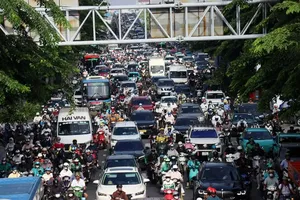
In recent times, HCMC reportedly confronted numerous severe bottlenecks. These included sluggish, unsynchronized urban planning, alongside the agonizingly slow pace of constructing social housing, renovating dilapidated apartments, and relocating canal-side houses. Furthermore, the city faced myriad inadequacies regarding environmental pollution, severe flooding, and waste treatment.
The Law on Urban Development permits HCMC to formulate a unified master plan materializing long-term targets. Grounded on that foundation, the city is empowered to proactively promulgate mechanisms exploiting subterranean, low-altitude, and high-altitude spaces, rigorously ensuring harmony between developmental imperatives and land users’ legitimate rights.
The legislation also establishes a bedrock for the municipality to issue preferential policies, mobilize lucrative resources, and drastically shorten investment procedures for social housing and worker accommodations. It significantly accelerates renovating dilapidated apartments while embellishing residential zones and the canal network.
When effectively deployed, HCMC will finally possess potent tools to dismantle stubborn, decades-old bottlenecks. This empowers the city to optimally mobilize social resources, profoundly improving citizens’ quality of life as the developmental landscape and population scale massively expand.
Since HCMC is urgently rolling out the Law on Urban Development, robust supervisory mechanisms will guarantee effective enforcement while mitigating potential negative impacts. The legislation isn’t a “rigid framework” but an “open institution,” demanding continuous optimization rooted in practical realities. Consequently, it dedicates an entire chapter explicitly stipulating agency responsibilities regarding supervision, inspection, plus strict accountability mandates.
Annually, HCMC must report enforcement results to the National Assembly Standing Committee. If the municipality applies policies diverging from standard stipulations, it must immediately report to the National Assembly. Meanwhile, the Government bears responsibility for directing, monitoring, and rigorously controlling execution risks.
The HCMC administration is mandated to provide transparent public accountability, empowering citizens to supervise effectively. Because immense jurisdictions were granted, actively listening to feedback from voters and enterprises is heavily emphasized. These function as vital early warning signals, allowing HCMC to promptly recalibrate unsuitable regulations.
Finally, Deputy Do Duc Hien outlined mechanisms guaranteeing rapid decision-making alongside crystal-clear accountability. HCMC’s decentralization contents were meticulously calculated to align perfectly with developmental demands as well as execution capacity. It strictly meets requirements for having specific “valves and locks.”
The embedded power control mechanism essentially centers around radical decentralization linked with multi-tiered control. This process must guarantee sheer openness, firmly tied to supervisory duties. Within each sector, these safeguards are appropriately engineered. Furthermore, shifting from an approval-based pre-check to a post-check system, inextricably linked to the personal accountability of top leaders, will significantly propel timely task execution. This fundamentally serves as the ultimate fail-safe ensuring effective municipal power control.



)