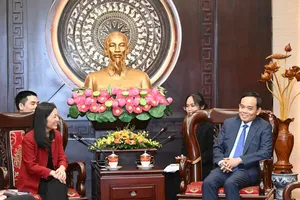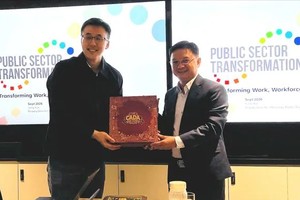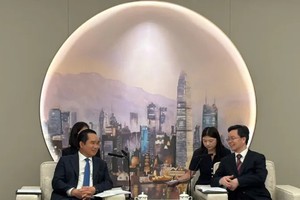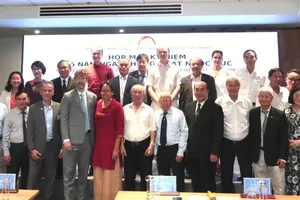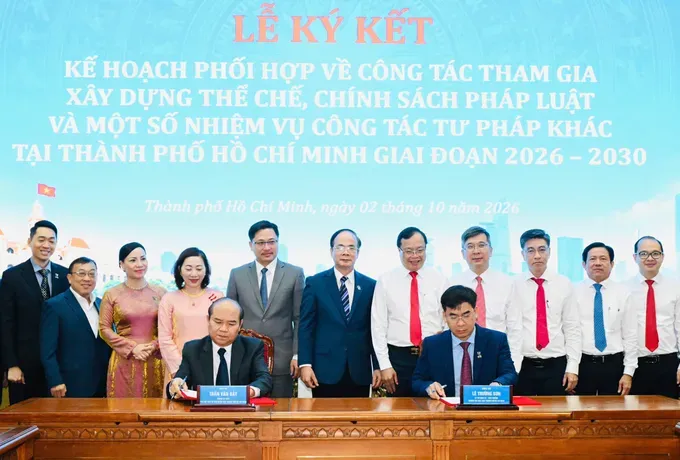
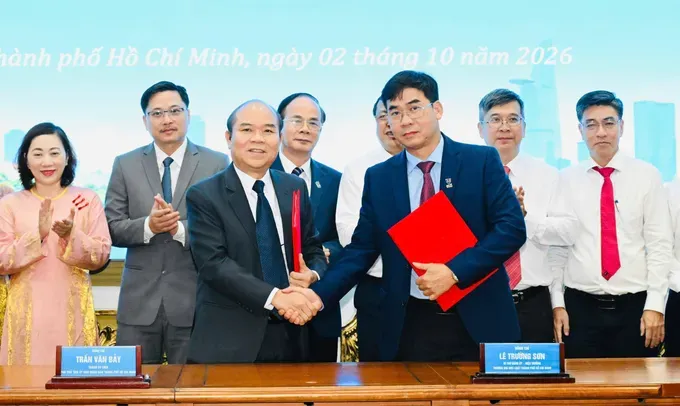
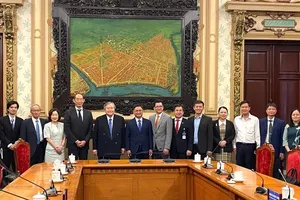
On October 2, Vice Chairman of the Ho Chi Minh City People’s Committee Tran Van Bay chaired a ceremony to sign the “Coordination Plan between the Ho Chi Minh City People’s Committee and the Ho Chi Minh City University of Law on participation in institutional development, legal policy development and other judicial tasks in Ho Chi Minh City for 2026–2030.”
Speaking at the signing ceremony, Vice Chairman of the Ho Chi Minh City People’s Committee Tran Van Bay emphasized that the signing marked a strategic and timely step to concretize major orientations set by the Party Central Committee while pooling intellectual resources to address practical challenges facing Ho Chi Minh City over the next five years.
According to him, Ho Chi Minh City is entering a period of accelerated development, creating high demands for institutional reform. Politburo Resolution No. 66-NQ/TW, dated April 30, 2025, on reforming lawmaking and law enforcement, and Conclusion No. 09-KL/TW, dated March 10, 2026, on completing the structure of Vietnam’s legal system, serve as guiding principles, underscoring the need to renew legal thinking and shift from administrative governance toward institutional development to meet the country’s development requirements in the new era and help the city achieve double-digit growth.
The Urban Development Law No. 18/2026/QH16 has opened up new institutional space for Ho Chi Minh City. This requires the city to urgently concretize the law and promulgate a comprehensive and timely system of implementing regulations.
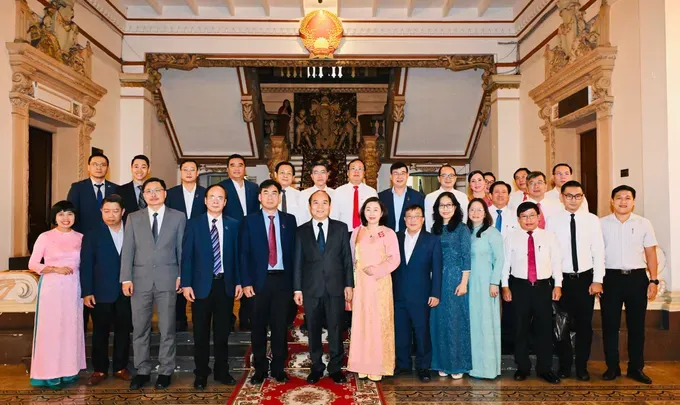
To ensure substantive results from the coordination plan, Vice Chairman of the Ho Chi Minh City People’s Committee Tran Van Bay asked the two sides to focus on improving the quality of their participation in institutional and legal policy development; conduct research, review, and provide recommendations on regulations guiding implementation of the Urban Development Law to unlock land, infrastructure and urban finance resources.
He also called for proactively commissioning research projects and organizing in-depth seminars to seek solutions to institutional bottlenecks, develop new urban management models and establish special pilot mechanisms for the city.

)