Beyond mechanical addition
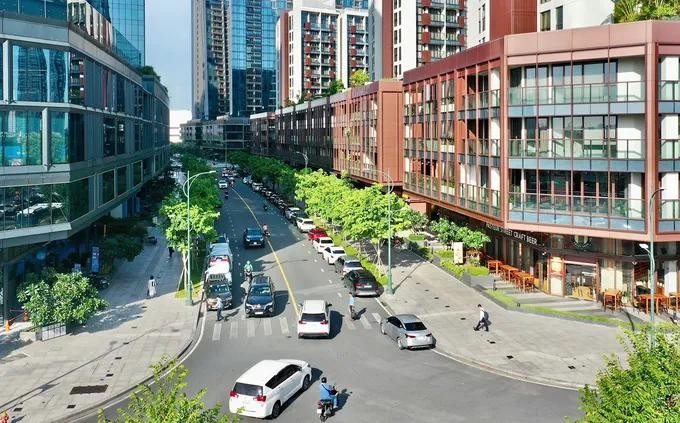
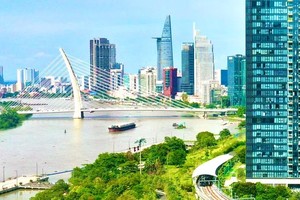
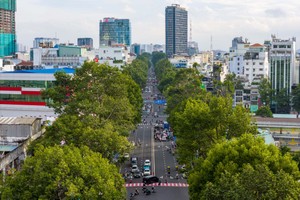
Following its recent administrative boundary rearrangement, HCMC boasts a brand-new developmental footprint spanning approximately 6,700km2, consisting of 168 wards, communes, and a special zone. Consequently, the HCMC Master Plan for the 2025-2050 period introduces a profoundly novel approach.
Socio-economic factors, urban spaces, plus infrastructure aren’t mapped out as isolated layers anymore; instead, they’re seamlessly embedded within a unified developmental framework where different roles mutually complement one another.
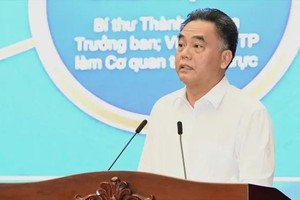
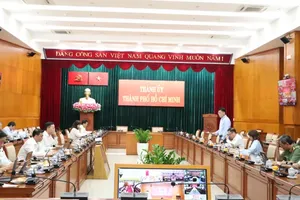
Speaking at the 9th expanded conference of the 1st HCMC Party Executive Committee, Director of the HCMC Department of Planning and Architecture Truong Trung Kien stated the locality will formulate one singular Municipal Master Plan. This comprehensive blueprint integrates and entirely supersedes existing plans, heavily relying on two massive pillars of socio-economic orientations and strategic allocation of urban developmental spaces.
Accordingly, the blueprint pinpoints four focal issues demanding immediate resolution:
- Relentlessly elevate competitive capacity;
- Allocate space commensurate with the ecological carrying capacity;
- Bolster regional connectivity via robust digital infrastructure;
- Inevitably upgrade the urban quality of life.
Furthermore, the master plan dictates a stringent requirement to untangle persistent developmental bottlenecks. These notoriously include spatial organization, climate change adaptation, paralyzing traffic jams, alongside land subsidence. Hand in hand with this is the strong orientation cultivating high-tech sectors to serve as a rock-solid foundation for digital transformation, ultimately reeling in top-tier enterprises.
During a mid-September consultation conference, Vice Chairman of the HCMC People’s Committee Hoang Nguyen Dinh emphasized that the master plan acts as the ultimate bedrock. It fundamentally orients urban spaces plus land-use targets, establishing a comprehensive technical infrastructure system for decades to come.
Materializing the grand orientations outlined in Resolution 09 of the Politburo, it includes radically reorganizing spaces following a multi-center model, linking urban development with public transit, efficiently exploiting underground spaces, and leveraging specific mechanisms mobilizing lucrative developmental resources.
5-5-10 structure
According to the planning orientation, HCMC is thoroughly organized under the “5 driving poles – 5 strategic linkage systems – 10 developmental governance zones” structure. Within this framework:
- The central core of Saigon, Cho Lon, and Thu Thiem firmly retains its paramount role as a global governance, financial, plus service hub;
- The Eastern flank is slated to become a bustling innovation pole;
- The North operates as a robust industrial and logistics pole;
- The South serves as a seaport, free-trade, alongside energy pole
- The Vung Tau – Long Hai – Ho Tram corridor morphs into an elite marine and tourism pole.
This intricate structure seamlessly interconnects the poles so they mutually complement each other. The strategic linkage systems are projected to string together Moc Bai, Cu Chi, and Hoc Mon right through the central core, Thu Duc, Di An, Thuan An, plus Bien Hoa, reaching Phu My and Cai Mep. Concurrently, it forms a vital East-West axis seamlessly linking the Mekong Delta with Can Gio, Vung Tau, Con Dao, alongside the sprawling Long Thanh Airport.
The economic space is being sculpted toward a far more diversified trajectory. It ambitiously incorporates the maritime economy, logistics, high-tech manufacturing, international finance, the digital economy, massive data centers, clean energy, plus high-caliber tourism.
Specifically, Can Gio is pinpointed as a marine ecological space acting as a bustling international transshipment port. The Cai Mep – Thi Vai cluster functions as an industrial and energy zone. Vung Tau vigorously drives marine tourism. Con Dao operates on a green, smart island model, inextricably linking ecological conservation with rich heritage.
A metropolis boasting a multi-polar structure inherently demands its infrastructure organized across multiple tiers. Beyond merely ground-level spaces, the comprehensive blueprint meticulously factors in subterranean zones, elevated spaces, and robust digital infrastructure.
Urban railways, expressways, seaports, airports, enormous data centers, alongside urban digital twins are definitively identified as overwhelmingly critical components.
For Vice Chairman Nguyen Duc Lap of the HCMC Association of Architects, pursuing a multi-polar approach doesn’t mean expanding the urban footprint at all costs. As industrial and logistics poles steadily materialize, investment pressure will inevitably skyrocket.
If the city lacks crystal-clear boundaries dictating urban developmental land versus ecological spaces, natural buffer zones could face catastrophic shrinkage step-by-step. Therefore, the master plan must function as a stringent control tool simultaneously.
Ecological zones, agricultural tracts, and mangrove forests simply can’t be viewed as leftover acreage once urban footprints are completely mapped out. The non-negotiable principle laid down dictates economic growth must strictly remain within carrying capacity limits of the fragile environment.
From that profound perspective, Vice Chairman of the HCMC People’s Committee Hoang Nguyen Dinh explicitly defined this as a monumental mandate orienting urban spaces, socio-economic targets, plus infrastructure systems for decades ahead, while remaining inextricably tethered to guaranteeing citizens’ quality of life.
According to the current timeline, the HCMC Master Plan is slated for rigorous review. The HCMC People’s Committee anticipates finalizing procedures and officially greenlighting the blueprint by approximately November 2026. This fundamentally establishes a rock-solid foundation for all echelons to deploy HCMC’s socio-economic orientations.
)