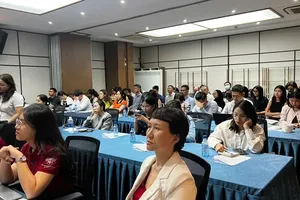
A seminar titled "Professional Farmers", organized by the Ministry of Agriculture and Environment on June 27, offered a new perspective on the profile of farmers in the digital era. Through practical models, farmers are gradually shifting from a production mindset to an agricultural economy mindset, using technology to increase the value of farm products and improve incomes.
From manual management to digital governance
At the seminar, the concept of professional farmers was illustrated not only through policy discussions but also by a range of successful production models.
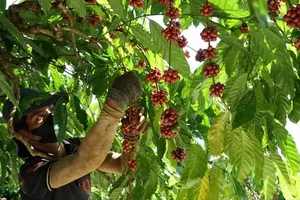
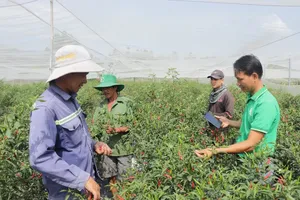
Director Nguyen Xuan Thao of Bich Thao Coffee Cooperative in Son La Province said the cooperative was established in 2017 with just 11 members. It has since expanded to include around 800 farming households and developed nearly 2,000 hectares of coffee-growing areas. According to Thao, the biggest transformation has been in production thinking rather than scale.
Coffee growers, who previously focused mainly on output and relied heavily on traders, now organize production along the value chain. This includes harvesting only ripe coffee cherries, applying VietGAP standards, using new varieties, investing in deep processing, developing brands, ensuring product traceability and marketing products through digital platforms.
Another example is the 26-3 (March 26) Green Agriculture Cooperative in Son La Province.
According to deputy director Hoang Thi Tham, women farmers at the cooperative have adopted a "dual transformation" model that combines green and digital transformation. The cooperative uses agricultural by-products and spent mushroom substrate to produce organic fertilizer, operates a "Green Station" model and applies digital management tools to monitor production and business activities in real time.
In Ho Chi Minh City, Lam Dong Province, Tay Ninh Province and Dong Thap Province, high-tech agriculture and digital transformation models are also demonstrating how technology and modern management are shaping professional farmers.
Tuan Ngoc Agricultural Cooperative in Long Truong Ward, Ho Chi Minh City, has developed a hydroponic vegetable production model using Israeli technology with sensors that monitor temperature, humidity, pH and electrical conductivity (EC), all controlled through a smartphone.
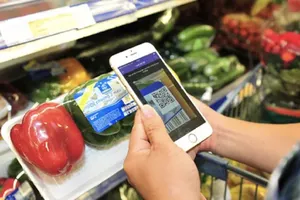
Lam Ngoc Tuan, the cooperative's director, said a single smartphone enables managers to monitor temperature, humidity, lighting, pH and EC across every greenhouse automatically. The entire production process has been digitalized, while products are traceable through QR codes and supplied to supermarkets, schools and institutional kitchens.
Rather than serving solely as field workers, farmers are becoming operators of data-driven production systems.
At the enterprise level, U&I Agriculture Joint Stock Company (Unifarm), led by Pham Quoc Liem, is another example of high-tech agriculture. The company applies sensor systems, automated irrigation, data-driven production management and new variety research to meet export standards for markets including Japan and South Korea.
The company currently develops more than 411 hectares of banana plantations in the An Thai High-Tech Agricultural Park in Phuoc Thanh Commune, Ho Chi Minh City, while transferring production techniques, planting materials and cultivation processes to partner farmers managing thousands of hectares of banana plantations in Ho Chi Minh City, Dong Nai Province and other localities.
Agricultural sector increases value-added production
According to Cao Minh Tuan, deputy director of the National Agricultural Extension Center, Vietnam's agricultural sector is shifting from a focus on increasing output to generating higher value-added products, and from manual management to digital governance.
Cao Minh Tuan said professional farmers should be built on three pillars: a new mindset, new production methods and new value creation. In addition to strong production skills, they should understand markets, master science and technology, comply with production standards and participate in cooperatives and agricultural value chains.
He added that professional farmers also need four core competencies: professional skills, economic management capability, collaboration skills and digital capability.
Le Minh Hoan, former Vice Chairman of the National Assembly and former Minister of Agriculture and Rural Development, shared: "Becoming a professional farmer is not the ultimate goal, but a process of continuous innovation. Today's professionalism will be different from tomorrow's professionalism as science and technology, digital transformation, and artificial intelligence continuously develop."
Drawing on the story of Son La Arabica coffee, he believes that agricultural products, in order to increase their value, must know how to tell their story. Altitude, climate, terrain, local culture, and the producing community can all become differentiating values. People don't just buy the product, they buy the story of the product, Mr. Le Minh Hoan said, adding that this differentiation will create sustainable value for Vietnamese agricultural products in both domestic and international markets.
According to Hoang Quoc Trung, representative of Sorimachi Vietnam Company (part of Sorimachi Group, Japan), to become a professional farmer in the digital age, one must first develop basic digital skills.
These include proficiently using smartphones to record electronic production logs, managing planting, care, and harvesting time using data, tracing origins using QR codes, using digital payments and online platforms to purchase supplies, and connecting to markets. Farmers also need to focus on protecting personal data, using secure passwords, and gradually accessing artificial intelligence tools to support production management, improve productivity, and enhance the quality of agricultural products.