On June 22, Pham Viet Thuan, Director of the Ho Chi Minh City Institute of Natural Resources and Environment Economics, submitted a proposal to the Secretary of the HCMC Party Committee and the Chairman of the HCMC People's Committee, recommending that the land price adjustment coefficient (K coefficient) be set at 1.
Under the proposal, a K coefficient of 1 would apply to cases involving land-use purpose conversion, land allocation, land leasing and compensation calculations for land recovered by the State, excluding real estate transfer transactions.
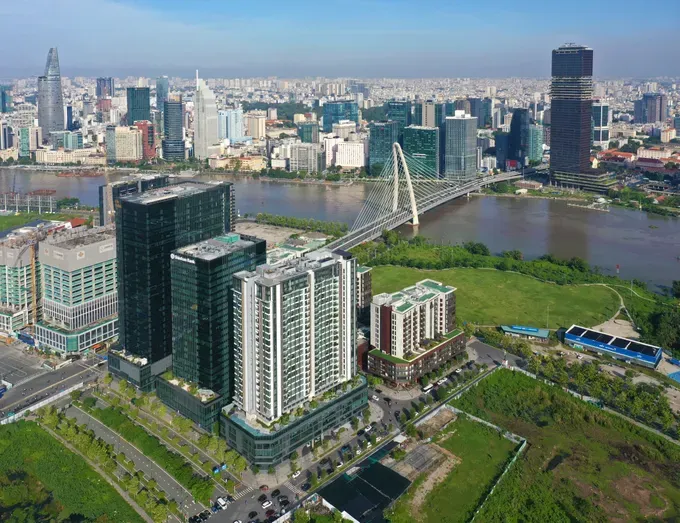
According to Mr. Pham Viet Thuan, applying a coefficient of 1 would bring land-related financial obligations closer to actual market values while avoiding excessive multiplier effects that could significantly increase input costs and create inflationary pressures.
He suggested that coefficients higher than 1 should be applied selectively only in specific areas, such as transit-oriented development (TOD) zones with high land-use intensity or premium commercial urban areas meeting international standards.
Explaining the proposal, the Director of the Ho Chi Minh City Institute of Natural Resources and Environment Economics noted that land price tables in many areas have already been adjusted upward. Continuing to apply the principle that the K coefficient should always exceed 1 would sharply increase land-use costs, placing additional financial pressure on residents and affecting business cash flow.
He also warned that higher land costs could undermine efforts to develop rental housing, as rental prices may exceed the average monthly income level of approximately VND8.6 million (US$327).
Conversely, maintaining a K coefficient of 1 would help businesses gain easier access to production sites, unlock investment capital, support job creation and contribute to social stability, he said.
The Director of the Ho Chi Minh City Institute of Natural Resources and Environment Economics added that a review of the draft K coefficient table proposed by the Ho Chi Minh City Department of Agriculture and Environment showed that some proposed coefficients are already higher than prevailing market land prices. In certain areas, the proposed adjustments would increase land values by as much as 259 percent compared to the beginning of 2026.
He argued that such increases are unusual, particularly given that the city's land price table introduced in 2026 was already developed based on market surveys and professional assessments.