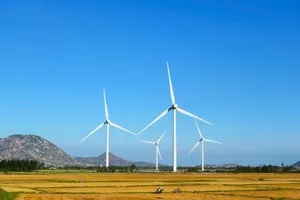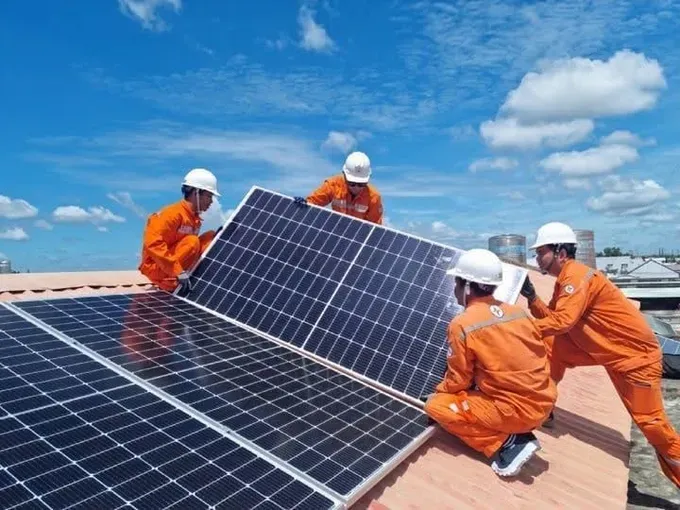
The National Power System and Market Operation Company Limited (NSMO) said that the peak capacity of the national power system reached a record level at 1:50 p.m. on June 24, at approximately 58,456 MW, up about 350 MW compared to the previous record set on May 26. Peak capacity refers to the maximum amount of electricity that the entire system must supply at a given time.
Compared to the same period in 2025, this capacity level increased by 13.5 percent and was 6.4 percent higher than the record level recorded for the whole year of 2025.
In the Northern region alone, the peak capacity reached 29,970MW, equivalent to the record level recorded on May 27. Compared to the same period last year, the power load in the Northern region increased by 13.3 percent. Power load refers to the total electricity demand of customers at a given time. When hot weather persists, demand for air conditioners, fans, and cooling equipment rises sharply, driving up the power load.
Due to increasing electricity demand, several transformers at 500 kV and 220 kV transmission substations in the Northern region have been operating under high load levels. However, voltage across the system remains within the permitted range, and the power grid continues to be operated safely.
To meet electricity demand, NSMO is mobilizing the maximum available power sources for the system, increasing hydropower generation, boosting electricity imports, and coordinating with newly commissioned power plants during trial operations to run at high capacity during peak hours.
Based on forecasts from the National Center for Hydro-Meteorological Forecasting regarding the continuation of hot weather on June 25, NSMO forecasts that the power load in the Northern region on June 25 will continue to increase compared to June 24.
The system operator and dispatcher urged people to turn off electrical appliances when not in use, set air conditioners at 26 degrees Celsius or higher, limit the use of decorative lighting at night, and proactively shift part of their electricity consumption to off-peak hours to reduce pressure on the power system as well as save on electricity costs.