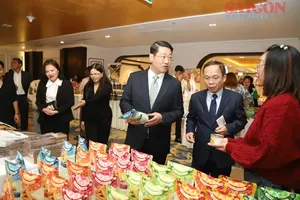
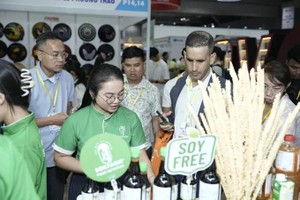
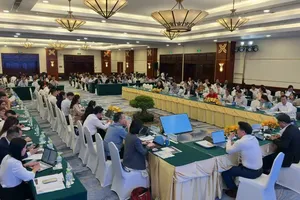
On June 24 in Ho Chi Minh City, the first Vietnam-China Agricultural Trade Connectivity Forum was held, opening new opportunities to strengthen cooperation in agricultural production, processing, logistics, and exports between the two countries.
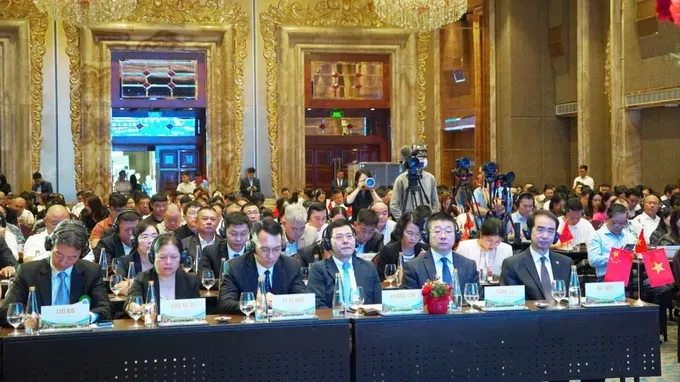
Attending the forum were Permanent Deputy Minister of Foreign Affairs Nguyen Minh Vu; representatives of the Ministry of Agriculture and Environment and the Ministry of Industry and Trade; and Chinese Ambassador to Vietnam He Wei.
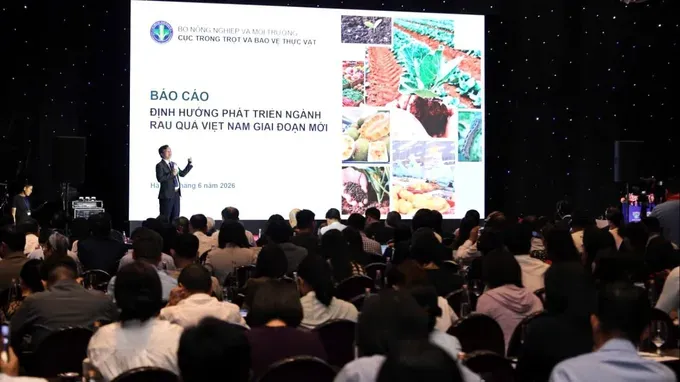
Nguyen Quoc Manh, Deputy Director General of the Department of Crop Production and Plant Protection, said Vietnam's fruit and vegetable sector has expanded strongly in both production and exports in recent years, becoming one of the fastest-growing segments of the crop production industry.
China is currently Vietnam's largest importer of fruits and vegetables. The two countries have signed multiple export protocols covering products such as durian, mangosteen, jackfruit, bananas, coconuts, passion fruit, sweet potatoes, and frozen durian. They are also continuing negotiations and finalizing export requirements for longan, lychee, rambutan, mango, dragon fruit, and citrus fruits.
Durian has recorded particularly strong growth in Vietnam's export structure. During the 2021-2025 period, Vietnam exported more than 3 million tons of fresh durian and nearly 190,000 tons of frozen durian. Currently, 28 countries import Vietnamese fresh durian, while more than 20 countries import frozen durian. China accounts for more than 95 percent of total durian export volume.
Importing markets are imposing increasingly stringent requirements on food safety, traceability, growing area codes, packing facilities, environmental protection, and carbon emission reductions. China has also tightened controls on growing area codes, packing facilities, and plant quarantine requirements.
According to Deputy Director General of the Department of Crop Production and Plant Protection Nguyen Quoc Manh, Vietnam should not only focus on exporting fresh produce to China but also expand processing and deep-processing activities, develop standardized raw material zones, strengthen traceability systems, and improve logistics infrastructure.
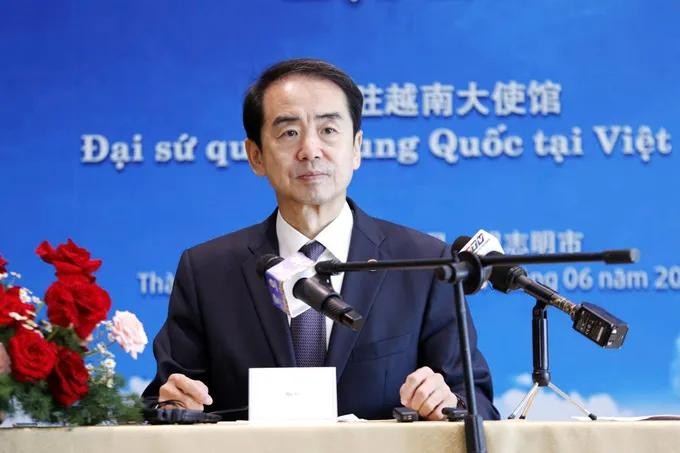
Chinese Ambassador to Vietnam He Wei said agricultural cooperation between the two countries is entering a deeper stage of development, gradually shifting from agricultural trade to the construction of comprehensive supply chains. China is currently Vietnam's largest export market for agricultural, forestry, and fishery products. In the first quarter of this year, Vietnam's agricultural and food exports to China increased 37.4 percent, more than six times the overall growth rate.
The Chinese Ambassador to Vietnam noted that bilateral trade turnover exceeded US$290 billion in 2025. In the fruit and vegetable sector alone, Vietnam remained the second-largest supplier to the Chinese market, accounting for 22.55 percent market share.
Looking ahead, Chinese Ambassador to Vietnam He Wei said both countries have favorable conditions to elevate agricultural cooperation thanks to strong political trust, improved infrastructure connectivity, and the digital transformation of agricultural trade. He proposed greater use of digital technologies in agricultural production, stronger cooperation between processing and logistics enterprises, and enhanced resilience across the entire supply chain.
Permanent Deputy Minister of Foreign Affairs Nguyen Minh Vu praised the initiative to organize the forum for the first time, noting that the participation of government agencies, industry associations, businesses, and trade promotion organizations from both countries reflected its significance. The forum provides an opportunity for stakeholders to exchange information, address challenges, and promote Vietnam-China agricultural trade.
According to the Deputy Minister of Foreign Affairs, both sides should develop sustainable production, supply, and consumption chains to fully realize cooperation potential. They should also accelerate market-opening procedures for agricultural products, speed up risk assessments and technical approvals for promising export items, and strengthen cooperation on standards, testing, quarantine, and traceability.
The two countries should also make effective use of e-commerce platforms and the digital economy to create new momentum in the methods, speed, and efficiency of bilateral agricultural trade.