Moving beyond bustling food streets and standalone heritage tours, Hanoi is preparing for a dramatic after-dark transformation. Under a newly approved night-time economy development plan, the capital aims to turn the Red River corridor and its millennia-old cultural heritage into new drivers of growth while building a distinctive urban brand.
Vibrant and rich in cultural identity
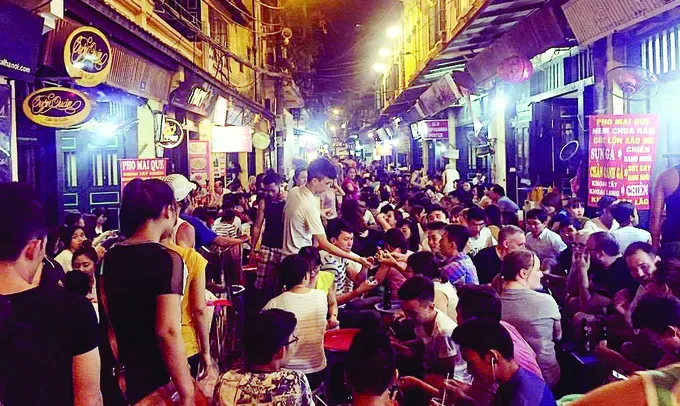
As night falls in Hanoi, Ta Hien Street in Hoan Kiem Ward quickly sheds its daytime calm and takes on a fast-paced, lively, and colorful atmosphere. From as early as 7 p.m., the clinking of glasses and conversations in multiple languages fill the air of the Old Quarter.
Along the street, vendors hustle to set up their stalls, prepare dishes, and serve a steady stream of customers. Neon lights from restaurants and bars cast a colorful glow across the street, while lively music adds to the festive atmosphere that continues late into the night. Nguyen Van Tu, 34, who owns a restaurant on Ta Hien Street, paused while arranging extra chairs for a group of foreign tourists to share his experience that since the city began promoting the night-time economy, visitor numbers have risen noticeably. Revenue generated between 8 p.m. and 2 a.m. now accounts for as much as 70 percent of his restaurant’s total earnings.
The expansion of Hanoi’s night-time economy is not limited to Ta Hien Street. The city’s after-dark map continues to grow, encompassing Nguyen Van Tuyet Food Street, Dao Ngoc Ngu Xa Food Street, the Tran Nhan Tong pedestrian zone, and the breezy West Lake area, where young people and tourists gather each evening to enjoy food, entertainment, and live music.
Beyond these vibrant streets, Hanoi offers a different pace of nightlife. At the solemn Van Mieu – Quoc Tu Giam complex, visitors can experience the “Tinh Hoa Dao Hoc” night tour before continuing to cultural activities at Ho Van, including lantern festivals, exhibitions, traditional do paper painting, and folk music performances.
Peterson, a tourist from Sweden, expressed his enthusiasm after joining the “Tinh Hoa Dao Hoc” night tour.
“Here, I experienced a wide range of emotions. The presentations are diverse and modern, helping us better understand your country’s tradition of valuing education, respect for teachers, and other cultural values. It was wonderful,” he said.
Nguyen Lien Huong, Deputy Director of the Van Mieu – Quoc Tu Giam Center for Cultural and Scientific Activities, said the center will continue developing the Van Mieu – Quoc Tu Giam and Ho Van sites into a leading creative cultural space, with the long-term goal of becoming a cultural industry hub for Hanoi.
Night-time economy reorganized “Gold mine”
As competition among cities intensifies, the night-time economy has become a new engine of growth in many countries and major urban centers around the world. However, Hanoi’s night-time economy has yet to be developed in line with its potential. Many night-time products and services still lack distinctive features and strong appeal for visitors.
Alena, a tourist from France, said: “I really enjoy Hanoi’s nighttime atmosphere because it is peaceful and romantic. However, the city still lacks large-scale entertainment complexes, internationally acclaimed performance programs, and high-quality shopping centers that operate throughout the night.”
In response to this situation, the Hanoi People’s Committee recently approved the project titled “Development of the Night-Time Economy in Hanoi for the 2026–2030 Period, with a Vision to 2045.”
According to the project, by 2035 the night-time economy is expected to become an important pillar of Hanoi’s urban economy, contributing approximately 7 percent to 8 percent of GRDP, while achieving average annual growth of 12 percent to 14 percent in the service, tourism, and cultural industry sectors.
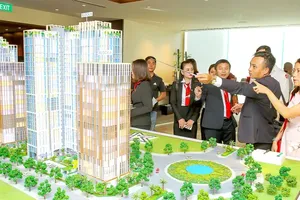
The Red River landscape corridor’s night-time economy zone is envisioned as a dynamic center for the creative economy and cultural industries, bringing together high-value cultural, artistic, and commercial activities. It will connect with other night-time economy areas in the region, serve as a new growth driver, and strengthen Hanoi’s position on regional and international creative maps.
The city also plans to establish six to eight key night-time economy zones and 15 to 20 public spaces and streets operating beyond midnight. These areas will be developed in a coordinated manner and linked to public transportation systems. At least three zones are expected to meet regional standards for cultural and tourism night-time experience destinations.
Looking toward 2045, Hanoi aims to become a regionally competitive night-time economy hub, with the sector contributing more than 12 percent of GRDP and helping establish the city’s brand as a “City of Nighttime Cultural Experiences.”
Discussing the project, Associate Professor and Doctor Bui Hoai Son, a full-time member of the National Assembly’s Committee for Culture and Social Affairs, said Hanoi possesses many unique assets, including a thousand-year history and a rich heritage system.
“Every street corner, roadway, bridge, and architectural structure carries its own story, contributing to Hanoi’s distinctive appeal,” he said. “When developed in a systematic way, these elements can turn the night-time economy into an important form of soft power, helping extend visitor stays, increase tourist spending, and create opportunities to build Hanoi’s reputation as a livable, vibrant, and culturally distinctive city.”