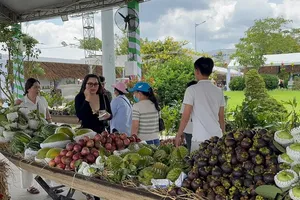
Northern seasonal fruits, including plums and lychees, were widely available at traditional markets in Ho Chi Minh City, such as Thach Da, Ban Co, Thi Nghe, Tan Dinh and An Nhon at lower prices than in previous years. Premium plums sold for around VND30,000 (US$1.13) per kilogram, while lychees were priced between VND45,000 (US$1.7) and VND55,000 (US$2.1) per kilogram.
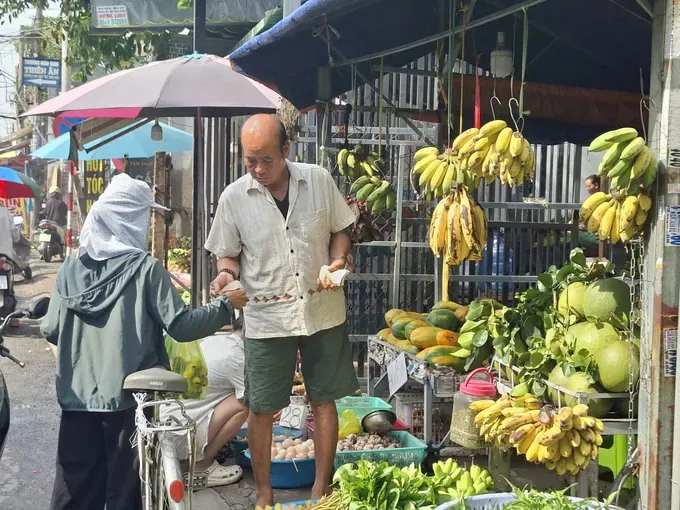
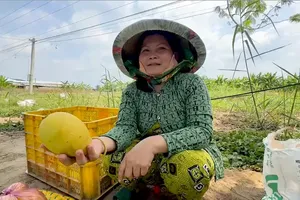
Fruits from the Mekong Delta and the Central Highlands, including mangoes, dragon fruit, pomelos, oranges and avocados, were also plentiful at markets across the city. At Ba Chieu Market, Cao Lanh mangoes were selling for around VND25,000 (US$1) per kilogram, while mandarins were priced at VND20,000 (US$0.75)–VND25,000 (US$1) per kilogram, sapodillas at about VND20,000 (US$0.75) per kilogram, and avocados at VND30,000 (US$1.13)–VND40,000 (US$1.5) per kilogram, depending on the variety.
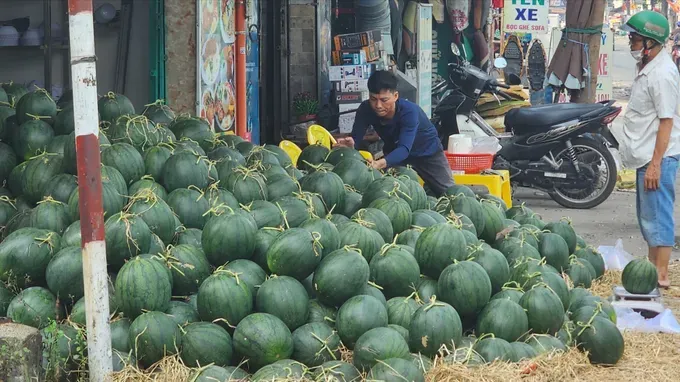
Some street vendors were offering white-fleshed dragon fruit for around VND15,000 (US$0.56) per kilogram and red-fleshed dragon fruit for VND25,000 (US$1)–VND30,000 (US$1.13) per kilogram, representing a decline of 30–40 percent compared with the same period last year. Ri6 durian and Cai Mon seedless durian also fell to around VND55,000 (US$2.1) – VND60,000 (US$2.3) per kilogram at local markets.
At An Nhon Market, fruit vendor Le Hoang Phuong said that supplies had increased significantly, but consumer demand remained sluggish.
Prices have dropped sharply, but sales have not met expectations. On many days, have to cut prices even further to clear unsold stock, she said.
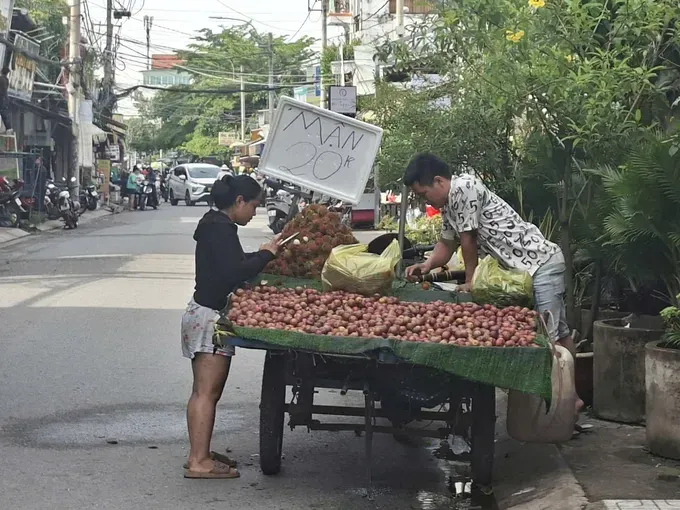
The drop in prices has encouraged consumers to buy more fruit. Tran Thi Hieu, a resident of An Hoi Tay Ward, said her family had been stocking up on oranges and mandarins, citing their affordability and ease of storage during the hot season.
According to traders, fruit prices have come under pressure across multiple product categories as supplies continue to outpace market demand. Large volumes of produce from growing regions have entered the market, while consumption and distribution channels have remained relatively unchanged.
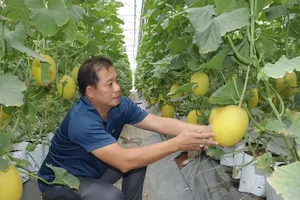
Dang Phuc Nguyen, Secretary General of the Vietnam Fruit and Vegetable Association (VinaFruit), said favorable weather conditions in the Mekong Delta, Southeast Region and Central Highlands earlier this year contributed to strong harvests. Better control of saltwater intrusion also helped improve yields for many fruit crops.
As a result, fruits such as oranges, watermelons, dragon fruit and mangoes entered peak harvest season simultaneously, significantly increasing supply and putting downward pressure on prices.
The market is also being affected by stricter export requirements. Overseas buyers are imposing higher standards for quality, food safety and traceability, while China’s implementation of Decree 280 from June 1, 2026 has introduced additional compliance obligations for agricultural and food exporters. Businesses are now required to reassess their registration documentation and quality management procedures before exporting to the Chinese market.
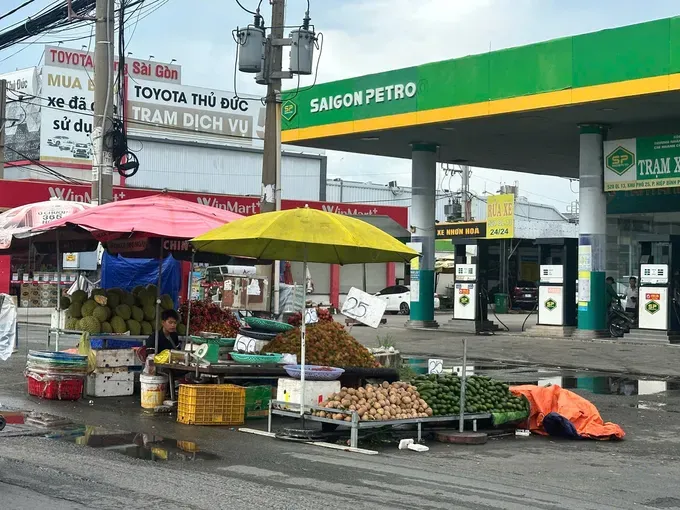
As fruit production continues to rise, Dang Phuc Nguyen, Secretary General of the Vietnam Fruit and Vegetable Association (VinaFruit), emphasized the need to expand processing capacity.
Greater processing capacity would enable the industry to better manage excess supply, prolong storage periods and diversify market outlets beyond the peak harvest season.






)