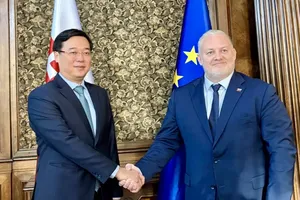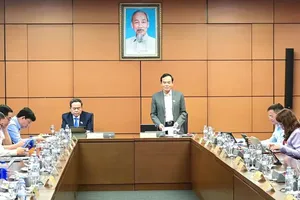
Deputy Director Nguyen Ngoc Hoi of the HCMC Department of Culture and Sports offered candid insights into the reality of the situation and shared HCMC’s new orientations for information management tied to behavioral culture.
He first explained why fake news bloom considerably and create such devastating effects during flood situations. He has recently joined an HCMC delegation providing support in Dak Lak Province. In the most difficult times, the strength of unity, the spirit of mutual affection, and the deep kinship of people have been powerfully awakened.
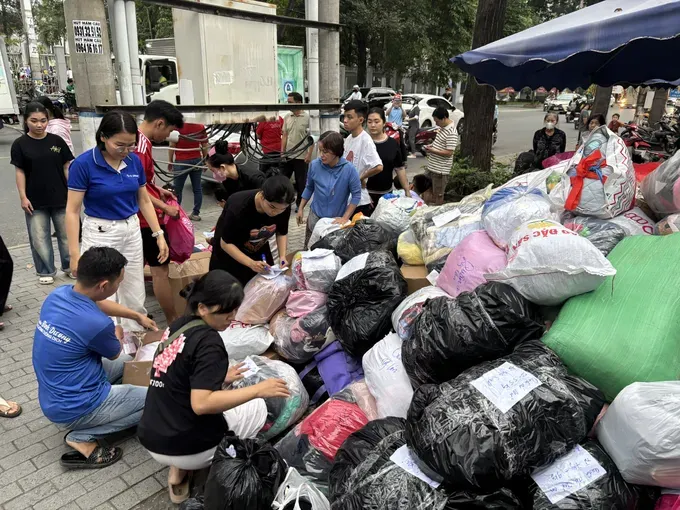
On the ground, so many beautiful things have been displayed, ranging from military and police forces racing against the clock to protect citizens; field kitchens keeping their fires lit from dawn to dusk, to mass organizations and benefactors organizing relief goods on their own without waiting for any call.
However, it is precisely at this moment that fake news exploits the community’s heightened emotions. Old photos are given false captions, videos are spliced, and fabricated information about “abandoning the people” or “unfair distribution” is spread, all aiming to cause confusion and divide trust.
Amidst the harsh reality of Central Vietnam’s floods, social media has been flooded with AI-generated videos and images fabricating damage, staging fake cries for help, and exaggerating devastation. These distorted, fake visuals still attract millions of views. They not only sow public confusion but also become tools for bad actors to attack rescue forces and authorities, profiting from the pain of flood victims. This isn’t simple ignorance; there are elements exploiting natural disasters to strike at residents’ faith and the great national unity bloc.
If fake news used to be crude and easy to spot, deepfakes can now create voices, images, and videos that are “startlingly realistic.” During floods, when public sentiment is sensitive, fake “cry for help” or “denunciation” videos can easily trigger a massive wave of sharing.
Fake news spreads exponentially, creating immense pressure on the response capacity of functional agencies. This is both a technical challenge and a challenge in preserving cultural safety and social trust in the digital environment.
Deputy Director Nguyen Ngoc Hoi then informed the applicable legal framework to deal with fake news. The Law on Cybersecurity, the Press Law, and the Law on Telecommunications clearly stipulate the responsibilities of organizations and individuals in posting and sharing content; the responsibilities of platforms; and the responsibility for coordinated handling.
Additionally, there is a 3-level coordination mechanism of Central (Ministry of Culture and Sports) – HCMC People's Committee as well as the Department of Culture and Sports – and specialized forces. This helps in removing fake news rapidly, tracing the source, and handling violations based on severity.
However, the difficulty isn’t a lack of regulations. It’s that fake news spreads too fast, creating pressure for an immediate response to the public, especially at a time when people are pouring so much effort into disaster prevention and flood recovery.
The Deputy Director then mentioned feasible solutions to stop fake news in such a sensitive time like this. It is necessary to devise a new management method that tightly links culture, information, and communication. The city is building a synchronized management mechanism where information is regulated not just by law, but by standards of behavioral culture.
Immediately, the HCMC Department of Culture and Sports has strengthened its specialized unit to proactively grasp public opinion and detect misinformation as early as possible. Instead of waiting for lengthy coordination processes, it will work directly with platforms and relevant agencies to demand rapid handling, removal of violating content, or the timely issuance of corrections.
In parallel, HCMC’s press system is the core force, maintaining the flow of mainstream information by updating quickly, accurately, and humanely. Correct, sufficient, and timely information is the most effective way to eliminate fake news.
The city also works regularly with artists and influencers on social media. For them, a single “share” or “like” can spread information much farther. Therefore, the social responsibility of every person behaving in cyberspace is incredibly important.
Finally, Deputy Director Nguyen Ngoc Hoi delivered advice on how the public can effectively protect themselves from fake news.
The most fundamental solution is building a “filter” within each person. A cultural filter isn’t software; it’s the analytical capacity and healthy skepticism that accompanies responsibility when consuming information.
Citizens need to be equipped with basic digital skills of checking sources, identifying fake images/videos, and not sharing without verification. The principle always being emphasized is “Slow down – Verify – Responsibility.” When every citizen is equipped with these filters, fake news will have no ground to survive.
In order to help maintain social trust, the most important action needed right now is to synchronize three factors: a sufficiently strong legal framework, sufficiently fast mainstream media, and a sufficiently solid digital culture. When strict law goes hand-in-hand with transparency, when media agencies proactively engage, and when citizens remain alert regarding dubious information, then no matter how technology changes, fake news will never be able to overwhelm the trust and solidarity of the community.
Decree 15/2020/ND-CP (amended and supplemented by Decree 14/2022/ND-CP) clearly stipulates fines from VND10-20 million (US$380-760) for using social media to provide or share false information. Violators are also forced to remove the false information as a remedial measure. Serious cases can be criminally prosecuted under the Penal Code (Articles 156, 288, 331) for fabricating, distorting, or slandering the reputation of organizations and officials, or transmitting data that causes serious consequences.


)