Applying science-technology in medical treatment
Returning for a follow-up after a year of total tongue reconstruction surgery at HCMC Oncology Hospital, Tran Thanh Nhan from Dong Thap Province was delighted by his excellent recovery. Though his children initially planned for overseas treatment, Mr. Nhan chose the domestic facility after researching their advanced methods. This decision significantly reduced surgical costs compared to family estimates while markedly improving his health.
The “Reconstruction of near-total and total tongue defects” procedure is among hundreds of breakthroughs successfully implemented through specialized techniques. Notably, the integration of artificial intelligence has further elevated the quality of care, affirming the pioneering role of HCMC’s medical sector in innovative scientific research and practical application.
According to Director of HCMC Oncology Hospital Diep Bao Tuan, MD PhD, the patriotic emulation movement at the hospital has focused on improving treatment quality and innovating service styles. Consequently, the hospital has standardized medical activities and updated treatment protocols.
Currently, the hospital handles an average of over 400,000 outpatient visits and 50,000 inpatient cases annually, becoming the largest tertiary oncology unit in the Southern region. The hospital has also successfully deployed advanced techniques such as laparoscopic cancer surgery and immunotherapy.
Emulating to improve service quality for citizens
2025 is regarded as a year of acceleration and breakthrough, where HCMC focuses on implementing historic policies regarding organizational restructuring and expanding development space. Numerous emulation movements were launched, achieving concrete results, especially in administrative reform and digital transformation.
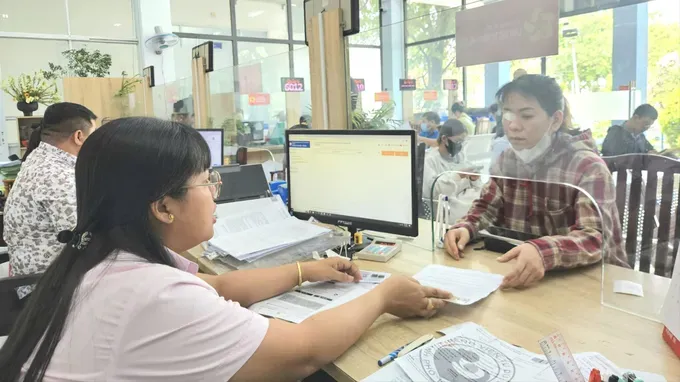
For several months, whenever utility notifications arrive, 63-year-old Nguyen Kim Loan from Duc Nhuan Ward utilizes her banking app for transfers. Now proficient in digital payments and VNeID app, she no longer hesitates during transactions. Ms. Loan admitted initial reluctance, but guidance from local youth union members and officials visiting her home helped her become adept. “Online transactions are convenient and save time. Understanding basic digital skills has eliminated my anxiety,” she expressed.
Duc Nhuan Ward has launched various emulation movements for digital transformation. The “Digital Literacy Campaign” effectively spreads this process across all social classes. Furthermore, the ward implemented the “Flexible Counter – Rapid Resolution” model for the vulnerable and the “Welfare Tech Group” to facilitate technology access and cashless subsidies. These initiatives have achieved a 30-percent reduction in administrative processing time, demonstrating substantive progress in digital transformation.
Meanwhile, in Thu Dau Mot Ward, emulation movements are tightly linked to local political tasks, especially carrying out administrative reform, building urban government, and improving service quality for citizens and businesses.
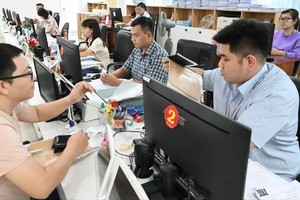
According to Chairman Tran Phong Luu of the Thu Dau Mot Ward People’s Committee, administrative reform continues to be a highlight. The rate of cases resolved ahead of or on schedule reached 99.62 percent, with no long-term backlogs. Citizen satisfaction was recorded at 100 percent. The digitization of records achieved high results, with the rate of digitized document components reaching 99.97 percent.
The application of IT has been vigorously implemented through breakthrough models. The ward piloted smart robots at its Public Administration Service Center to facilitate queue numbering and record lookups using facial recognition.
Additionally, the “Digital Literacy Campaign” successfully established community technology groups; 100 percent of officials and over 3,700 citizens installed digital applications. Notably, 10,160 land-use tax payments were processed via the app, totaling nearly VND5 billion (US$200,000).
The Thu Dau Mot Ward People’s Committee remains focused on aligning emulation movements with socio-economic targets, national security, and urban discipline. By accelerating digital transformation in management and administrative resolution, the locality is tightening public service ethics. These efforts elevate grassroots government effectiveness, ensuring citizens and businesses are served increasingly well.
Chairwoman Nguyen Thi Thanh Thao of the Duc Nhuan Ward People’s Committee reported that Duc Nhuan Ward has implemented creative emulation models that have yielded clear results.
Specifically, online file resolution reached over 99 percent, shortening time by 20 to 30 percent. To equip citizens with digital skills, the ward built the “Serving Government, Friendly Administration” model, where the “Welfare Tech Group” guides people in looking up social policies such as health insurance and social subsidies online.
Vice Chairwoman Tran Thi Bich Van of the Vung Tau Ward People’s Committee shared that the movement in Vung Tau Ward focuses on awakening responsibility and the desire to excel in every official and citizen.
By the end of 2025, the ward had no longer recorded poor households according to multi-dimensional standards; 99.3 percent of households met cultural standards, and 95 percent of people participated in health insurance. These practical activities create an exciting atmosphere among the people, contributing to a civilized urban lifestyle.
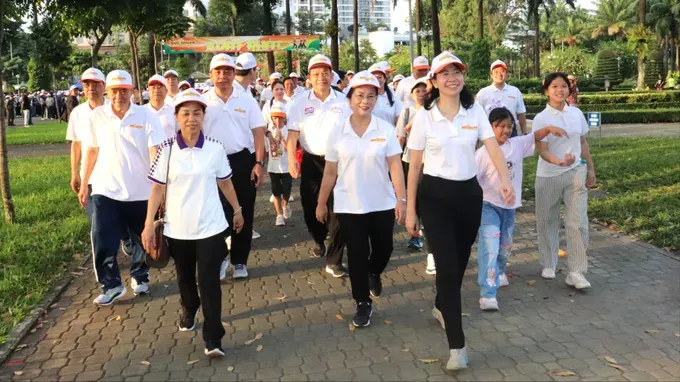
Patriotic emulation movements trigger massive transformation across HCMC
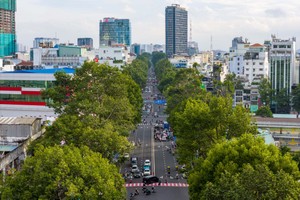
The HCMC People’s Committee has issued a comprehensive report reviewing the 2025 Patriotic Emulation movements while outlining resolute directions for 2026. The Committee assesses that these movements were deployed with high efficiency and professional rigor, remaining closely aligned with core political mandates.
The Government demonstrated immense determination in focusing on central tasks and resolving complex bottlenecks. By prioritizing economic development and social welfare, the city successfully achieved its socio-economic milestones.
Specifically, the “For the Poor – Leaving No One Behind” campaign yielded effective results, and the workplace culture movement fostered numerous innovative models. The city also showed strong resolve in accelerating synchronized, modern infrastructure development.
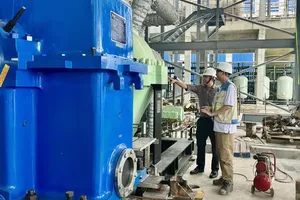
By concentrating resources, particularly from the state budget and Public-Private Partnerships, into technical infrastructure, HCMC has moved closer to an integrated structure. In 2025, the government finalized appraisals for 26 major projects.
Furthermore, regarding the initiative to eradicate temporary housing, the city exceeded targets ahead of schedule. Authorities completed 733 houses, hitting a 100-percent success rate with an investment exceeding VND49.7 billion ($1.99 million). Additionally, socio-political organizations repaired 899 more homes, while the city budget allocated VND421.4 billion ($16.8 million) to support various localities.
The city is determined to create fresh momentum to successfully fulfill all socio-economic and security targets. This involves mobilizing the collective strength of the entire political system and the populace to realize development goals for the 2026–2030 period, in accordance with the Resolution of the 1st HCMC Party Congress.
HCMC will facilitate exchanges with exemplary individuals who have spearheaded city movements. The HCMC People’s Committee will formally launch the 2026 Patriotic Emulation movement and sign emulation agreements between the Chairman of the People’s Committee and various city clusters. The event also recognizes and rewards collectives and individuals who exhibited outstanding performance in 2025.
Prominent results of the 2025 patriotic emulation movement
- GRDP Growth Rate: Estimated at 8.03 percent.
- Total GRDP Value: Estimated at VND2.74 quadrillion ($109.6 billion), accounting for 23.5 percent of the national GDP.
- GRDP Per Capita: Estimated at $8,066.
- Industrial Production Index: Estimated to increase by 9 percent.
- Preferential Credit: Over VND2.9 trillion ($115.9 million) disbursed to more than 38,800 households.
- Healthcare: 105,327 health insurance cards provided with a total budget exceeding VND111 billion ($4.44 million).
- Education: Learning cost support for 4,938 students and scholarships granted to 6,432 students.
- Employment: Vocational training for 190 workers and job placement for 625 individuals.
- Housing: 1,309 charity houses newly built or repaired with a budget of over VND91.79 billion ($3.67 million).
)