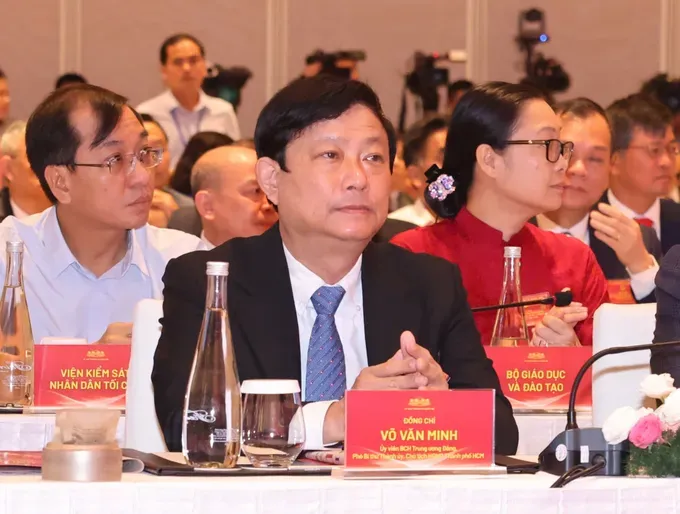
At the national conference of All-Level People's Councils on the implementation of orientations and tasks for the 2026-2031 tenure, held in Hanoi on May 28, the Standing Committee of the Ho Chi Minh City People’s Council submitted a presentation titled “Experience and Solutions to Promote the Role and Authority of People’s Councils in Building Breakthrough Mechanisms for Socio-Economic Development.”
The presentation reflects practical perspectives and the strong development aspirations of a megacity undergoing a historic transformation.
Accordingly, Ho Chi Minh City has entered the new tenure with the stable operation of the two-tier local government model following the merger process, administering a population of nearly 14 million across 168 wards, communes, and special zones. The city is among the pioneering localities in digital transformation through the operation of the Ho Chi Minh City People’s Council Electronic Information Portal, integrated data connectivity with 168 grassroots-level units, the implementation of “paperless meetings,” and online voting.
Actively participating in the development of special institutional mechanisms, the city coordinated with relevant agencies to submit to the National Assembly the issuance of Resolution No. 260/2025/QH15 (supplementing Resolution 98) while promulgating 298 local resolutions to remove legal bottlenecks and create momentum for development.
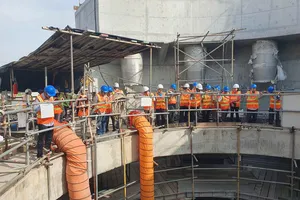
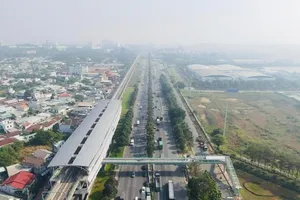
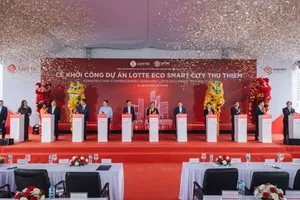
As a result, the city has achieved many encouraging outcomes, including gross regional domestic product (GRDP) in the first quarter of 2026, which grew by 8.27 percent, the highest growth rate in the past decade; budget revenue in the first four months of the year exceeded VND328 trillion (US$12.5); and foreign direct investment (FDI) inflows rose by 127.1 percent. The city has also officially launched the Vietnam International Financial Center, commenced construction of Metro Line No. 2, and broken ground on the Ben Thanh–Can Gio Metro project.
In the coming time, the Ho Chi Minh City People’s Council has identified the city’s key challenge as achieving double-digit economic growth. The central solution is to concretize the nine strategic resolutions of the Politburo and the breakthrough resolutions of the National Assembly in service of the multi-center megacity model.
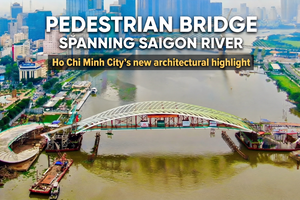
The city also affirmed its determination to strengthen oversight and decisively address delayed projects and major social welfare programs, including urban redevelopment projects along rivers and canals, flood prevention initiatives, and key transport infrastructure projects.
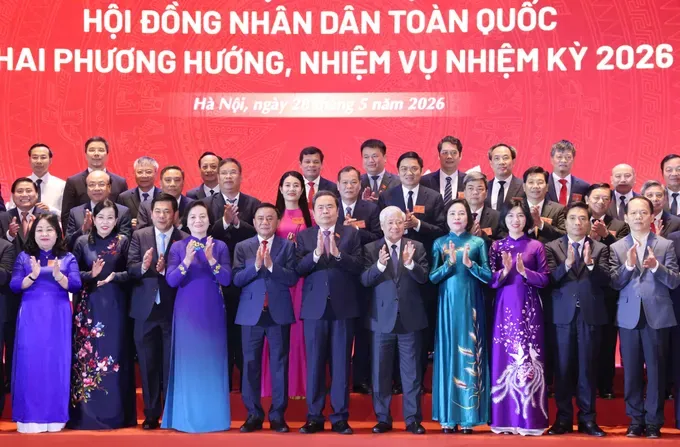
To realize these goals, Ho Chi Minh City has put forward a number of urgent recommendations to the National Assembly and the Government, including high expectations for the formulation of a Special Urban Law to establish a unified and sustainable legal framework for the governance model of a megacity, thereby enabling the city to take greater initiative in spatial planning and resource mobilization.
The city also seeks the removal of obstacles related to procedures and administrative processes in order to soon establish a Free Trade Zone and attract major financial institutions to the Vietnam International Financial Center. In addition, Ho Chi Minh City has proposed expanding public-private partnership (PPP) models in the fields of healthcare, sports, and urban railway infrastructure to better leverage social resources and investment capital.
“Unlocking resources through special mechanisms is an urgent requirement to ensure that policies are issued in a timely manner and in compliance with regulations, thereby contributing to the development of Ho Chi Minh City worthy of being the city named after President Ho Chi Minh,” the presentation emphasized.




)




