The People's Committee of Can Tho City on June 10 hosted a scientific conference titled “Developing Logistics Services in Can Tho City as the Logistics Center of the Mekong Delta.”
The event brought together representatives from the city government and departments, the Import-Export Agency under the Ministry of Industry and Trade, research institutes, universities, industry experts, business associations and logistics enterprises.
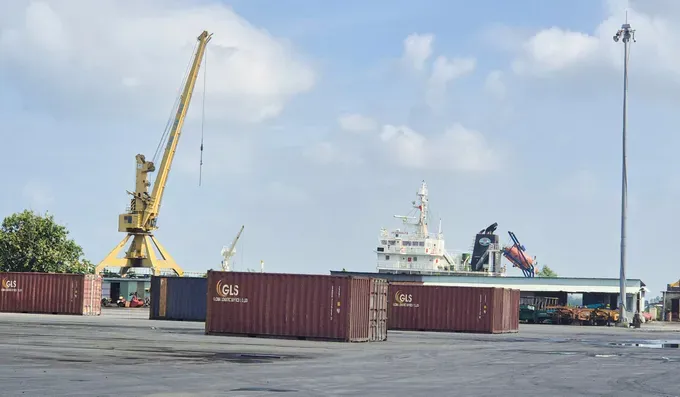
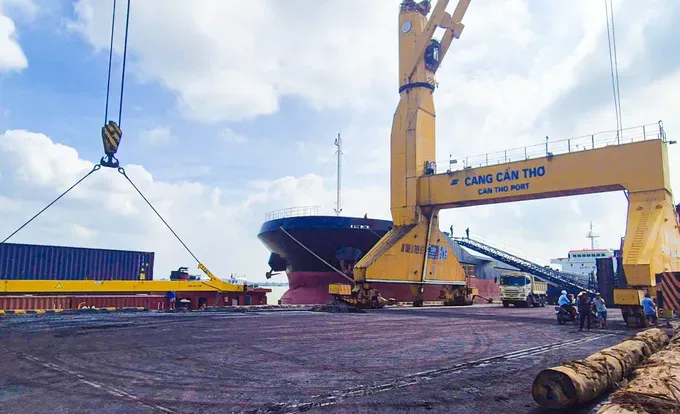
According to a report by the Can Tho City Department of Industry and Trade, cargo throughput at ports in the city reached approximately 12–15 million tons in 2025. Can Tho is currently home to more than 500 logistics-related businesses, most of which are small and medium-sized enterprises. The city has four operational logistics centers, while two additional centers are under construction.
However, Deputy Director of the city's Department of Industry and Trade Hua Truong Son acknowledged that logistics development still faces significant challenges. Logistics costs remain disproportionately high, accounting for around 18–22 percent of the value of goods, compared with the global average of 10–12 percent.
The high costs stem largely from weak multimodal transport connectivity. Long distances between production areas and export gateways force goods to be transported through ports outside the region. In addition, navigation channels leading to the Hau River have yet to reach the depth required for larger vessels, forcing ships exceeding 10,000 tons to wait for favorable tides or transfer cargo, increasing operating costs by an estimated 10–20 percent.
The region also lacks integrated cold-storage facilities equipped with advanced preservation technologies near major collection hubs.
Mr. Nguyen Duc Binh, Secretary General of the Vietnam Logistics Business Association (VLA), said that Can Tho City's strategic location as the "heart" of the Mekong Delta gives it significant potential to become a regional logistics hub. He suggested that the city introduce special mechanisms and incentives to attract logistics investors and accelerate sector development.
Although the Mekong Delta is one of Vietnam’s key agricultural and seafood production hubs, high transportation and logistics costs continue to undermine its competitiveness. Can Tho’s current investment incentives have not been strong enough to draw large-scale logistics projects, while the region remains without a fully developed logistics ecosystem or major strategic investors to drive sustainable growth.
Mr. Pham Quoc Long, Chairman of the Vietnam Ship Agents, Brokers and Maritime Services Association (VISABA), emphasized the need for substantive administrative reforms rather than merely reducing paperwork processing times. He also called for a more flexible planning approach that can adapt to rapidly changing logistics markets, transportation infrastructure developments, and evolving strategies of international shipping and logistics companies.
In addition, he highlighted the urgent need to address the severe shortage of skilled logistics personnel through expanded training and workforce development programs.
Speaking at the conference, Mr. Le Cong Ly, Standing Vice Chairman of the Can Tho City People's Committee, thanked participants for their recommendations and contributions, which he said would help the city advance toward its goal of becoming the logistics center of the Mekong Delta.
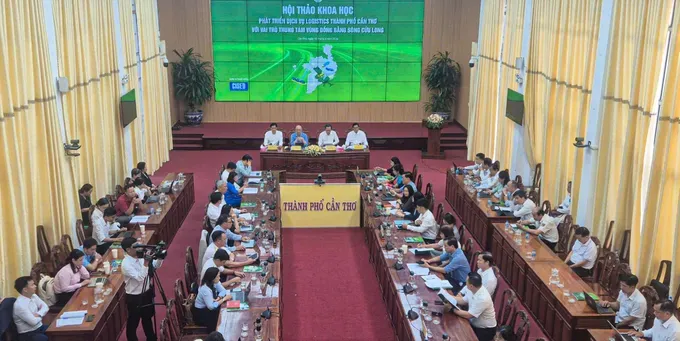
The conference provided a comprehensive assessment of logistics development in Can Tho and the wider Mekong Delta region, identifying key challenges and bottlenecks, particularly in agricultural logistics, inland waterway logistics, and multimodal transport connectivity. The findings are expected to serve as an important foundation for the city as it refines policies and action plans to strengthen logistics services in the years ahead.