The resolution is expected to be reviewed by the Hanoi People’s Council during its special session scheduled from June 12 to 16.
According to the proposal, Hanoi will implement the low-emission zone in three phases.
Phase 1: A pilot program will be conducted in Zones 1 and 2 of Hoan Kiem Ward from July 1 to December 31.
Phase 2: The pilot program will be expanded to Zones 1, 2, and 3, covering Hoan Kiem Ward and Cua Nam Ward, from January 1, 2027, to December 31, 2027.
Phase 3: Full implementation across the entire Ring Road 1 area will begin on January 1, 2028.
Zone 1 comprises 11 streets surrounding the pedestrian precinct and night market in Hoan Kiem Ward, namely Trang Tien, Hang Khay, Le Thai To, Hang Dao, Hang Ngang, Hang Buom, Ma May, Hang Bac, Hang Mam, Nguyen Huu Huan, and Ly Thai To. The zone covers an area of 0.5 square kilometers and has a population of approximately 20,000 residents.
Zone 2 consists of 119 streets and five alleys within the Old Quarter area, bounded by Trang Thi, Phung Hung, Hang Dau, Tran Nhat Duat, Tran Quang Khai, Trang Tien, and Hang Khay streets.
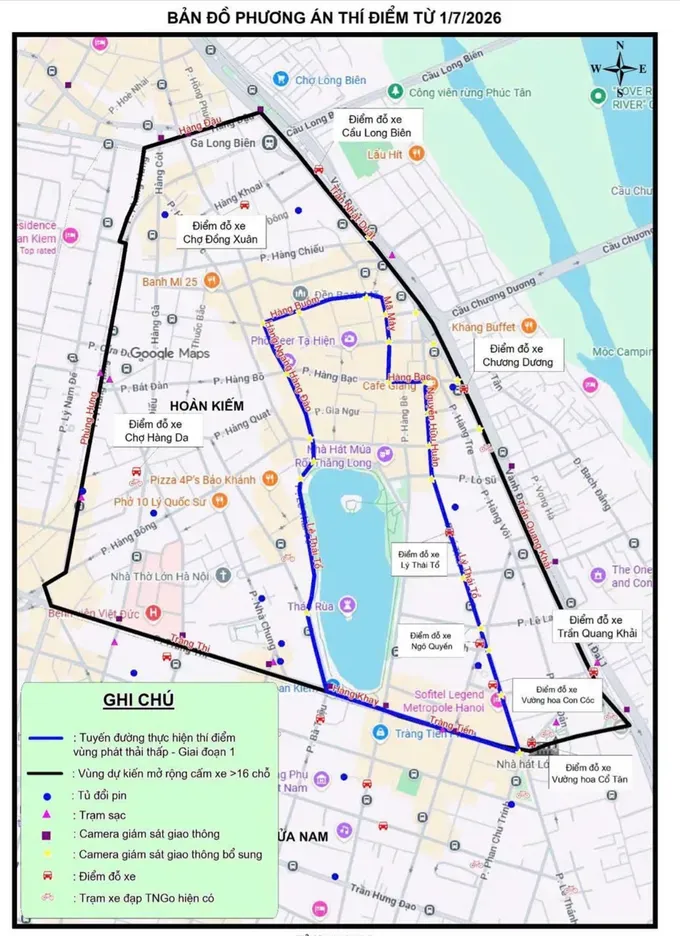
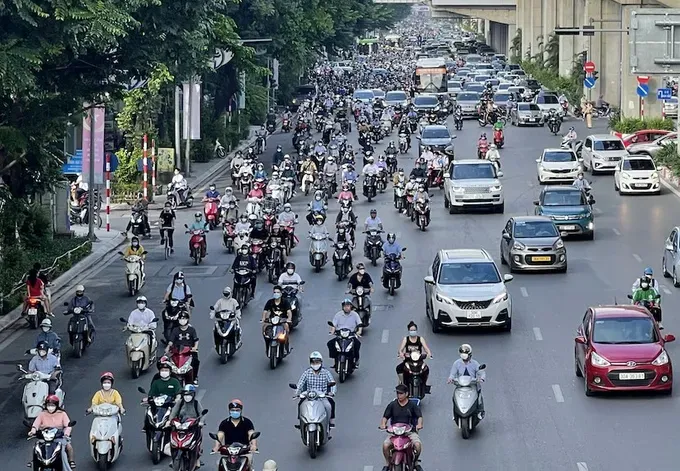
In Zone 1, Hanoi will restrict all vehicles from operating between 7:00 p.m. and midnight on Fridays, Saturdays, and Sundays. Priority vehicles and those authorized in writing by competent authorities will still be permitted to operate. However, beginning in 2027, vehicles entering the low-emission zone must comply with Level 4 emission standards or higher.
For ride-hailing motorcycles and vehicles providing transport services through digital platforms, Hanoi will initially encourage operators to limit their activities within the low-emission zone. From 2027 onward, motorcycles powered by fossil fuels will be prohibited from entering the pilot area, while digital platform providers will be required to direct vehicles in compliance with the regulations.
For motorcycles and mopeds not engaged in transport services through app-based mobility platforms, Hanoi encourages owners to limit the use of motorcycles manufactured or imported before 2008 and mopeds manufactured or imported before 2016. The city also encourages residents to use public transportation and transition to environmentally friendly, green transport modes.
Hanoi is expected to allocate approximately VND1.045 trillion (US$39.7 million) during the 2026–2030 period to implement policies supporting the transition from gasoline-powered vehicles to electric vehicles and to encourage greater use of public transportation.
The Hanoi People’s Committee has instructed the municipal Department of Construction to finalize the draft resolution on support measures for vehicle conversion.
According to the Hanoi Department of Construction, the draft resolution has removed the provision for direct cash assistance to individuals residing within Ring Road 1 to ensure the policy’s social equity and fairness.
According to the proposal, Hanoi will provide support only to individuals from poor households in the city, thereby ensuring the humanitarian nature of the policy and demonstrating the city’s commitment to accompanying and assisting vulnerable residents. Other groups, including people with meritorious service to the nation, persons with disabilities, senior citizens, and children under six years of age, are already entitled to fare exemptions on public passenger transport services.
During the implementation of the resolution, Hanoi will continue to study, review, and propose additional support policies for the transition to greener modes of transportation, in line with the city’s socio-economic conditions and development requirements.