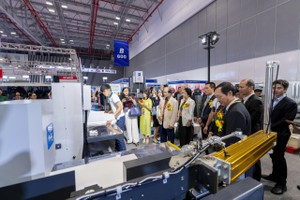
From physical job exchanges to AI-integrated digital platforms, the labor market in the country is entering a new era. Recruitment is becoming faster and more convenient, while labor supply and demand are being restructured for transparency and efficiency to meet the demands of the digital economy.
Job hunting at one’s fingertips
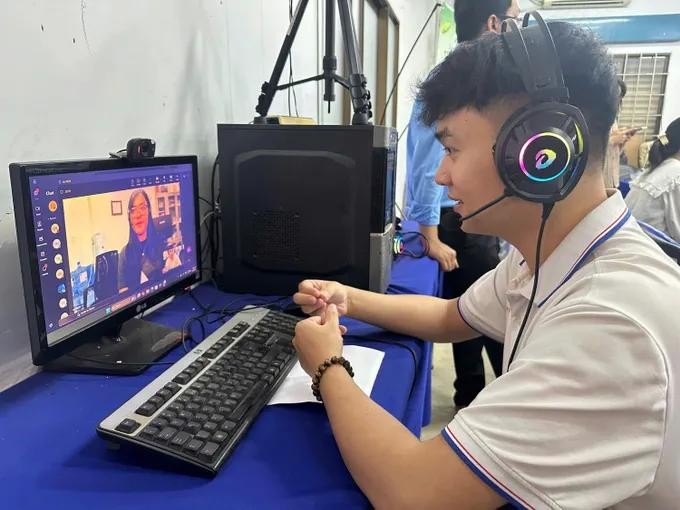
On a late April morning, Pham Thuy Ngan in Xuan Thoi Son Commune, Ho Chi Minh City bypassed the commute to the Ho Chi Minh City Employment Service Center’s job fair. Instead, she connected with recruiters via video call from her home computer. After just 20 minutes of interviewing, she has secured a trial offer.
This is becoming the new norm. Recent job exchanges have seen a surge in online participation, particularly among young workers, signaling a clear shift from traditional models to digital environments. Director Nguyen Van Hanh Thuc of the HCMC Employment Service Center noted that IT applications have significantly expanded market access, allowing workers to browse hundreds of vacancies simultaneously while enabling businesses to streamline recruitment.
The private sector is also driving this digital wave. The "Vua Tho" (King of Craftsmen) app has connected hundreds of thousands of workers nationwide in just over a year. According to its founder, the platform currently hosts 200 job categories with over 100,000 workers and 600,000 customers. Workers accept jobs directly through the app and gain access to insurance and vocational training.
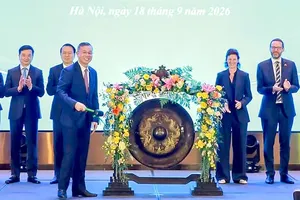
On a national scale, the National Job Exchange (vieclam.gov.vn) officially launched on April 14. This unified platform connects workers, enterprises, and regulators, marking a milestone in modernizing the labor sector. Within its first fortnight, the floor bridged thousands of job seekers with employers, currently hosting over 60,000 vacancies and 5,000 active profiles.
Deputy Minister of Home Affairs Nguyen Manh Khuong emphasized that with a labor force of 53.6 million and millions of businesses and households, a unified digital platform is essential to eliminate market fragmentation and accelerate connections.
Labor market transformation hinges on worker adaptability
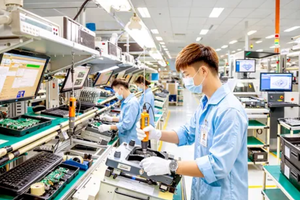
For businesses in the seafood, textile, and processing industries, the shortage of skilled labor is becoming increasingly evident. Ms. Le Hang, Vice President of the Vietnam Association of Seafood Processing and Export (VASEP), stated that this sector currently provides livelihoods for over 4 million direct workers, but still faces difficulties in recruiting and allocating labor effectively across regions. When data is interconnected, businesses can be more proactive in accessing human resources and more effectively regulate labor distribution between regions.
From a management perspective, digitizing labor market data helps authorities closely monitor supply and demand, thereby developing appropriate policies. This also serves as a basis for implementing social security programs that target the right groups and meet their needs. The labor market is moving towards greater digitalization and connectivity. For these platforms to be effective, the collaboration of the State, businesses, and workers is essential. When data is interconnected, skills are enhanced, and policies are appropriately designed, the labor market will operate more efficiently, becoming a crucial driver of sustainable economic growth.
However, digital transformation in the labor sector is not just about technology. Experts believe that the decisive factor still lies in the adaptability of workers. According to the International Labour Organization (ILO), the biggest challenge today is not only unemployment but also the gap between workers' skills and market demands. In many developing economies, the informal sector remains large, and training has not kept pace with actual needs. Therefore, along with investing in digital infrastructure, it is necessary to promote retraining and upskilling. Digital skills, soft skills, and the ability to adapt to a flexible work environment will become decisive factors in the coming period.