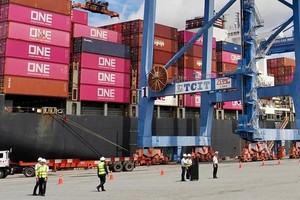
From the coastal roads of Tran Phu – Quang Trung – Ha Long – Thuy Van, visitors can watch ships moving in and out of international shipping lanes, or travel upstream along the Cai Mep - Thi Vai Port to explore a dynamic chain of industrial zones, ports and urban areas in the eastern part of Ho Chi Minh City. Beneath this vibrant landscape lies a history of bold reforms and strategic turning points that reflect a long-standing aspiration to seize opportunities for rapid and sustainable growth.
A breakthrough policy: Land-for-infrastructure
In the early 1990s, when the former Ba Ria - Vung Tau Province was newly established, infrastructure was severely lacking. Despite its natural beauty, the region had minimal roads, electricity, schools and healthcare facilities. At the time, the central government allocated only about VND30 billion (US$1.1 million) annually to the province far from enough to support development.
Facing these challenges, local leaders proposed a land-for-infrastructure model, allowing investors to build public works in return for land.
The idea was unprecedented nationwide. It gained crucial support from Prime Minister Vo Van Kiet, who approved the pilot policy in 1993. Within just three months, around 30 projects were launched simultaneously, including major roads such as Tran Phu – Quang Trung – Ha Long and Lang Cat – Long Son, along with drainage systems. As infrastructure expanded, communities grew alongside new roads, transforming local livelihoods.
During the second phase (1994–1998), the model was broadened to include not only roads but also economic, cultural and social infrastructure. By 2000, hundreds of projects had been completed, including industrial zones, commercial centers, healthcare facilities and cultural institutions, laying the foundation for long-term development.
Over time, Ba Ria - Vung Tau evolved from a struggling coastal province into a major economic gateway. Today, it serves as a maritime gateway for Ho Chi Minh City, connecting inland production with global trade routes.
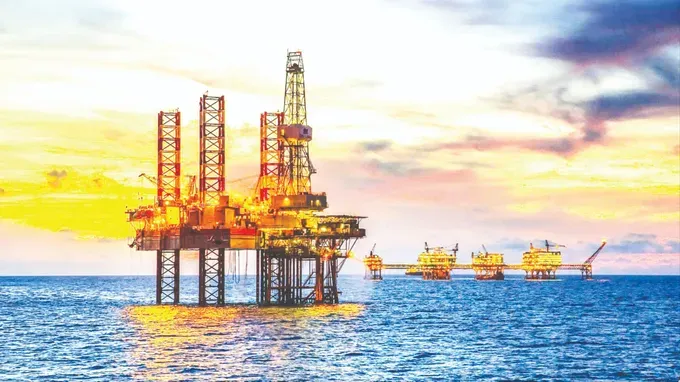
The region holds vast offshore oil and gas reserves, forming the backbone of its economy for decades. Developments such as the Phu My Power Center and the Long Son Petrochemical Complex have strengthened its industrial ecosystem.
However, as oil reserves declined, the province began shifting its growth model. Leveraging the strategic advantages of the Cai Mep - Thi Vai Port, authorities reoriented development toward port logistics and the broader maritime economy.
Toward an integrated maritime economy
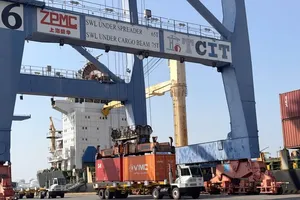
The Cai Mep - Thi Vai Port system has received substantial investment in recent years. The port complex now hosts more than 24 active projects, with a total wharf length of nearly 11 kilometers and total investment exceeding VND55 trillion (US$2.1 billion). In 2009, it was designated as Vietnam’s southern international gateway port, and in the same year welcomed 80,000 DWT vessels operating direct routes to Europe and the Americas. By 2023, the complex ranked among the world’s top 30 container ports, handling nearly 5.6 million TEUs and capable of receiving vessels over 200,000 DWT, firmly establishing its position in global logistics networks.
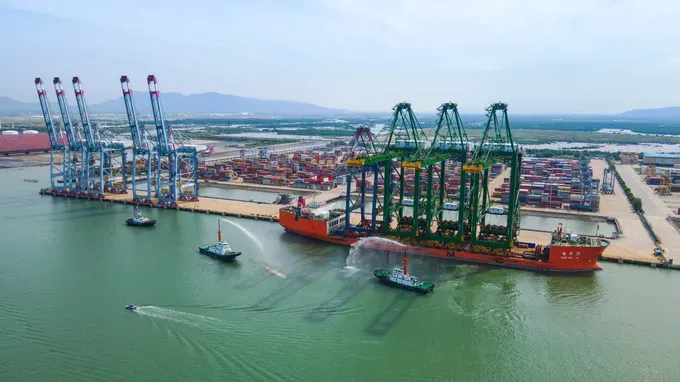
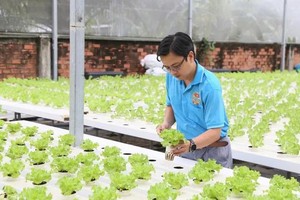
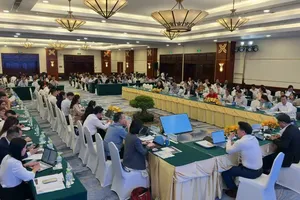
Working sessions with central authorities and southeastern localities have also served as platforms for former Ba Ria - Vung Tau Province leaders to propose mechanisms to remove bottlenecks, improve transport connectivity, and link cargo sources to the Cai Mep - Thi Vai port system. The province’s consistent shift in development strategy and economic restructuring has delivered early results. In 2017, for the first time, domestic revenue reached VND26.873 trillion (US$1 billion), surpassing income from oil and gas as well as import-export activities—marking a pivotal turning point toward a more diversified economy.
Alongside port development, the maritime economic space has expanded in an integrated direction. Logistics infrastructure has grown rapidly, with more than 300 enterprises in operation. Industrial zones are closely connected to seaports, forming a seamless chain from production to transportation and export. The new vision goes beyond simply having ports, aiming to build a complete and integrated maritime economic ecosystem.