During global restructuring, strategic economic autonomy doesn’t mean self-sufficiency or reduced integration. On the contrary, the more volatile the world becomes, the broader the integration must be to open up new spaces of choice, avoiding systematic dependence on a single resource, market, or entity.
Strategic economic autonomy isn’t posed as an isolated slogan; rather, it’s being concretized by a structural system of resolutions, where the state economy plays a foundational role, the private sector acts as the driving force, and international integration serves as the development space.
As the world is going through a highly volatile period, events like the Strait of Hormuz with wild fluctuations in global oil prices and scarer supply serves as a warning about the risk of vulnerability, given that Vietnam is a highly open economy but possesses a limited capacity for autonomy. Even when military conflicts subside, instability persists, and Vietnam, despite staying out of the fray, might still find itself amidst the risks.
Mitigating negative impacts of energy tremors
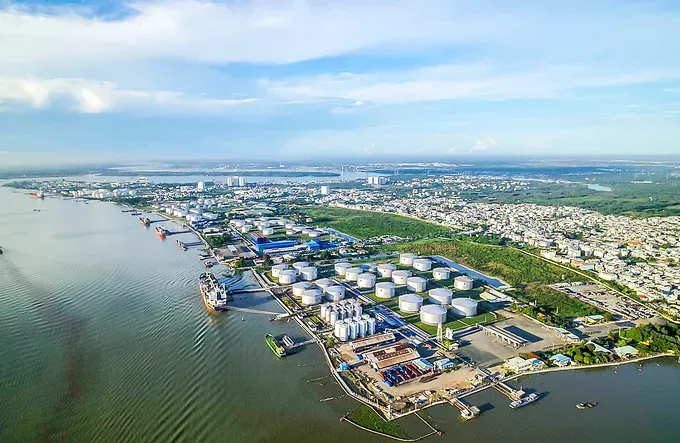
Energy is the lifeblood of the economy, and Vietnam is currently being affected by severe “tremors” stemming from energy supplies. According to Chairman Pham Van Thanh of the Board of Directors of the Vietnam National Petroleum Group (Petrolimex), a major challenge today is the risk of energy shortages.
The total power generation capacity currently reaches nearly 90,000 MW, lower than the planned target of over 94,000 MW. Meanwhile, several crucial mechanisms regarding electricity pricing, offshore wind power development, and the restructuring of Vietnam Electricity (EVN) remain incomplete. If these bottlenecks aren’t cleared soon, the risk of power shortages could directly impact growth targets.
General Director Le Ngoc Son of Vietnam National Industry – Energy Group reported that Vietnam extracts 180,000 crude oil barrels daily, supplying solely Dung Quat Refinery. Nghi Son Refinery meets 40 percent of national petroleum demand but imports all raw materials from Kuwait. Currently, domestic refining capacity satisfies 70 percent of local demand, necessitating 30 percent imports.
To enhance energy autonomy, he emphasizes that robust public and private partnership mechanisms will attract investors. Because energy sector capital requirements are substantial, appropriate mechanisms are extremely crucial. Private participation remains limited primarily due to a lack of strict electricity purchase guarantee commitments.
President Le Quoc Vinh of Le Group proposes at least four immediate actions:
- The economy should not rely on a single energy supply. Truly diversifying energy sources doesn’t merely mean “having multiple suppliers,” but rather reducing reliance on any geopolitical chokepoints and expanding LNG supplies from less risky markets.
- An energy “shock absorber” should be built, encompassing strategic reserves, flexible price regulation mechanisms, and the capacity to swiftly transition between energy sources.
- The development of domestic and renewable energy sources must be accelerated. An energy system overly dependent on imports is inherently vulnerable.
- On the corporate side, enterprises must always prepare contingency plans for when energy supplies face difficulties.
“We can no longer assume that energy is always available and prices are always stable. Energy costs must be considered a strategic variable, not an operational one.”
President Le Quoc Vinh of Le Group
Vietnam didn’t have to wait for the current oil price shock; previous events like the Covid-19 pandemic or the Russia-Ukraine conflict were already “exogenous shocks” that made nations realize strategic autonomy isn’t about closing doors. Instead, it’s the capacity for self-determination in every core developmental choice and the protection of the nation’s vital interests amidst global volatility.
GDP growth alongside national security and welfare
Numerous practical incidents occurred in Vietnam between 2022 and 2024. These serve as typical examples demonstrating that when “internal strength” (the capacity for self-supply or strategic reserves) is insufficiently robust, the openness of the economy is directly proportional to its level of dependence, and social welfare will suffer severe damage when the world is volatile.
Take the post-Covid-19 pandemic during the 2022-2023 period as an example. The healthcare sector at that time faced immense difficulties regarding the supply of pharmaceuticals and medical equipment. At its peak, according to a Ministry of Health report submitted to the Government at an online healthcare conference in August 2022, up to 80 percent of public health facilities nationwide faced shortages of medicines and consumable supplies.
In HCMC alone, major hospitals lacked hundreds of pharmaceutical items covered by insurance. This isn’t difficult to explain, as Vietnam still has to import approximately 90 percent of pharmaceutical raw materials (primarily from China and India) and nearly 100 percent of high-tech medical equipment.
According to the Statistical Yearbook and the Socio-Economic Situation Report for 2025, issued by the National Statistics Office of Vietnam (under the Ministry of Finance) in January, the localization rate across different industries shows significant divergence.
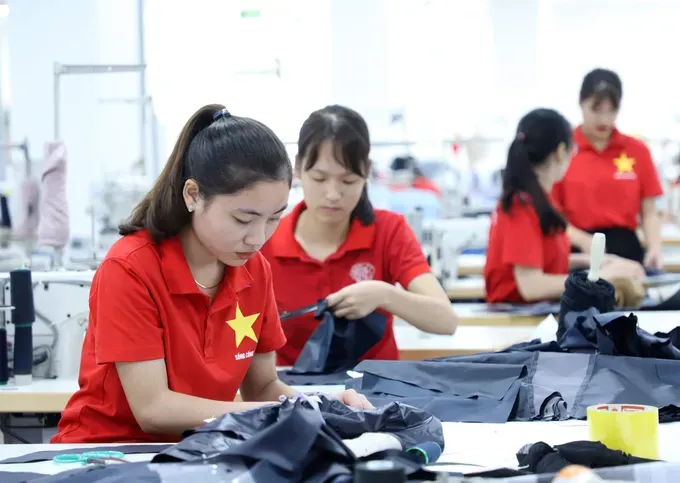
While the localization rate for the textile, garment, and footwear sectors reaches 45 – 50 percent, the electronics and computer industry stands at only about 15 – 20 percent, the lowest among key sectors.
In the automotive industry, 80 percent of manufacturing components are still imported. Nationwide, there are 377 automotive enterprises, including 169 FDI enterprises, accounting for 46.43 percent. The number of domestic manufacturers and suppliers for the automotive industry remains quite modest, with a total product count of over 1,200. The majority are supporting industry products with medium and low technological content, holding a minor value within the overall value structure of a car.
The national economy can be envisioned as an imposing building whose foundations are laid upon the frequently shifting “strata” of the world. Enhancing internal strength, therefore, isn’t solely a narrative of GDP growth, but also a matter of national security and welfare.
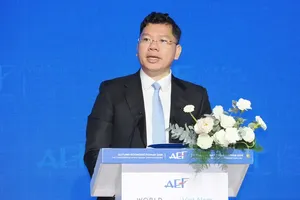
Chairman Nguyen Thanh Tung of the Board of Directors of the Joint Stock Commercial Bank for Foreign Trade of Vietnam (Vietcombank) commented: “Recently, petroleum reserves have been short-term. Moving forward, the bank is prepared to participate in financing investment projects for petroleum storage facilities for reserves. However, the core issue doesn’t lie in the storage facilities themselves, but in the regulatory mechanisms. Because reserves are subject to commodity fluctuations, there can be profits or losses at various points in time. Therefore, an accompanying mechanism is required to support businesses and ensure operational efficiency.”