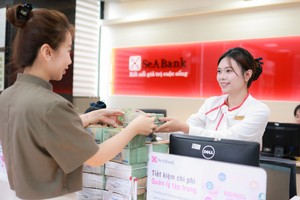
According to the General Statistics Office under the Ministry of Finance, the country’s gross domestic product (GDP) in the first quarter of 2026 is estimated to have increased by 7.83 percent compared to the same period in 2025.
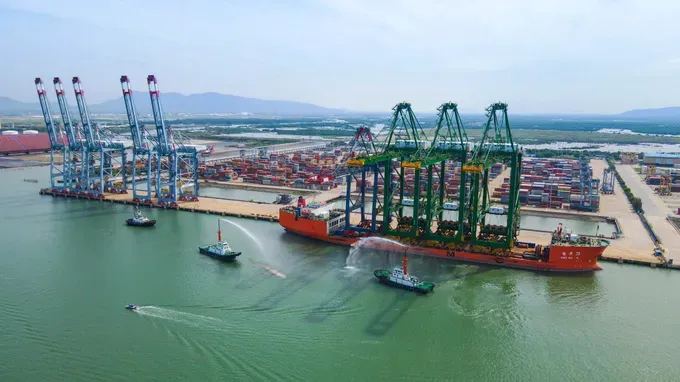
Most recently, the ASEAN+3 Macroeconomic Research Office (AMRO) released a press statement on Vietnam’s economic outlook, affirming that the country continues to maintain strong growth momentum despite global instability.
The AMRO noted that Vietnam’s economy has demonstrated remarkable resilience in the face of prolonged global uncertainties. Growth has been underpinned by a robust export-oriented manufacturing sector, sustained foreign direct investment (FDI), and stable domestic demand. AMRO Chief Economist Anthony Tan commented that domestic demand is expected to remain steady, supported by ongoing policies such as the extension of value-added tax (VAT) reductions and planned public infrastructure spending.
Earlier, in its regional economic update released in early April, the World Bank described Vietnam as a model of adaptability, capable of turning challenges into opportunities to drive internal reforms. The World Bank forecasts that Vietnam’s growth in 2026 and 2027 will rank among the highest in the East Asia and Pacific region.
Aaditya Mattoo, Chief Economist of the World Bank, noted that while some countries in the region are experiencing slowdowns or losing reform momentum, Vietnam stands out as a proactive example of reform in response to emerging challenges.
As 2026 marks the first year of implementing Vietnam’s Socio-Economic Development Plan for 2026–2030, international organizations emphasize that maintaining macroeconomic stability, improving the quality of growth, and staying committed to foundational reforms will be key to translating positive assessments into tangible outcomes, thereby shaping a more sustainable development cycle in the years ahead.
Most international experts note that sustaining double-digit growth after 2026 will not be easy, but it is feasible with continued support and improvement of core growth drivers.
Mr. Julien Gurrier, Ambassador of the European Union to Vietnam, said that he is highly impressed with the country’s reforms as it enters a new development phase from streamlining administrative structures to issuing key resolutions on private sector development and legal reforms.
He emphasized that Vietnam is gaining stronger confidence from its international partners.
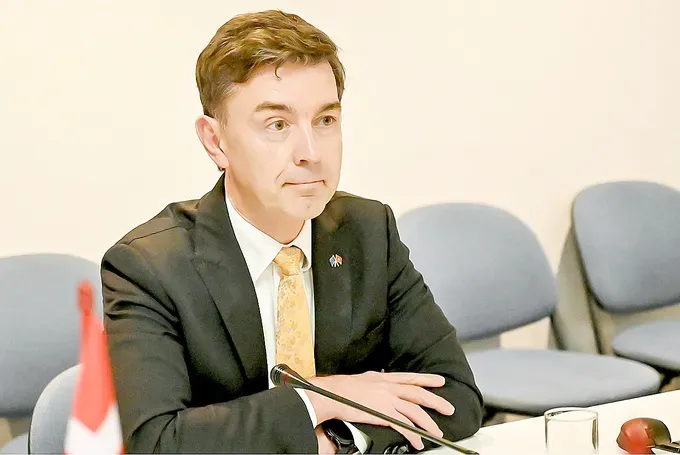
In particular, with the 14th National Party Congress outlining Vietnam’s priorities, partners believe this will serve as a foundation for long-term cooperation. The EU remains committed to supporting Vietnam’s goal of becoming a developed country by 2045.
Mr. Olivier Brochet, Ambassador of France to Vietnam, described the country as a dynamic economy. Over nearly 40 years since the launch of the Doi Moi (Renewal) in 1986, Vietnam has undergone profound economic transformation, modernized its infrastructure, and diversified its international partnerships.
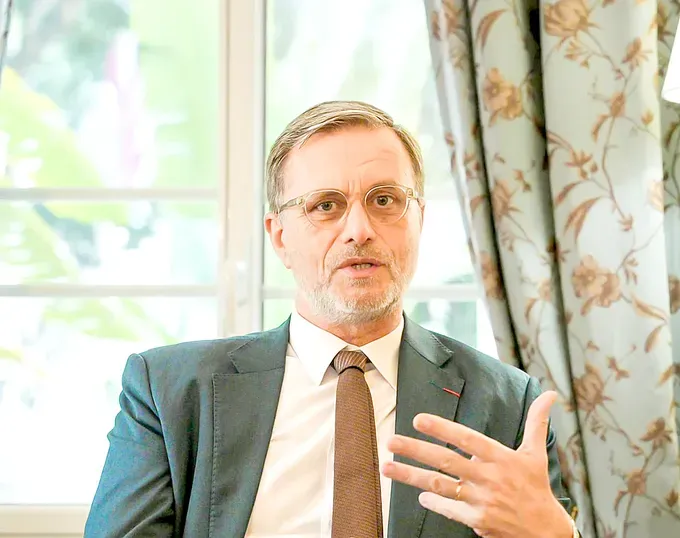
Today, Vietnam is deeply integrated into global value chains and plays a central role within ASEAN, with France continuing to support this trajectory through economic, academic, scientific and institutional cooperation.