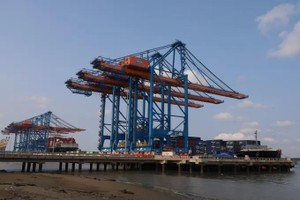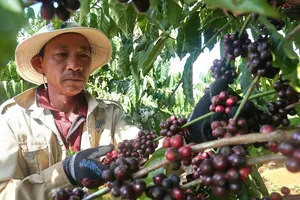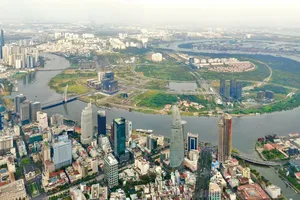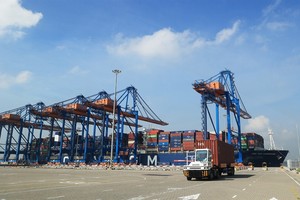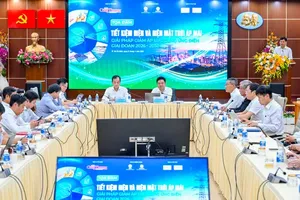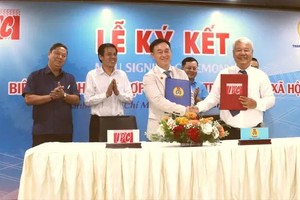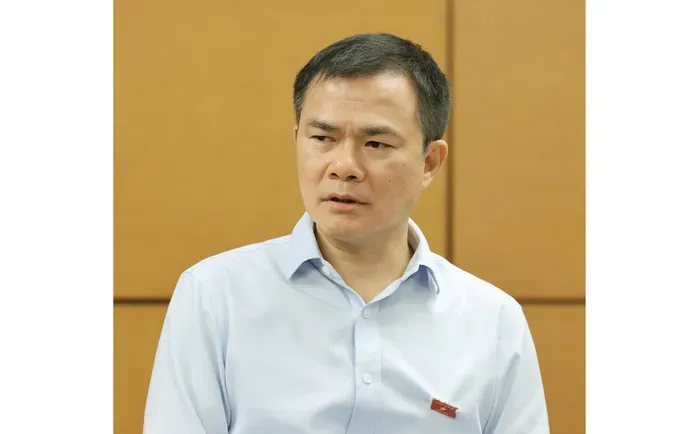
Chairman and General Director of Viettel Group Tao Duc Thang stressed that to achieve double-digit growth, the core issue is how to expand the national economic space. Based on Viettel’s experience with self-reliance, expanding into new markets ensures regular and stable growth.
Therefore, he proposed that the Government establish a systematic program to expand economic space abroad. This should range from foreign policy pathfinding to identifying markets where Vietnam holds strengths in products and technology, thereby enabling entire ecosystems to travel together. Additionally, it’s essential to designate “leading” flagship enterprises to pioneer and create an investment ecosystem overseas.

Assoc Prof Dr Tran Dinh Thien, Member of the Prime Minister’s Advisory Council, commented that autonomy, self-reliance, and resilience are vital for Vietnam. To achieve this, institutions must lead the way, reforming to “open the door” for new productive forces to develop and create a solid economic foundation. The essence and approach to strengthening internal resources have already changed.
First, while Vietnam previously relied less on the private sector, it’ll now be the engine helping the economy break through. Second, for years, Vietnam has excelled at attracting FDI and international trade, but this carries risks due to a low technological base and the struggle of the domestic sector to scale up. Thus, the new strategy must target high-quality FDI, the investors capable of connecting with Vietnamese firms to upgrade technological proficiency. Third, resources for business development must be distributed transparently and fairly, without discrimination.
The Politburo's Resolution No. 79-NQ/TW, dated January 6, 2026, on state economic development has opened new space and momentum. Once the functions and mechanisms of the state economy has been clearly defined, it’ll create opportunities to better manage the relationship between state-owned and private enterprises based on market principles.

Director Nguyen Thi Lam Giang of the Agency for Innovation, Green Transformation, and Industrial Promotion shared that on June 12, 2025, the Government issued Decision No. 1131/QD-TTg, establishing a list of strategic technologies and products. This was followed by Decision No. 2815/QD-TTg in December 2025, prioritizing a national R&D program for these products.
Furthermore, Notice No. 22-TB/CQTTBCD (March 20, 2026) regarding General Secretary To Lam’s conclusions emphasized refining the strategic technology list to be more streamlined, focusing on sectors that are decisive for national development. The notice outlined six major orientations for ensuring technology stem from economic needs; categorizing tech into established markets versus new growth drivers; designing policies to strongly encourage R&D investment; concentrating resources on key areas to avoid wasteful, scattered investment; overhauling organizational models with clear leadership accountability; and prioritizing high-quality human resources.
Strategic technology is now defined as the tool to solve the “major puzzles” of each sector, led by enterprises with specific products and markets. The Ministry of Industry and Trade views this as the key to national growth, autonomy, and competitiveness.

Deputy Director Pham Van Quan of the Industrial Agency (Ministry of Industry and Trade) said that since 2015, the Government has identified supporting industries as the “backbone” of national manufacturing. By July 2025, Decree No. 205/ND-CP had introduced breakthrough innovations focusing on high added-value, high-tech, and eco-friendly products. This serves as a catalyst for Vietnamese firms to boldly innovate in materials and energy-saving products.
Institutions and policies are becoming Vietnam’s new competitive advantage. Recent resolutions have opened a synchronized development space for foundational, strategic, and supporting industries. With a commitment to rapid institutionalization, the Ministry of Industry and Trade is clearing the path for a phase where supporting industries don’t just contribute to growth but drive green, autonomous manufacturing.

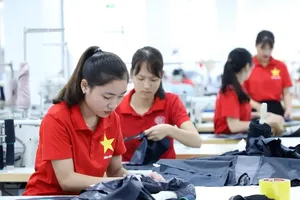
Deputy Secretary-General of VCCI Dau Anh Tuan claimed that Vietnam benefits from a self-reliant manufacturing base, which is crucial for building an autonomous economy. With resilience, the economy can stand on its own two feet regardless of external conflicts, asserting its global position.
To build an autonomous economy, it’s essential to rely on internal strength, with Vietnamese enterprises, particularly the private sector, serving as the nucleus. While the private sector has grown in scale and diversity, the landscape of large enterprises remains thought-provoking. Real estate and finance still account for over 50 percent, while processing and manufacturing represent less than 10 percent of Vietnam’s 500 largest firms.
Resolution No. 68-NQ/TW, issued on May 4, 2025, targets having 20 Vietnamese enterprises with global brands. To reach this, it’s necessary to form a “support platform” from the State and more vigorous institutional reforms to clear the path for Vietnamese businesses to thrive and integrate.