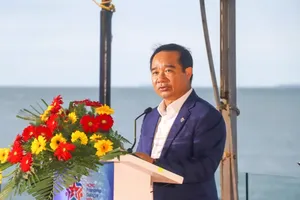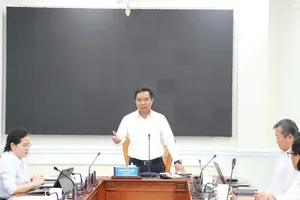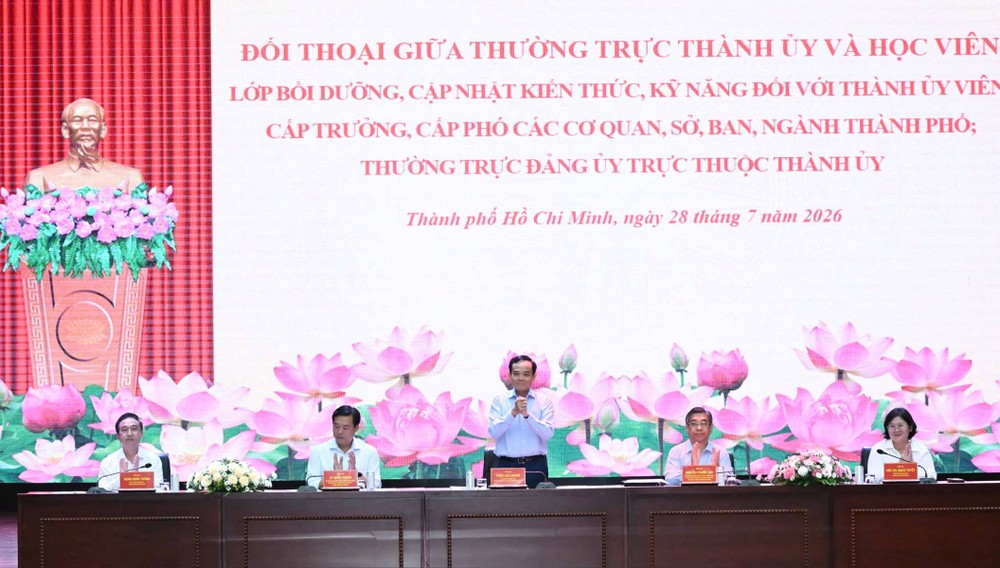
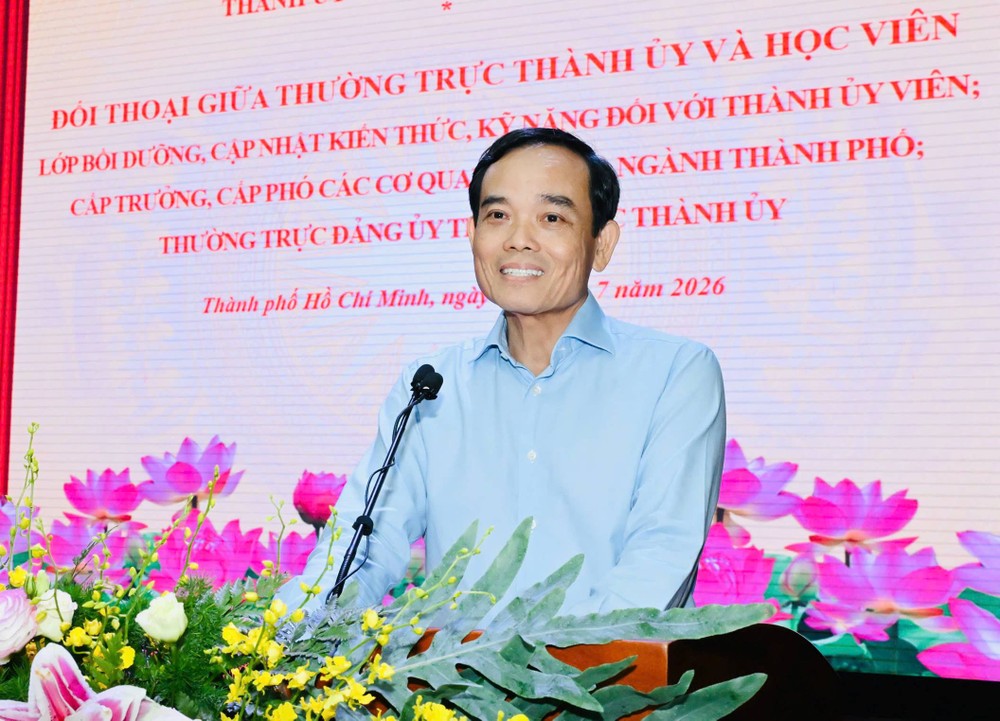
Speaking at a dialogue between the Standing Board of the HCMC Party Committee and senior municipal officials attending a leadership training program, HCMC Party Secretary Tran Luu Quang outlined the city's approach to any future administrative reorganization.
The event was attended by senior city leaders, including Permanent Deputy Party Secretary Le Quoc Phong, Deputy Party Secretary and Chairman of the Vietnam Fatherland Front Committee of HCMC Nguyen Phuoc Loc, Deputy Party Secretaries Dang Minh Thong and Van Thi Bach Tuyet, along with HCMC Party Committee members and leaders of municipal departments, agencies, and subordinate Party organizations.
HCMC Party Secretary Tran Luu Quang said that over the past year, the Politburo had received and acknowledged proposals from several localities seeking to further reorganize commune-level administrative units to better reflect local conditions. However, he stressed that no nationwide consolidation plan is currently under consideration.
Under a resolution adopted by the National Assembly, 705 communes, wards, and special administrative zones across Vietnam currently fall short of the required standards for population size and land area. Ho Chi Minh City accounts for 54 of these administrative units.
Of the city's 54 units, only Con Dao Special Zone and Thanh An Island Commune fail to meet the population criterion. Mr. Tran Luu Quang noted that both have unique geographical characteristics that make mergers impractical. The remaining 52 communes and wards mainly do not satisfy the minimum land-area requirement.
The HCMC Party Chief emphasized that population and land area are not the sole criteria for determining whether administrative units should be merged.
In line with the Politburo's consensus, any restructuring must be based on scientific assessment, implemented cautiously, reflect practical needs, and secure public support.
In addition to the criteria approved by the National Assembly, authorities should also consider development potential, geographical location, infrastructure, national defense and security, and the specific characteristics of each locality before making decisions.
As a result, whether HCMC proceeds with additional mergers will depend on studies and proposals prepared by the city and individual local governments rather than a centrally imposed mandate.
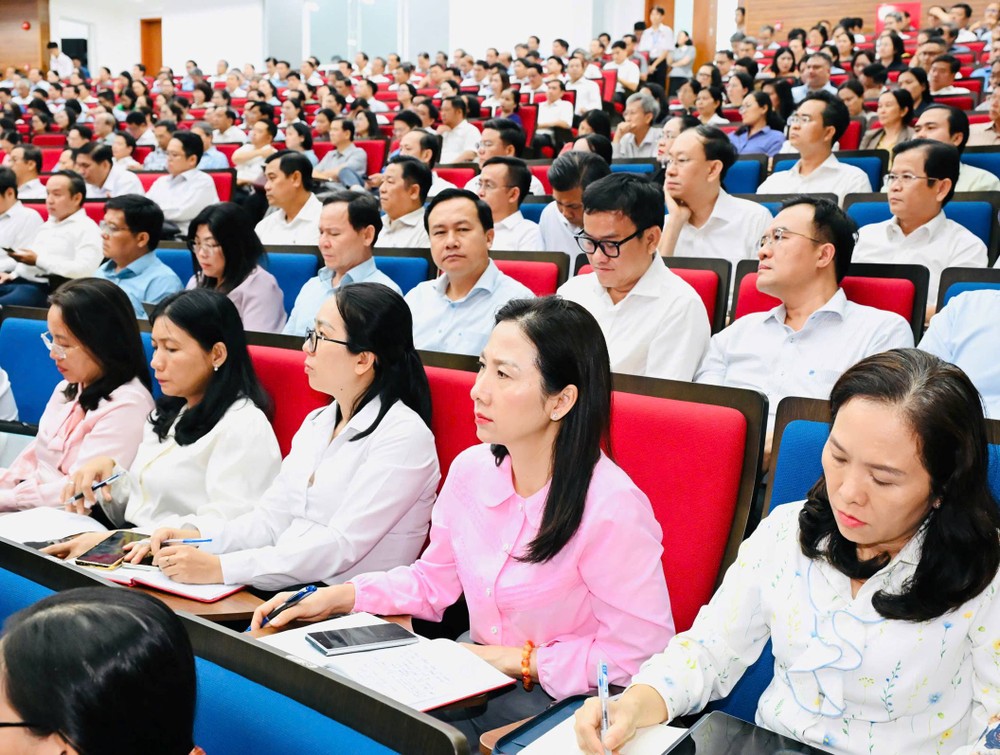
The Standing Board of the HCMC Party Committee has instructed communes, wards, and special administrative zones to discuss their restructuring needs, build local consensus, and submit recommendations to the city. Public consultation will also be conducted to ensure broad support.
To ensure objectivity, the HCMC Institute for Development Studies (HIDS) has been tasked with conducting an independent assessment of factors including development potential, comparative advantages, national defense, and security.
Based on recommendations from local authorities and the HIDS's findings, the Standing Board of the HCMC Party Committee will decide on each case individually.
HCMC Party Secretary Tran Luu Quang said all reviews and reports must be completed and submitted to the Standing Board of the HCMC Party Committee before August 30.