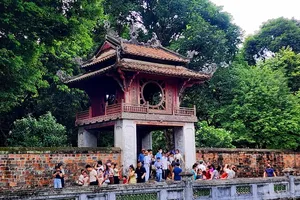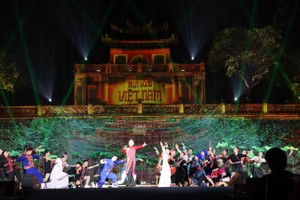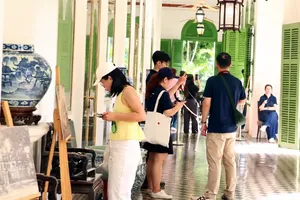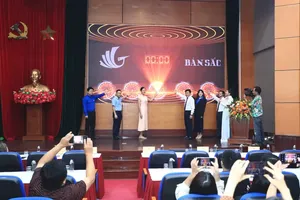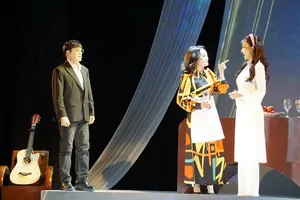
An exhibition titled “Su da luu danh” (Stone steles: names and legacies) has been held at the Van Mieu (Temple of Literature) – Quoc Tu Giam (Vietnam's first national university) relic site by the Hanoi Department of Culture and Sports, in coordination with the Van Mieu – Quoc Tu Giam center for cultural and scientific activities, organized
This is a meaningful activity celebrating the success of the 14th National Party Congress, welcoming the Lunar New Year—the Year of the Horse, and looking ahead to the 950th founding anniversary of the country's first national university.
In his opening remarks, Le Xuan Kieu, Director of the Centre for Cultural and Scientific Activities, said the exhibition blends traditional and modern display approaches, using paper and stone as key materials.
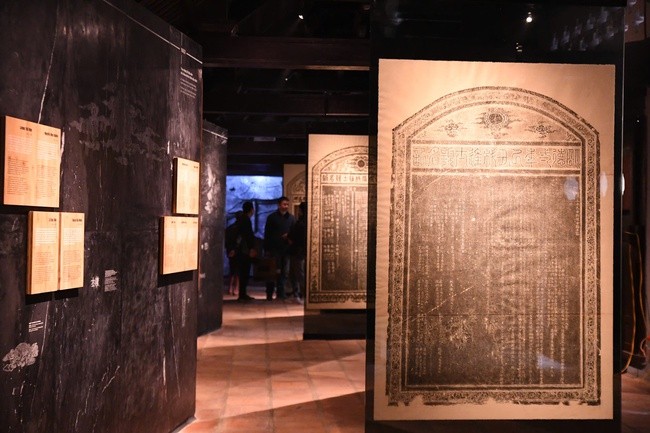
Integrated with existing exhibition spaces, it presents in a cohesive and in-depth manner the exceptional historical, ideological, and artistic value of the doctoral laureates’ steles.
The exhibition is organized around four main themes, portraying the Confucian examination-based education system, the policies of feudal dynasties on selecting, rewarding, and valuing talent, and the lives of outstanding figures who made significant contributions to education and other fields. Through this approach, visitors not only gain access to the documentary value of the stone inscriptions but also recognize each doctoral stele as a finely crafted work of stone art.
The exhibition space is designed as an artistic dialogue between two key materials—paper and stone—symbolizing the journey from learning and self-cultivation to honor and lasting recognition. The transition between these materials reflects the desire of the feudal dynasties to “eternalize” the tribute paid to the intellectual elite.
A highlight of the exhibition is the fusion of tradition and modernity, as ancient rubbings are “brought to life” through projection technology, transforming historical materials into vivid digital images. Digital solutions are employed to recreate both tangible and intangible heritage spaces, offering a fresh narrative of Vietnam’s examination history and spreading the spirit of “touching history, discovering heritage.”
It is closely linked with existing displays, forming a unified whole within the relic site, enabling the public to gain a more systematic and in-depth understanding of the relic site’s formation and development, as well as the outstanding achievements of Vietnam’s examination-based education under the monarchical era.
According to Director of the Centre for Cultural and Scientific Activities, Le Xuan Kieu, the exhibition was developed with the participation of Vietnamese and French experts, recounting the stories behind the 82 doctoral steles—from royal examinations and scholarly lineages to prominent figures associated with education, the examination system, and state governance under the monarchical era.
Through this narrative, the exhibition conveys a consistent message on Vietnam’s enduring tradition of learning and respect for talent, a vital source nurturing the nation’s culture and future.