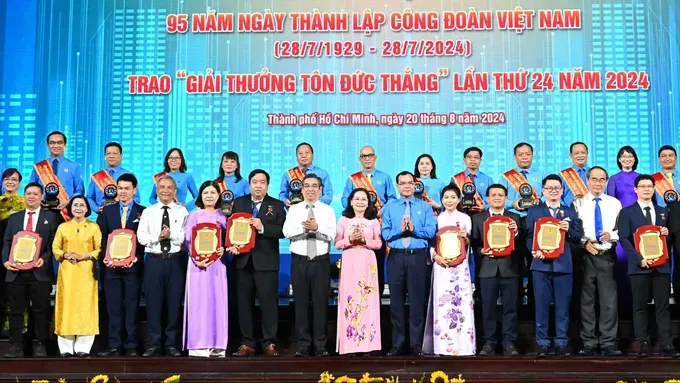
Director Nguyen Thi Loan of the Hi-Tech Agriculture Research and Development Center stands as the sole female recipient of the Ton Duc Thang Award this year. Having been dedicated to high-tech agriculture since her graduation, Ms. Loan operates as both a researcher and a direct manager of production.
Between 2020 and 2024, she and her colleagues spearheaded numerous technical initiatives recognized at both city and national levels, spanning aquaculture, medicinal mushrooms, organic crops, and smart agricultural models utilizing digital technology. These projects have transitioned into actual production, transferred to farmers, cooperatives, and businesses to generate clear economic value and long-term efficacy.
Discussing a significant milestone in her journey of technical innovation, Ms. Loan highlighted the intensive two-stage white-leg shrimp farming model, which applies the Internet of Things (IoT) for environmental monitoring in the former Can Gio District.
The hallmark of this model is that environmental parameters are monitored 24/7 via smart devices, allowing farmers to make timely adjustments to fluctuations, thereby mitigating risks and diseases. Thanks to superior water environment control, the shrimp grow steadily, with yields reaching approximately 40 tonnes/ha, significantly higher than traditional methods. The number of annual crops has also increased, enhancing land-use efficiency.
This model is not only economically significant but also shifts the local approach to farming, from relying on experience to data-driven management, and from passive methods to the proactive application of science.
Looking ahead, Ms. Loan stated she’ll continue to lead her team in promoting research, transfer, and application of high technologies, gradually mastering advanced techniques tailored to HCMC and other localities. Parallel to this is the training of a scientific workforce and the spreading of a modern agricultural mindset, contributing to the city’s major resolutions on innovation and sustainable urban agriculture.
The HCMC Biotechnology Center is the workplace of Doan Huu Cuong, a man who has spent over two decades researching plant varieties. For him, the most accurate metric for a research project’s value is the smile on a farmer’s face during a bumper harvest of “Made in Vietnam” crops. Over 24 years at the center, he and his team have focused on creating varieties of cantaloupe, bell peppers, and gynoecious cucumbers suited to Southern Vietnam’s climate and greenhouse production.
Practical production shows that farmers need stable yields and uniform quality that meet market demands. Driven by this need, Cuong’s team focuses on breeding new varieties emphasizing adaptability and economic efficiency. For a variety to be applied in reality, the trial process usually lasts 4-6 years across multiple seasons and regions, which hasn’t been without its share of setbacks.
“I’ll always remember the first time I brought my bred cantaloupe to the fields,” he recalled. “The experimental results were perfect, but when planted on a large scale, growth was uneven, and pests attacked, causing a severe drop in yield.” That failure was a shock, but it served as a turning point that completely reshaped his mindset.
In the face of climate change, Cuong believes a researcher’s role isn’t just technical transfer but also inspiring a modern agricultural philosophy, helping farmers confidently embrace new progress. This includes building trust in domestic products and changing cultivation habits regarding pesticides and fertilizers to ensure safety and economic gain.
Moving forward, his team will focus on virus-resistant and climate-resilient fruit vegetables like pumpkins, chili peppers, and triploid watermelons to help farmers reduce input costs and optimize profits in harsh weather.
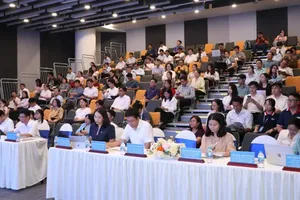
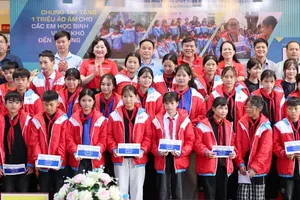
The 25th Ton Duc Thang Award in 2025 received 58 applications, an increase of 14 over 2024. According to the Selection Council, the entries are diverse across industries. The quality is notably high, with many initiatives generating profits worth tens of billions of VND (hundreds of thousands of dollars) and hundreds of workers being trained to improve their professional skills.





)