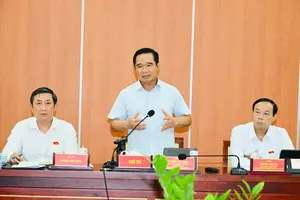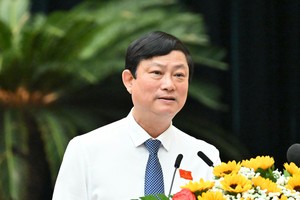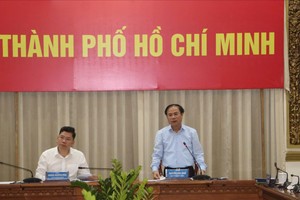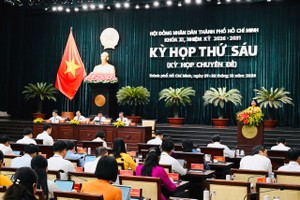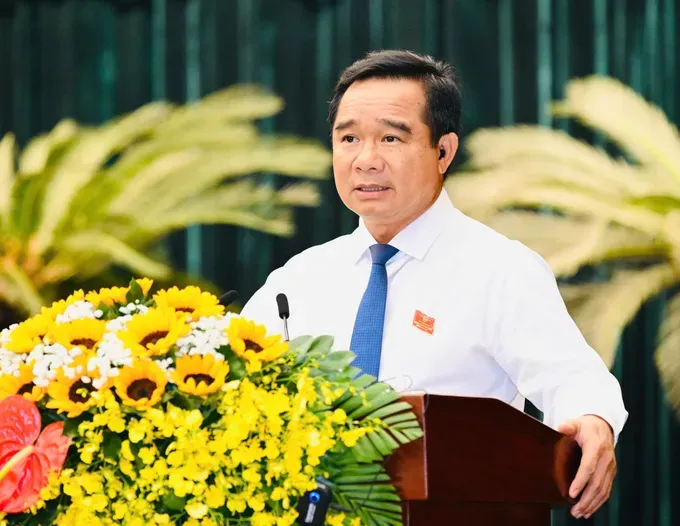
Chairman of the municipal People's Committee Nguyen Van Duoc affirmed at the Ho Chi Minh City People's Council session on October 30.
These will be aligned with public investment plans while mobilizing private-sector resources and public-private partnership (PPP) mechanisms.
On the morning of October 30, during the plenary discussion at the sixth session of the 11th Ho Chi Minh City People's Council for the 2026-2031 tenure, several delegates continued to offer comments on the proposal seeking approval of the Ho Chi Minh City Master Plan for 2025-2050, with a 100-year vision.
Clarifying TOD planning and protecting residents' rights
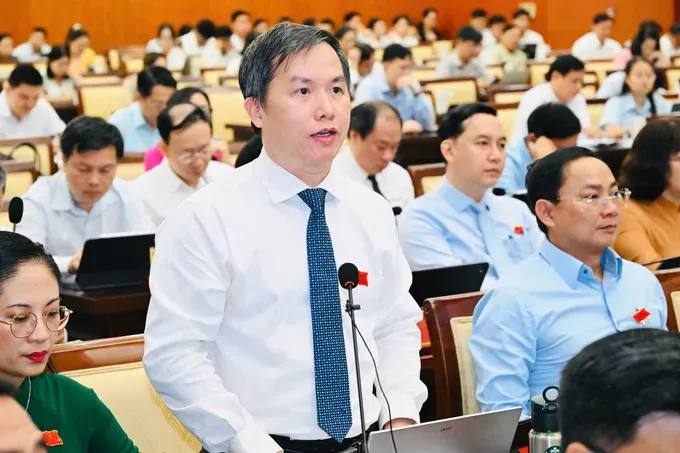
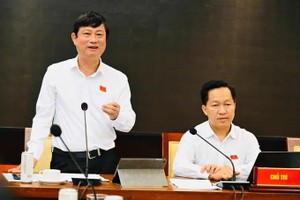
Commenting on the draft master plan, delegate Nguyen Anh Tuan called on the city to review the plan and seek input from localities across the 10 development-driving zones, clarifying each area's role, advantages, and potential contribution to the city's overall development.
He said the city should hold consultations with groups of localities within these 10 zones to reach consensus on development orientations, identify key infrastructure projects, and establish priority programs. This would provide a basis for local authorities to proactively allocate resources, prepare subdivision and detailed zoning plans, and organize implementation.
Delegate Nguyen Anh Tuan noted that transit-oriented development (TOD) would have a significant impact on residential communities and socio-economic activities. Early consultations with local authorities would help identify priority infrastructure works and projects while building consensus among residents and investors.
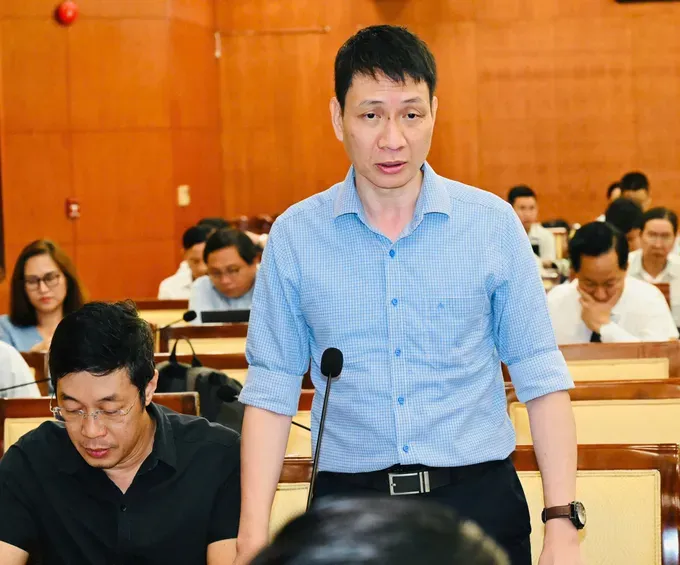
Responding to questions about TOD, Truong Trung Kien, Director of the Ho Chi Minh City Department of Planning and Architecture, said the Ho Chi Minh City People's Council had adopted Resolution No. 26 on transit-oriented development.
Under the master plan, the city will identify metro lines and station locations as a basis for designating areas for compact city development around stations, making it more convenient for residents to use metro and light rail services. TOD zones are expected to cover areas within a radius of approximately 1,000 meters from each station.
As for existing housing within these zones, decisions on whether homes should be cleared or retained will be made at the detailed planning stage, following surveys of existing conditions and assessments of development potential.
Areas that can be upgraded and meet TOD requirements will be considered for retention, while locations requiring new development will be designated for concentrated project investment.
Planning must become genuine platform for development

Speaking at the session, Chairman of the Ho Chi Minh City People's Committee Nguyen Van Duoc said the Ho Chi Minh City Master Plan for 2025-2050, with a 100-year vision, sets out a development orientation for the city as a multipolar, multi-center megacity, featuring five growth poles, five strategic connectivity systems, five satellite centers, and 10 development management zones. The plan also aims to protect ecological infrastructure systems and spaces of long-term value.
According to Chairman of the Ho Chi Minh City People's Committee Nguyen Van Duoc, approval of the master plan is only the first step; effective implementation is what matters most. Immediately after its approval, the municipal People's Committee will swiftly translate it into specific programs, plans, project portfolios, and implementation resources, in alignment with public investment plans while mobilizing private-sector resources and public-private partnership (PPP) mechanisms.
The city will prioritize infrastructure projects with strong spillover effects, including interregional transport, urban railways, transit-oriented development (TOD), logistics, digital infrastructure, energy, and ecological infrastructure. It will also strengthen connectivity between development centers and production and service hubs, seaports, and logistics gateways.
At the session, the municipal People's Committee submitted 17 items for consideration, comprising 15 draft normative resolutions and two individual resolutions, falling short of the planned target of 31 draft resolutions.
Mr. Nguyen Van Duoc stressed that delays in submitting documents, coordination, and consultation must not be allowed to affect the city's overall development progress. Lead agencies must therefore clarify the reasons for delays, identify those responsible, and establish specific completion schedules and deadlines for outstanding draft resolutions.
For resolutions scheduled for submission in December and 2027, agencies must begin preparations immediately rather than leave the workload until the last minute.
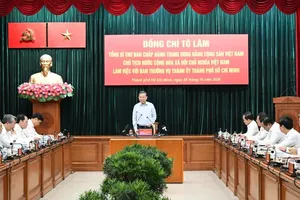
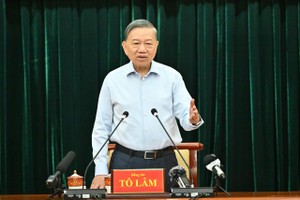
He also reiterated the directives given by Party General Secretary and State President To Lam at his October 28 meeting with the Ho Chi Minh City Party Committee Standing Committee. He emphasized that requirements to strengthen implementation capacity, remove bottlenecks, and create new growth drivers must be translated immediately into concrete tasks, with clearly assigned responsibilities, deadlines, and measurable outcomes.
Regarding public investment, the city must focus on resolving existing bottlenecks. For delayed projects, the causes and those responsible must be clearly identified. For projects with no prospect of disbursing their allocated funds, capital must be promptly reallocated. At the same time, the city must prepare its 2027 project portfolio with all required procedures completed, land clearance secured, and implementation capacity in place, ensuring that no project is allocated capital without the necessary conditions for disbursement.
He also pledged that the city would continue to address bottlenecks involving land, investment procedures, site clearance, infrastructure, and funding while creating the most favorable possible environment for businesses to invest, produce, operate, and innovate.
Alongside economic growth, the city will pay particular attention to residents' quality of life.
Growth is truly meaningful only when people have more job opportunities, access to suitable housing, and schools for their children; when they receive better healthcare; enjoy more convenient travel and a cleaner living environment; and can share more fully in the benefits of development, Chairman of the Ho Chi Minh City People's Committee Nguyen Van Duoc emphasized.
According to him, Ho Chi Minh City is entering a period of development that offers significant opportunities but also places very high demands on governance capacity and implementation. This requires the city to translate institutional frameworks into drivers of growth, turn planning into resources, convert policy orientations into action, and ensure that actions deliver tangible results that residents and businesses can see, experience, and benefit from.
Ho Chi Minh City plans to add 18,654 resettlement apartments
Regarding housing and resettlement, a representative of the Ho Chi Minh City Department of Construction said the department was reviewing the legal status and investment progress of social housing projects to advise the municipal People's Committee on resolving outstanding difficulties.
The department proposed establishing a social housing fund to accommodate people displaced by projects, with housing located within a radius of 5-7 kilometers of the respective project sites and meeting the needs of eligible beneficiaries under existing policies.
Under the plan to relocate 41,540 houses along and on rivers, canals, and waterways during the 2026-2030 period, the city expects to implement 94 projects, with a total estimated investment of more than VND404.185 trillion (US$15.7 billion).
The city also plans to implement 18 resettlement housing projects, adding 18,654 apartments across 20 land sites. Four projects will use public investment funds, requiring an additional VND4.962 trillion, while the remaining 14 are expected to mobilize resources from the private sector.